

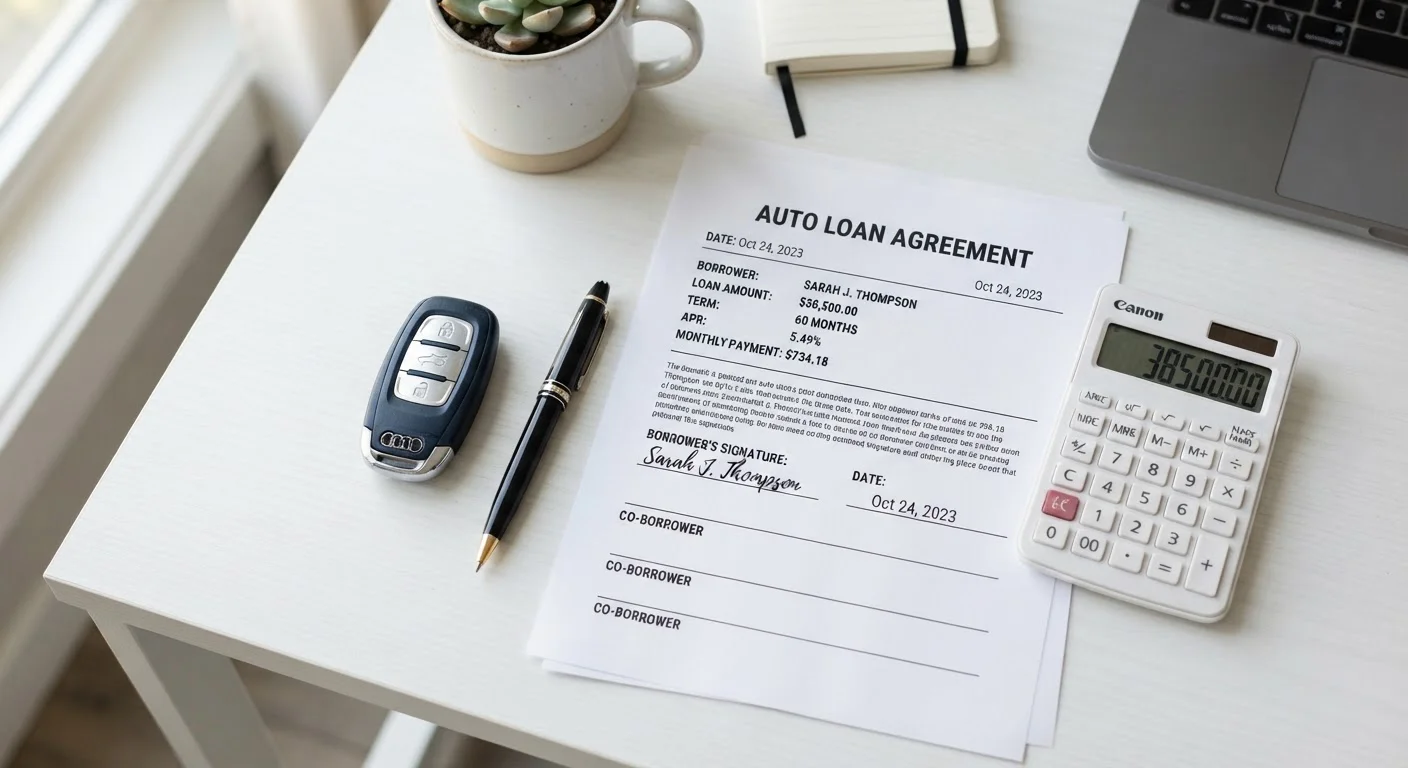
What an Auto Loan Actually Is
When most people buy a car, they do not pay the full price in cash - they borrow money from a lender and pay it back over time. That arrangement is an auto loan. The loan has three core components: the principal (the amount borrowed), the interest rate (the lender's charge for lending that money), and the loan term (the repayment period, usually expressed in months).
Because the car acts as collateral, auto loans are considered secured debt. If you want a broader foundation on how different types of debt work, the guide A First Look at Personal Debt is a useful starting point.
~$730
Average monthly new car payment in the US
According to Experian's State of the Automotive Finance Market report, the average monthly payment for a new vehicle loan has climbed steadily in recent years.
69 months
Average new vehicle loan term
Experian data shows the average loan term for new vehicles has grown longer over time, reflecting consumers seeking lower monthly payments.
~1/3
New car buyers who are underwater on their trade-in
Industry research suggests a significant share of trade-ins carry negative equity - meaning the owner owes more than the vehicle is worth - often tied to long-term financing.
How Lenders Decide What to Offer You
Before approving a loan, lenders assess the risk that you might not repay. The key factors they typically weigh include:
- Credit score and history: A higher score signals lower risk and usually results in a lower interest rate. Missed payments or high existing debt can work against you.
- Income and employment: Lenders want confidence that your income is sufficient and stable enough to cover monthly payments.
- Debt-to-income ratio (DTI): This compares your monthly debt obligations to your gross monthly income. A lower DTI is generally favorable.
- Loan-to-value ratio (LTV): This measures the loan amount relative to the vehicle's value. A larger down payment improves your LTV and can reduce your rate.
Understanding how your credit profile affects these outcomes is worth doing before you apply. How credit scores affect the car-buying process explains what lenders see when they pull your report.
Check Your Credit Before You Apply
You are entitled to a free credit report from each of the three major bureaus annually via AnnualCreditReport.com. Reviewing your report before applying for a car loan lets you spot errors and understand what lenders will see - giving you time to address any issues in advance.
Loan Terms, Interest, and the True Cost of Borrowing
Loan terms for new vehicles commonly range from 36 to 84 months. A longer term reduces your monthly payment, but you pay interest for a longer period - meaning the total amount repaid is higher. A shorter term costs more each month but less overall.
The number to focus on when comparing loan offers is the APR (annual percentage rate), not just the quoted interest rate. The APR folds in certain fees, giving you a more accurate picture of the loan's annual cost. Even a difference of one or two percentage points in APR can meaningfully change the total you repay over the life of the loan.
“The monthly payment is what dealers want you to focus on - but the total cost of the loan is what actually comes out of your pocket. Those are very different numbers.”
— Consumer Financial Protection Bureau, U.S. federal consumer financial watchdog agency
For a full walkthrough of how financing fits into the broader purchase, see the car-buying process from first search to signed papers.
Down Payments and Getting Pre-Approved
A down payment is the portion of the vehicle's price you pay upfront in cash. It directly reduces the amount you need to borrow. Beyond lowering your monthly payment, a meaningful down payment helps ensure you do not end up owing more than the car is worth - particularly important in the early months when depreciation can outpace loan payoff.
Pre-approval is a process where a lender reviews your finances and commits to a loan amount and rate before you visit a dealership. It serves two purposes: it tells you what you can realistically spend, and it gives you a concrete offer to compare against dealer-arranged financing. Getting pre-approved through a bank or credit union is generally a straightforward step that strengthens your position at the negotiating table.
For a deeper look at the full banking and credit ecosystem behind these decisions, Credit & Banking: A Plain-Language Guide provides useful context.
Pre-Approval Is Not a Final Commitment
A pre-approval letter gives you a strong indication of what a lender will offer, but final loan terms are confirmed only after the lender verifies all documentation and the vehicle details are finalized. Rates and amounts can change if your circumstances shift between pre-approval and closing.
This article is for general informational purposes only and does not constitute financial or legal advice. Loan terms, rates, and lender requirements vary. Consult a qualified financial professional for guidance specific to your situation.
Frequently Asked Questions
There is no universal minimum, as each lender sets its own standards. Generally, higher credit scores qualify for lower interest rates, while lower scores may still qualify but at higher rates. Checking your credit report before applying helps you understand your starting position. See our guide on <a href="/cars-driving/buying-a-car/how-credit-scores-affect-the-car-buying-process">how credit scores affect the car-buying process</a> for more detail.
A common guideline is 10-20% of the vehicle's purchase price, though there is no single right answer. A larger down payment reduces the loan amount, which can lower your monthly payment and reduce the risk of owing more than the car is worth - a situation called being 'upside down' on the loan.
The interest rate is the cost of borrowing expressed as a percentage of the principal. The APR (annual percentage rate) includes the interest rate plus any fees rolled into the loan, making it a more complete measure of the loan's true annual cost. When comparing offers, use the APR.
In most cases, yes. However, some lenders charge a prepayment penalty for paying off a loan ahead of schedule. Always check your loan agreement for this clause before making extra payments or paying the balance in full early.
Both options have trade-offs. Dealer financing can be convenient and sometimes offers promotional rates, but it pays to compare it against quotes from your bank or credit union. Our article on <a href="/cars-driving/buying-a-car/dealer-financing-vs-outside-lender-which-route-saves-you-more">dealer financing vs. outside lenders</a> walks through the key differences.
The content on this site is for informational purposes only and is not a substitute for professional advice. Always consult a qualified professional for guidance specific to your situation.