

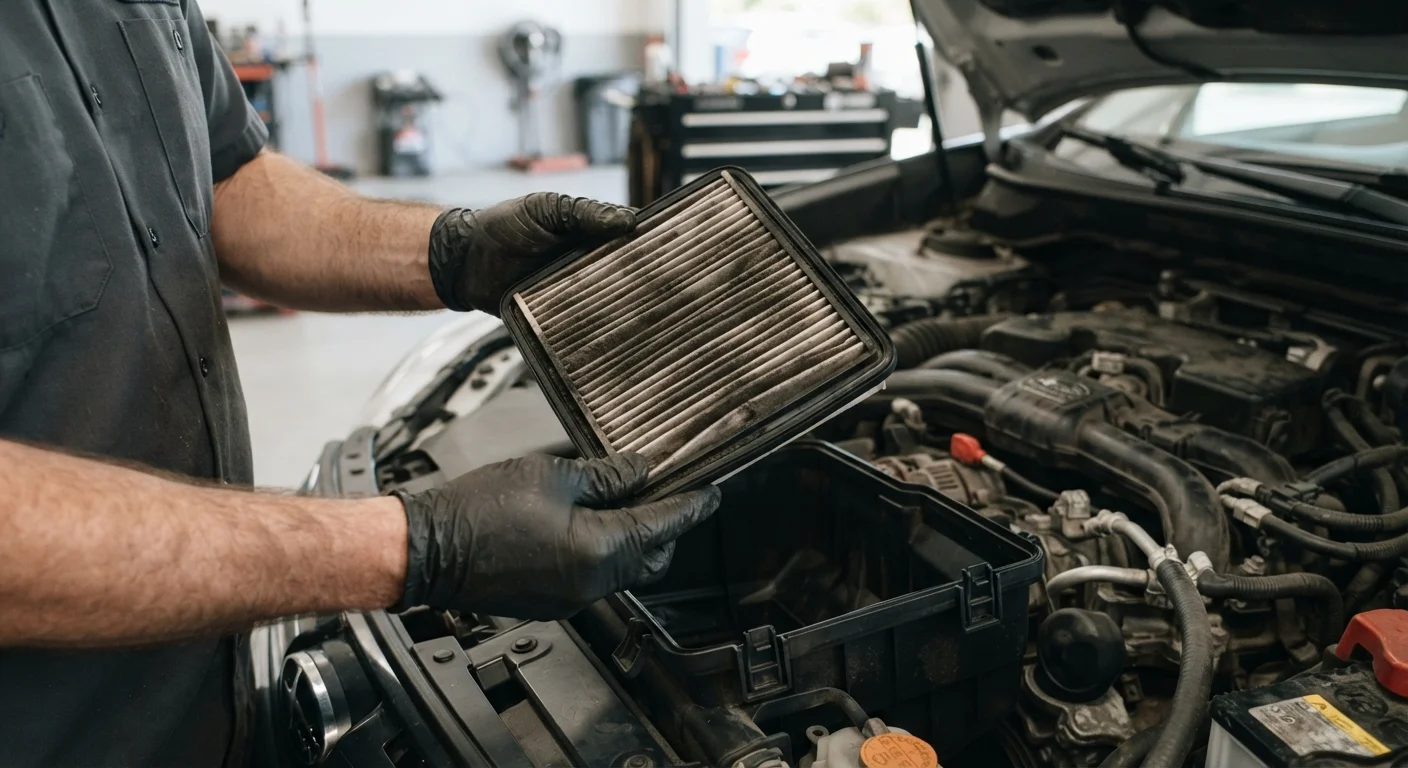
What the Air Filter Actually Does
Every time your engine runs, it pulls in large volumes of outside air to mix with fuel and power combustion. That air carries invisible passengers - road dust, pollen, sand particles, and other fine debris. The air filter sits at the entrance of the engine's air intake system and acts as a barrier, trapping contaminants before they can reach precision engine components like pistons, cylinders, and valves.
Think of it as the engine's first line of defense. Abrasive particles that bypass the filter can score cylinder walls and wear out components far faster than normal use would. Over thousands of miles, that damage accumulates - and it's largely preventable.
Don't Confuse Engine and Cabin Air Filters
Many vehicles have two separate air filters: the engine air filter described here, and a cabin air filter that cleans the air flowing into the passenger compartment. They serve different purposes, are located in different places, and have different replacement intervals. Check your owner's manual to understand which filter is which and when each needs attention.
Signs Your Air Filter May Need Replacing
Unlike a flat tire or a warning light, a dirty air filter rarely announces itself loudly. Its effects tend to be gradual and easy to dismiss. Here are the most common indicators:
- Reduced fuel economy: When airflow is restricted, the engine may compensate by burning more fuel to maintain output.
- Sluggish acceleration: Less air into the engine means less power on demand - you may notice the car feels slower to respond.
- Rough idle or engine misfires: A starved engine can struggle to maintain a smooth idle, particularly at low speeds.
- Check engine light: Modern vehicles monitor airflow with sensors; a blocked filter can trigger a mass airflow sensor fault code.
- Visible dirt on the filter: A quick visual inspection often tells the whole story - a grey or caked filter is overdue for replacement.
These symptoms overlap with other issues, so a mechanic's diagnosis is worthwhile if you're unsure of the cause.
Check at Every Oil Change
Building a quick air filter inspection into every oil change interval is an easy habit that prevents you from losing track of its condition. It takes less than a minute and ensures you're never driving too long on a clogged filter. Most technicians will check it automatically if you ask.
Replacement Intervals and What Affects Them
Manufacturer recommendations typically fall in the 15,000 to 30,000 mile range, but real-world conditions shift that window significantly. Drivers who frequently travel on gravel roads, construction zones, or in areas with high pollen counts or wildfire smoke will clog filters faster than someone driving mostly on clean urban highways.
A quick rule of thumb: check the filter at every oil change. It adds less than a minute to the inspection and gives you a clear picture of its condition. If you're replacing it yourself, your owner's manual will specify the correct part number - using the right filter for your engine is important for maintaining proper airflow and fit.
15,000-30,000 mi
Typical air filter replacement interval
General manufacturer guidance for most passenger vehicles under normal driving conditions.
~10 min
Time to replace most air filters
Estimated replacement time for most passenger vehicles when following manufacturer access instructions.
Routine filter changes are also a good reminder to audit other small maintenance habits. Skipping small items like this is one of the habits that quietly wear down your car long before any obvious symptoms appear.
Replacing It Yourself: What to Expect
For most passenger vehicles, replacing the air filter is one of the most straightforward maintenance tasks a driver can handle. The filter sits in a plastic airbox - typically located near the top of the engine - that can usually be opened by unclipping a few latches or loosening one or two screws.
The process generally involves: opening the airbox, removing the old filter, noting its orientation, placing the new filter in the same position, and securing the housing. No special tools are needed for the majority of vehicles. The whole job typically takes under 10 minutes.
If you're not comfortable working in the engine bay, any shop will replace it quickly and at low cost during a routine service visit. Either way, it's a small investment that protects a much larger one.
Frequently Asked Questions
Most manufacturers recommend replacing the engine air filter every 15,000 to 30,000 miles. If you regularly drive on unpaved roads, in dusty environments, or through heavy traffic, you may need to replace it more frequently. Check your owner's manual for the interval specific to your vehicle.
A severely clogged filter restricts airflow to the engine, which can reduce fuel economy, cause rough idling, and in extreme cases trigger the check engine light. Over time, a compromised filter may allow contaminants to bypass it and reach engine components, accelerating wear.
Yes. Most air filters are housed in a plastic airbox that can be opened by hand or with a basic screwdriver. Hold the filter up to light - if it appears dark, grey, or packed with debris, it's time to replace it. When in doubt, have a mechanic inspect it during your next service visit.
Replacing a heavily restricted filter can restore normal engine airflow, which may improve fuel economy back to its baseline. However, the gains depend on how clogged the old filter was. A modest improvement is possible, but a new filter alone is unlikely to produce dramatic mileage changes on a well-maintained vehicle.
For most vehicles, yes. The airbox is usually accessible without tools, and the replacement process typically takes under 10 minutes. Consult your owner's manual for the correct filter specification and location before starting.
The content on this site is for informational purposes only and is not a substitute for professional advice. Always consult a qualified professional for guidance specific to your situation.