

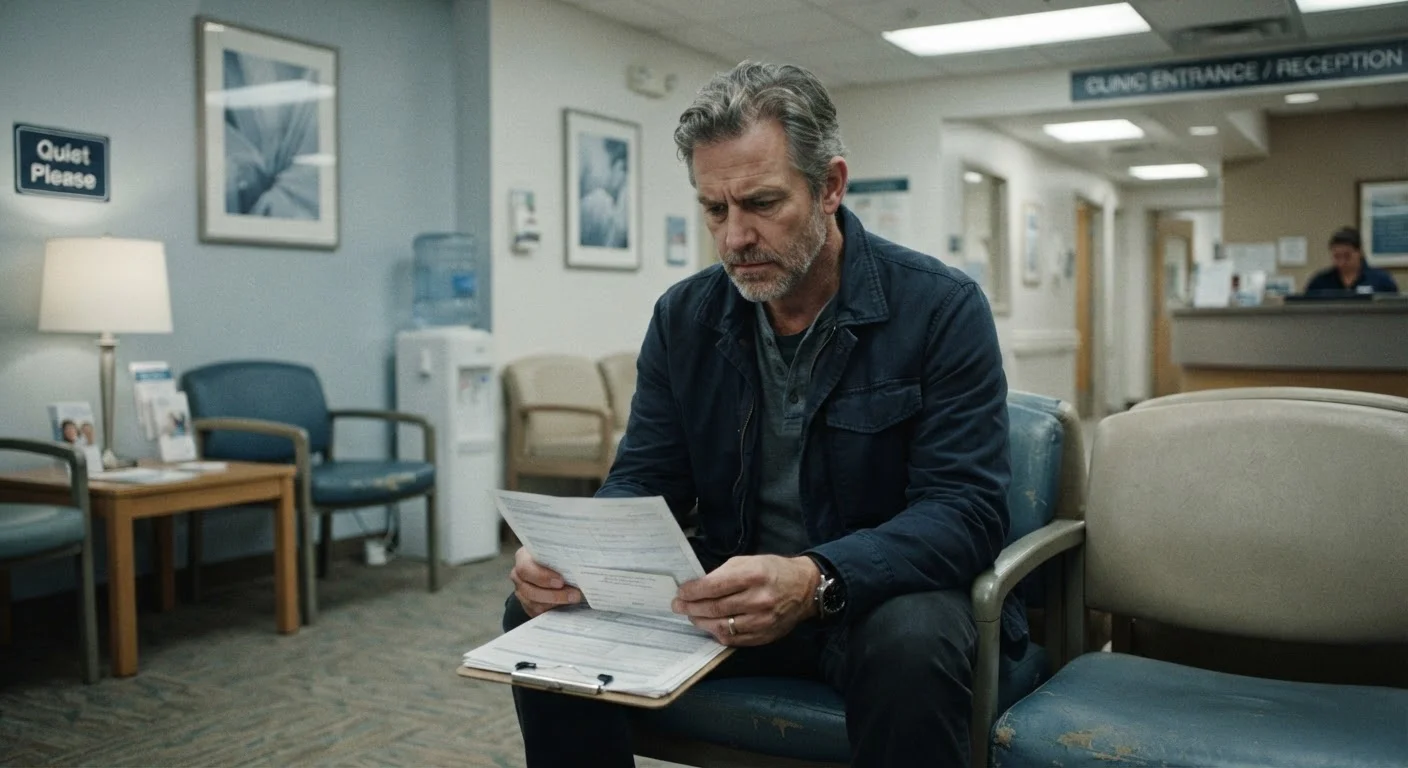
The Gap Is Real - and Well Documented
Data from the U.S. Centers for Disease Control and Prevention consistently shows that men are less likely than women to have visited a doctor in the past year - a gap that holds even when researchers account for pregnancy-related care visits. Men are also more likely to lack a regular primary care physician and more likely to wait until a health problem becomes urgent before seeking attention.
This isn't a minor statistical quirk. It translates into real consequences: conditions that are manageable when caught early - high blood pressure, elevated cholesterol, early-stage cancers - become significantly harder to treat when left unaddressed. Understanding why this pattern exists is the first step toward changing it.
~40%
Men without a regular primary care physician
According to surveys analyzed by the Kaiser Family Foundation, a substantial share of adult men in the U.S. report having no regular doctor they visit for routine care.
3-4x
Higher male suicide rate vs. women
The CDC reports that men die by suicide at roughly three to four times the rate of women in the United States, a figure that reflects the severe consequences of untreated mental health conditions.
~25%
Men who haven't seen a doctor in over a year
National health interview data consistently finds that a significant proportion of adult men go more than a year between any medical contact, compared to a smaller share of women.
What's Driving the Avoidance
The reasons men avoid medical care are layered. At the cultural level, many men are socialized from an early age to associate toughness with health and help-seeking with weakness. Phrases like 'walk it off' or 'push through it' are deeply embedded in many male social environments. This creates a psychological barrier that makes admitting to feeling unwell feel like a personal failure rather than a normal human experience.
Beyond cultural conditioning, practical barriers matter too. Men are less likely to have an established relationship with a primary care doctor. Many have fewer routine healthcare interactions in their younger adult years - unlike women, who often engage regularly with the healthcare system for reproductive health. Without that habit formed early, proactive care feels unfamiliar.
Fear also plays a documented role. Research suggests many men delay seeking care specifically because they are afraid of what a diagnosis might reveal. Avoidance becomes a way of maintaining a sense of control, even as the underlying risk grows.
“Men are socialized to be stoic, to endure pain and not complain. That same stoicism that might make someone a good soldier makes them a terrible patient.”
— Will Courtenay, Researcher and clinician specializing in men's health behavior
The Mental Health Dimension
The avoidance pattern is especially pronounced when it comes to mental health. Men are diagnosed with depression at lower rates than women - but this appears to reflect underreporting and underdiagnosis rather than a lower true prevalence. Men are more likely to externalize psychological distress through irritability, substance use, overwork, or withdrawal, rather than expressing emotional symptoms that would prompt a mental health referral.
The stigma around vulnerability is particularly sharp in the mental health space. Admitting to anxiety or depression can feel incompatible with deeply held ideas about male identity for many men. This silence has serious consequences: men account for a disproportionately high share of suicide deaths in the United States.
Breaking down the barriers to men's mental health support requires addressing both the cultural stigma and the clinical gap in how psychological distress is recognized and discussed with male patients.
What the Delay Actually Costs
The downstream health effects of consistent care avoidance are significant. Cardiovascular disease - already a leading cause of death among men - is strongly influenced by unmanaged risk factors like hypertension and high cholesterol, conditions that are often asymptomatic in early stages. Without regular screenings, these risks accumulate silently. See our overview of cardiovascular risk factors in men for more on how these patterns develop.
Similarly, colorectal and skin cancers - both of which have strong survival rates when detected early - are more likely to be diagnosed at advanced stages in men who forgo routine checkups. The screenings that catch these conditions early are not complex or time-consuming, but they require men to show up.
For a closer look at which specific preventive checks are most commonly skipped, our guide to annual health checks men tend to overlook outlines what a basic health review typically involves.
Starting Small Can Make a Real Difference
If establishing a full annual physical feels like a large step, starting with a single, low-barrier action - such as scheduling a blood pressure check at a pharmacy clinic or asking a doctor about one specific concern - can build the habit of engagement. Consistent, small steps toward routine care tend to produce lasting change more reliably than waiting for a significant health event to prompt action.
Shifting the Pattern
Change starts with normalizing healthcare as a routine part of adult life - not something reserved for emergencies. Social encouragement from partners, friends, and family members is one of the strongest documented predictors of men engaging with the healthcare system. When health conversations become less taboo in male peer groups, individual behavior follows.
Healthcare systems also have a role to play. Offering flexible appointment times, making screening accessible, and training providers to engage men who express reluctance all contribute to reducing the gap. Some workplaces have begun incorporating basic health screening into occupational health programs, which removes the barrier of having to initiate care independently.
Patterns built up over decades don't shift overnight, but awareness is a meaningful starting point. Men who recognize the cultural forces shaping their healthcare habits are better positioned to make deliberate choices - including the choice to show up for a checkup before a problem demands it.
This article is for general informational purposes only and does not constitute medical advice. Please consult a qualified healthcare professional for guidance specific to your health situation.
Frequently Asked Questions
Research points to a mix of cultural conditioning, fear of bad news, and practical barriers like work schedules or lack of a regular doctor. Many men are raised to view illness as weakness and self-reliance as a virtue, which discourages help-seeking behavior. These attitudes often persist into adulthood and become habitual.
When men delay seeking care, conditions such as high blood pressure, diabetes, and certain cancers are often diagnosed at later, harder-to-treat stages. Earlier detection through routine checkups is generally associated with better treatment options and outcomes. The cost of delay is measured both in health and, in many cases, in life expectancy.
Yes. Men are significantly less likely than women to seek help for depression, anxiety, or other mental health conditions. Stigma around emotional vulnerability plays a large role. Men are also more likely to express psychological distress through behavioral changes - irritability, risk-taking, or withdrawal - rather than recognizable emotional symptoms, which can make the problem less visible.
Social support - especially from partners, family members, and peers - is one of the strongest predictors of men engaging with healthcare. Normalizing conversations about health among men, reducing stigma around vulnerability, and making it easier to access care (such as after-hours appointments) all play a role. Healthcare providers trained in engaging male patients also make a measurable difference.
Men frequently skip cholesterol screenings, blood pressure checks, colorectal cancer screening, skin cancer evaluations, and diabetes risk assessments. Dental and vision care are also commonly neglected. Many of these screenings are recommended on a regular schedule starting in a man's 30s or 40s, depending on individual risk factors.
No - the pattern of men underusing healthcare relative to women is documented across many countries and healthcare systems. However, the degree and causes vary. In the U.S., additional factors like lack of health insurance, cost concerns, and fewer routine healthcare touchpoints for men can amplify the problem.
The content on this site is for informational purposes only and is not a substitute for professional advice. Always consult a qualified professional for guidance specific to your situation.