

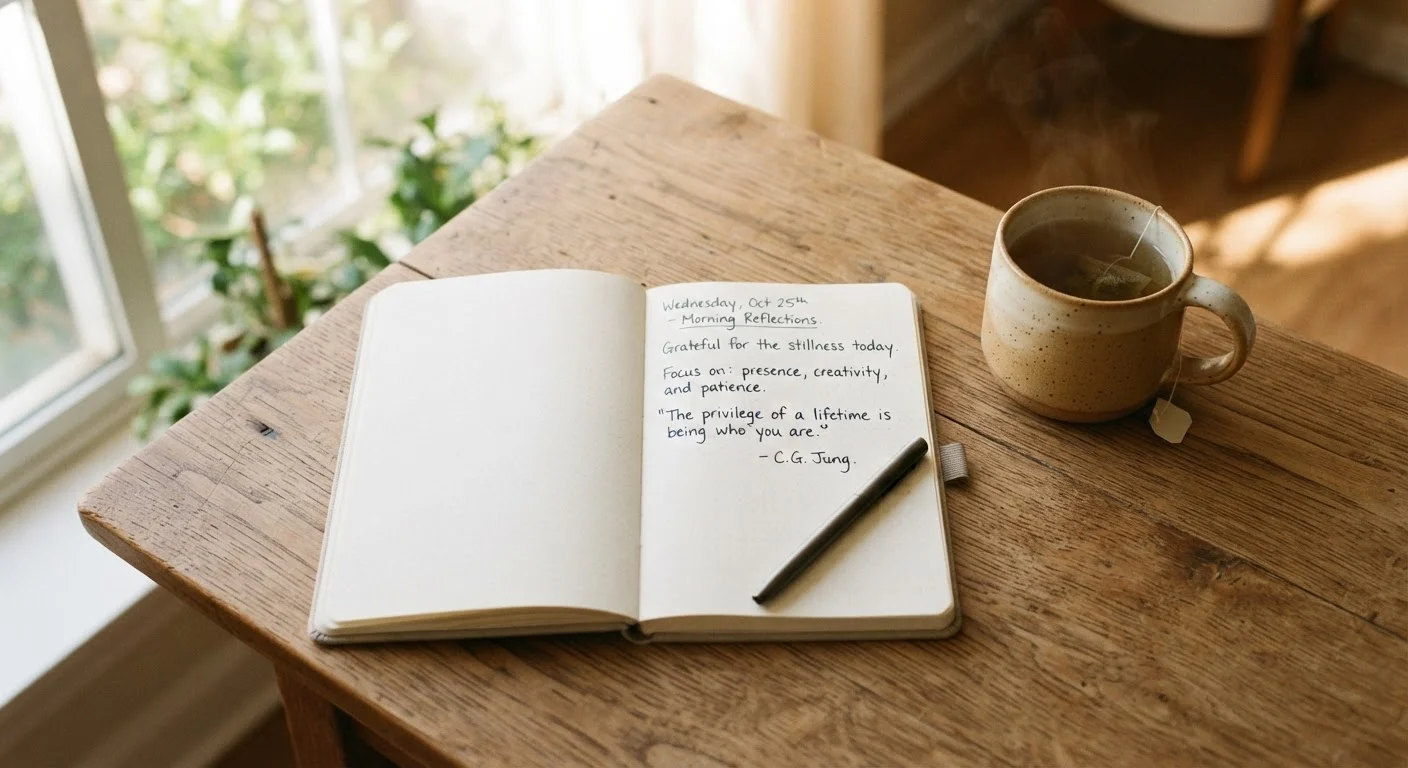
Why Journalling Is More Than a Diary
When most people picture journalling, they imagine recounting the day's events in a notebook. But structured journalling techniques have evolved considerably, with a growing body of research exploring their role in emotional regulation, stress processing, and self-awareness. If you're new to mental wellness practices, journalling offers a low-barrier starting point that requires nothing more than a pen and some quiet time.
The techniques below go well beyond the diary format. Each one targets a different aspect of inner life - from recognizing cognitive distortions to building a practice of gratitude. Think of this list as a menu: you don't need to use every approach, and trying a few over several weeks is a reasonable way to discover what resonates.
This article is general health information and is not a substitute for personalized advice from a qualified mental health professional. If you are experiencing significant distress, please reach out to a licensed provider.
Expressive Writing
Developed by psychologist James Pennebaker in the 1980s, expressive writing involves writing continuously about a stressful or emotionally significant experience - including your thoughts and feelings about it - for a set period, typically 15 to 20 minutes over several days. Multiple studies have explored its potential to reduce distress and improve mood, though effects vary and results are not universal.
The key distinction from diary writing is intentionality: you're not recounting events chronologically but excavating your emotional response to them. Avoid editing or worrying about grammar. The point is honest, unfiltered engagement with what you're carrying.
Expressive writing targets your emotional response to events, not just the events themselves.
Gratitude Journalling
Gratitude journalling involves regularly noting things - large or small - for which you feel genuinely appreciative. The research base here is reasonably well-established: consistent gratitude practice is associated with modest improvements in positive affect and life satisfaction, though it works best when the entries are specific and varied rather than repetitive.
A common pitfall is writing the same three items daily until the practice becomes rote. Varying the focus - one day a relationship, another a small sensory pleasure, another a personal strength - keeps the reflection meaningful. Three to five items per session is a widely used guideline, though quality matters more than quantity.
Specific, varied gratitude entries are more effective than generic repetition.
Cognitive Restructuring Journalling
Rooted in principles from cognitive behavioral therapy (CBT) - a well-researched psychological approach - this format helps you identify and examine unhelpful thought patterns. A typical structure: describe a situation, write down the automatic thought that arose, identify any cognitive distortions present (catastrophizing, all-or-nothing thinking, mind-reading), and then write a more balanced alternative interpretation.
This is not a DIY replacement for CBT with a trained therapist. Rather, it's a self-reflective practice that can help you notice recurring patterns in how you interpret events. If you find that a particular pattern keeps surfacing and is significantly affecting your daily life, that's a useful signal to discuss with a professional.
Noticing recurring thought patterns in writing is the first step toward examining them.
Mood and Symptom Tracking
Rather than narrative writing, this approach uses structured logs - rating mood, energy, sleep quality, or stress on a simple scale each day, sometimes with brief notes on contributing factors. Over weeks, patterns often emerge: certain days, situations, or habits that consistently correlate with better or worse states.
This kind of data can be genuinely useful in a clinical context as well. Sharing a mood log with a therapist or physician gives them a more detailed picture than memory alone typically provides. Women tracking menstrual cycles alongside mood may find particular value here - the cycle tracking overview covers how different tracking methods work and where each falls short.
Mood logs can reveal patterns that memory alone often misses.
Unsent Letter Writing
This technique involves writing a letter to someone - a person you're in conflict with, someone you've lost, or even a younger version of yourself - that you never intend to send. The exercise creates emotional distance that makes it easier to articulate feelings that are difficult to express directly, including grief, anger, or unresolved regret.
The value lies in externalizing emotions onto the page rather than cycling through them internally. There is no obligation to act on what you write or to share it with anyone. Some people find it helpful to re-read the letter after some time has passed; others prefer to discard it entirely after writing.
Writing a letter you'll never send can help articulate feelings that are hard to express aloud.
Stream-of-Consciousness (Morning Pages)
Popularized by Julia Cameron's The Artist's Way, morning pages involve writing three pages of longhand, free-flowing thought first thing in the morning - no topic, no structure, no filter. The practice is designed to clear mental clutter and surface ideas or concerns that might otherwise remain below conscious awareness.
It's worth noting that this technique is primarily associated with creative development rather than clinical mental health practice, and the evidence base differs from approaches like expressive writing or CBT-informed journalling. That said, many people report it as a useful reset at the start of the day, particularly for managing low-level anxiety or mental noise.
Unfiltered morning writing can help surface concerns that might otherwise stay below conscious awareness.
Building a Practice That Sticks
The format matters less than the consistency. Many people find that pairing journalling with an existing routine - morning coffee, an evening wind-down, or a lunch break - makes it easier to sustain. Setting a modest goal, such as three sessions per week rather than daily writing, reduces the pressure that can turn a helpful habit into another source of obligation.
Starting Small Is Perfectly Valid
You don't need a dedicated journal, a specific time of day, or lengthy sessions to benefit from structured writing. A few focused sentences using any of the above formats can be more useful than a long, unfocused entry. Start with one technique for two or three weeks before deciding whether it's working for you - most practices take time to show their value.
If you're navigating workplace stress, the mental wellness at work overview offers broader context on the factors that shape well-being in professional settings. And for a structured check-in that complements any journalling practice, see the emotional wellbeing audit, which covers sleep, stress, relationships, and daily functioning.
Journalling works best as one layer of a broader self-care approach. It is not a clinical intervention, and it is not appropriate as a replacement for therapy or medication where those are indicated. If you encounter terms in your reading - such as rumination, dysregulation, or burnout - the plain-language mental health reference guide defines these clearly without clinical jargon.
The content on this site is for informational purposes only and is not a substitute for professional advice. Always consult a qualified professional for guidance specific to your situation.