

Our Verdict
No single paint finish works everywhere. Your best choice depends on a room's function, how much traffic it sees, and whether moisture or staining is a concern. Matching finish to surface and use is what makes paint work longer and look better.
| Best for | Recommended |
|---|---|
| Ceilings and low-traffic formal rooms | Flat/Matte |
| Bedrooms, dining rooms, and living rooms | Eggshell or Satin |
| Kitchens, bathrooms, and laundry rooms | Semi-Gloss |
| Trim, doors, and cabinetry | Semi-Gloss or Gloss |
Why Paint Finish Matters More Than Color
Most homeowners spend considerable time choosing a paint color and relatively little time thinking about finish. That's understandable — color is the most visible choice. But finish determines how the paint actually performs over time. It affects how easily a wall cleans up after a scuff, how much moisture it can resist, and even how prominently it shows every bump and dent in the drywall.
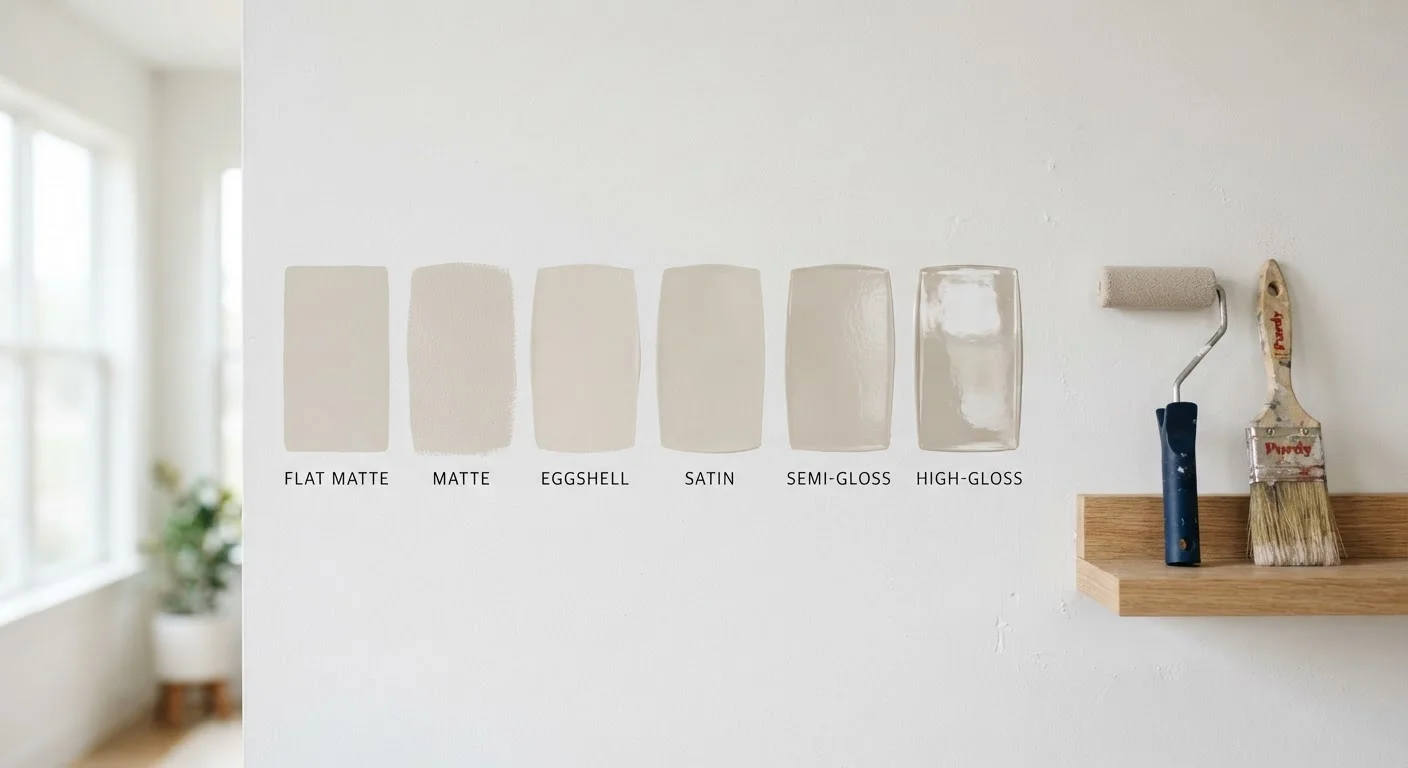
Paint finishes are categorized by their sheen level — essentially how much light they reflect. The higher the sheen, the more durable and washable the paint tends to be. The trade-off is that higher sheen also means more imperfections become visible. Understanding this spectrum helps you match the right finish to each room's specific demands.
The Five Main Finish Types Compared
Here's a breakdown of how the most common paint finishes stack up across key performance factors:
| Flat/Matte | Eggshell | Satin | Semi-Gloss | Gloss | |
|---|---|---|---|---|---|
| Sheen Level | None | Very low | Medium | Medium-high | High |
| Hides Imperfections | Excellent | Good | Moderate | Poor | Poor |
| Washability | Low | Moderate | Good | Very good | Excellent |
| Moisture Resistance | Poor | Low | Moderate | Good | Very good |
| Best Used On | Ceilings, formal rooms | Bedrooms, dining rooms | Living areas, hallways | Kitchens, bathrooms, trim | Doors, cabinets, trim |
| Ease of Touch-Up | Excellent | Good | Moderate | Difficult | Very difficult |
Use this as a general guide. Actual performance can vary by paint formulation, surface preparation, and number of coats applied.
Room-by-Room Recommendations
Ceilings
Flat or matte finish is the standard choice for ceilings. The non-reflective surface minimizes the appearance of roller marks and texture irregularities, which are especially obvious overhead under direct light.
Bedrooms and Living Rooms
Eggshell offers a very subtle sheen that's more forgiving on imperfect walls than satin while still being somewhat wipeable. Satin is a step up in durability and suits living rooms that see regular activity. Either finish holds up well in spaces that don't face heavy moisture or grease.
Kitchens and Bathrooms
These rooms demand moisture-resistant finishes. Semi-gloss is the workhorse here — it repels humidity, tolerates cleaning products, and resists the mildew growth that flat paint can harbor. It also reflects light well in smaller spaces, which is a bonus in compact bathrooms.
Test Before You Commit
Paint a small sample patch — at least 12 inches square — and let it dry fully before judging the sheen. Paint looks different wet versus dry, and lighting conditions in the room will affect how the finish reads. Evaluate the sample at different times of day before purchasing a full quantity.
Hallways and Children's Rooms
High-traffic areas benefit from satin or semi-gloss finishes that can handle repeated wiping. Crayon, handprints, and scuffs are facts of life in kids' rooms, so a more washable finish saves effort over time.
Trim, Doors, and Cabinets
Semi-gloss and gloss finishes are conventional choices for woodwork and cabinetry. The higher sheen provides visual contrast against walls and stands up to the friction that doors and cabinet fronts endure daily.
Common Mistakes to Avoid
Don't Use High Sheen on Damaged Walls
Semi-gloss and gloss finishes amplify surface flaws rather than hiding them. If your walls have dings, cracks, or uneven texture, address those issues before applying a high-sheen paint. Skipping repairs and using a shinier finish to compensate will typically make imperfections more noticeable, not less.
Beyond finish selection, surface preparation is often overlooked. Paint applied over dirty, unprimed, or poorly patched surfaces won't perform to its full potential regardless of sheen level. Always clean walls, fill holes, and prime bare surfaces before painting. When switching from a higher sheen to a lower one — say, from semi-gloss to eggshell — light sanding helps the new paint adhere evenly.
Finally, resist the urge to use leftover paint from another room in a spot where the finish doesn't fit. Using flat paint in a bathroom to use it up, for example, can lead to peeling and mold issues within months.
The content on this site is for informational purposes only and is not a substitute for professional advice. Always consult a qualified professional for guidance specific to your situation.