

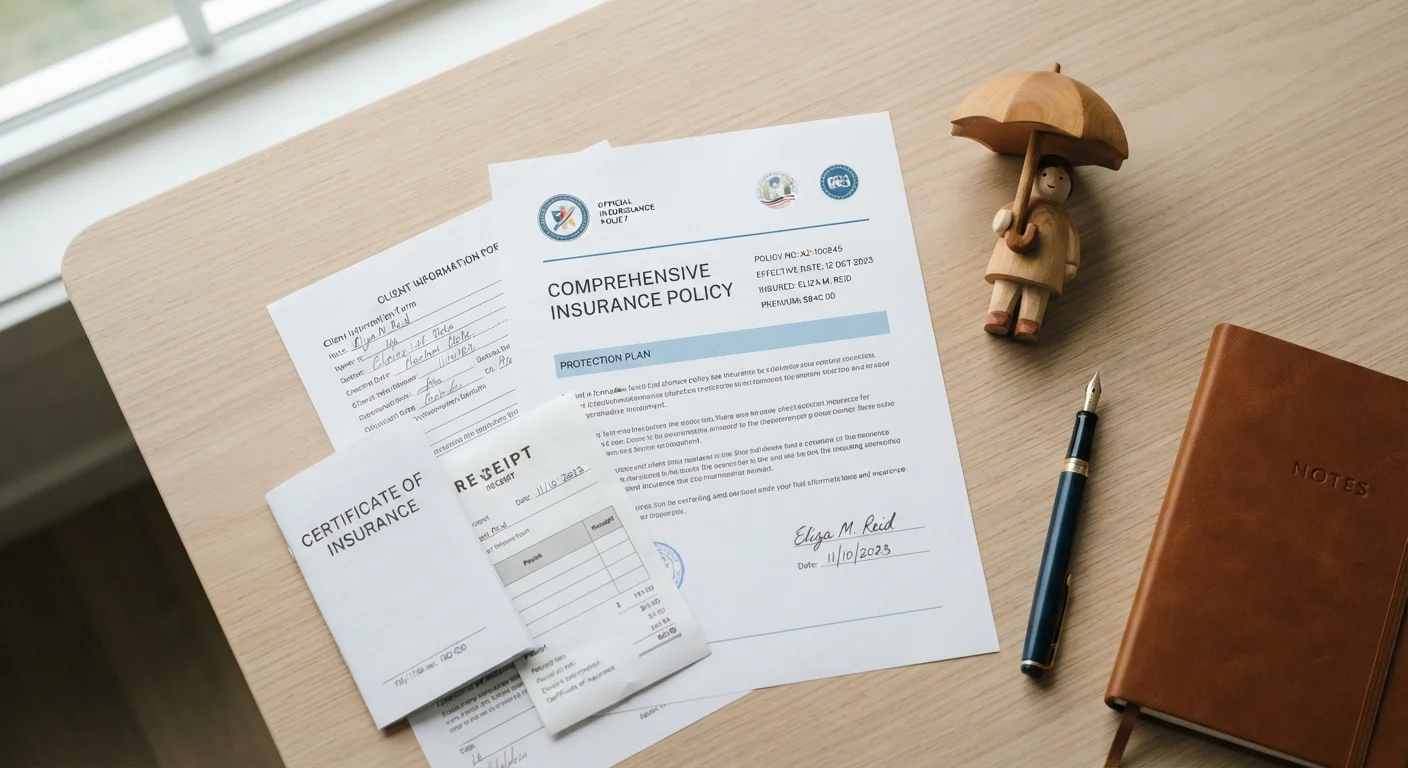
Why Insurance Exists — and Why It Matters
Insurance is a financial tool built on one straightforward idea: spread risk across many people so that no single person faces a catastrophic loss alone. You pay a relatively small, predictable premium each month or year. In return, the insurer agrees to cover large, unpredictable costs — a wrecked car, a hospital stay, a house fire — up to the limits you've chosen.
Without insurance, a single bad event can wipe out savings, create debt, or leave a family without a home. That's why lenders typically require homeowners insurance before approving a mortgage, and why nearly every state requires auto liability coverage before you can legally drive. For a broader look at how insurance connects to your overall financial picture, our guide on credit and banking basics shows how protection products fit alongside credit and savings decisions.
91%
U.S. adults with some form of insurance
According to LIMRA and industry survey data, the vast majority of American adults carry at least one insurance policy, most commonly auto or health.
40%
Renters without renters insurance
Industry estimates consistently show a large share of renters forgo coverage, leaving personal belongings and liability unprotected.
$1,000+
Typical annual homeowners premium
The Insurance Information Institute reports that average homeowners insurance premiums vary widely by state but commonly exceed $1,000 per year.
The Main Types of Insurance Coverage
Insurance falls into a handful of core categories, each protecting against a distinct set of risks:
- Health insurance — Covers medical care costs, including doctor visits, prescriptions, and hospital stays. Plans vary widely in what they pay and what they require you to pay out of pocket.
- Auto insurance — Liability coverage pays for damage or injury you cause to others; collision and comprehensive cover your own vehicle. If you're weighing a vehicle purchase, our car buying guide explains how insurance factors into the total cost of ownership.
- Homeowners or renters insurance — Homeowners policies protect the structure and personal belongings and include liability coverage. Renters policies cover belongings and liability but not the building itself.
- Life insurance — Pays a benefit to named beneficiaries if you die. Term life covers a set number of years; permanent life builds cash value over time.
- Disability insurance — Replaces a portion of income if illness or injury prevents you from working.
For a deeper breakdown of what each category covers — including travel and income protection — see our article on types of insurance coverage.
When comparing policies, look at the coverage limit and exclusions list first — not just the premium. The cheapest policy often has the narrowest coverage.
Consumers frequently discover coverage gaps only after filing a claim, at which point there's no opportunity to correct the decision.
Set a calendar reminder to review all your policies once a year, ideally around renewal time, to make sure your coverage still matches your actual assets and situation.
Life changes — new property, a raise, dependents — shift your risk exposure, and an outdated policy may leave real gaps.
Key Terms Every Policyholder Should Know
Insurance contracts use specific language that affects your real costs and rights. These are the terms that matter most:
- Premium
- The amount you pay — monthly, quarterly, or annually — to keep your policy active.
- Deductible
- The amount you pay out of pocket before the insurer pays anything on a claim. Higher deductibles usually mean lower premiums.
- Coverage limit
- The maximum dollar amount the insurer will pay for a covered loss.
- Exclusion
- Specific events or circumstances the policy does not cover. Always read the exclusions section carefully.
- Declarations page
- The summary page of your policy listing your name, covered property, limits, and premium. It's the fastest way to check what you actually have.
- Claim
- A formal request you submit to the insurer to receive payment for a covered loss.
Policies Vary Significantly by State
Insurance is regulated at the state level in the U.S., which means minimum coverage requirements, available policy types, and consumer protections differ depending on where you live. Your state insurance commissioner's website is a reliable resource for understanding rules that apply to you specifically.
How to Buy a Policy: What the Process Actually Looks Like
Buying insurance involves a few consistent steps regardless of the type:
- Assess what you need to protect. Consider your assets, income, dependents, and existing coverage gaps. This shapes which policies matter most.
- Gather quotes from multiple insurers. Premiums for identical coverage can vary significantly between companies. State insurance commissioners often have tools to help consumers compare options.
- Read the policy documents before signing. The declarations page, coverage summary, and exclusions section are your priorities. Ask an agent or licensed broker to explain anything unclear.
- Understand your payment and renewal terms. Know when your premium is due, whether it auto-renews, and how much notice you'll receive of rate changes.
Licensed agents represent a single insurer; independent brokers can quote from many. Neither relationship guarantees the lowest price, but both can answer coverage questions. For guidance on stretching your coverage dollar without cutting essential protection, see our article on getting the most from your insurance policy.
Ask About Discounts Before You Finalize
Most insurers offer discounts for bundling multiple policies (such as auto and home), maintaining a claims-free history, or installing safety features like smoke detectors or anti-theft devices. Ask specifically what discounts you qualify for — they aren't always applied automatically.
Filing a Claim: Step by Step
Knowing the claims process in advance makes a stressful situation easier to manage:
- Document the loss immediately. Take photographs or video. Save receipts, police reports, or medical records as applicable.
- Notify your insurer promptly. Most policies require timely notice. Delays can complicate or reduce your payout.
- Work with the claims adjuster. An adjuster — employed by or contracted with your insurer — will assess the damage and determine what the policy covers.
- Review the settlement offer carefully. If you believe the offer is too low, you can dispute it. Most states have a formal appeal process, and you can hire a public adjuster at your own expense to advocate on your behalf.
- Understand subrogation. If a third party caused your loss, your insurer may pay you and then seek reimbursement from that party — this is standard practice and generally doesn't affect your claim.
Never Misrepresent Facts on an Application or Claim
Providing false or misleading information when applying for insurance or filing a claim is considered insurance fraud and can result in policy cancellation, denial of your claim, and potential legal consequences. Always answer application questions completely and accurately.
Common Pitfalls and How to Avoid Them
Even well-intentioned policyholders make mistakes that cost them when it matters most:
- Under-insuring to save on premiums. Choosing coverage limits too low to cover actual replacement costs leaves a gap you'll have to fund yourself after a loss.
- Not updating coverage after life changes. Marriage, a new home, a new vehicle, or a growing family typically require a policy review. What covered you two years ago may not cover you now.
- Missing the exclusions. Flood damage is excluded from most standard homeowners policies, for example. Separate flood insurance is available but must be purchased independently.
- Letting policies lapse. A gap in coverage — even a short one — can affect your rates, your eligibility, and your financial exposure.
- Filing small claims unnecessarily. Frequent small claims can raise your premiums. For minor losses close to your deductible, it may cost less to pay out of pocket.
Managing insurance well is part of a broader personal finance strategy. Our saving and debt hub covers how to build the financial cushion that makes smart coverage decisions possible.
Don't Rely on Memory for Policy Details
Keep digital or physical copies of all your policy documents in a place you can access quickly — including after a disaster. After a major loss is the worst time to discover you can't locate your declarations page or claims contact number.
This article provides general information about insurance concepts for educational purposes only. It is not personalized insurance, financial, or legal advice. Coverage terms, exclusions, and regulations vary by insurer, policy, and state. Always read your policy documents carefully and consult a licensed insurance agent, broker, or financial adviser before making decisions about your own coverage.
The content on this site is for informational purposes only and is not a substitute for professional advice. Always consult a qualified professional for guidance specific to your situation.