

What a Sinking Fund Actually Is
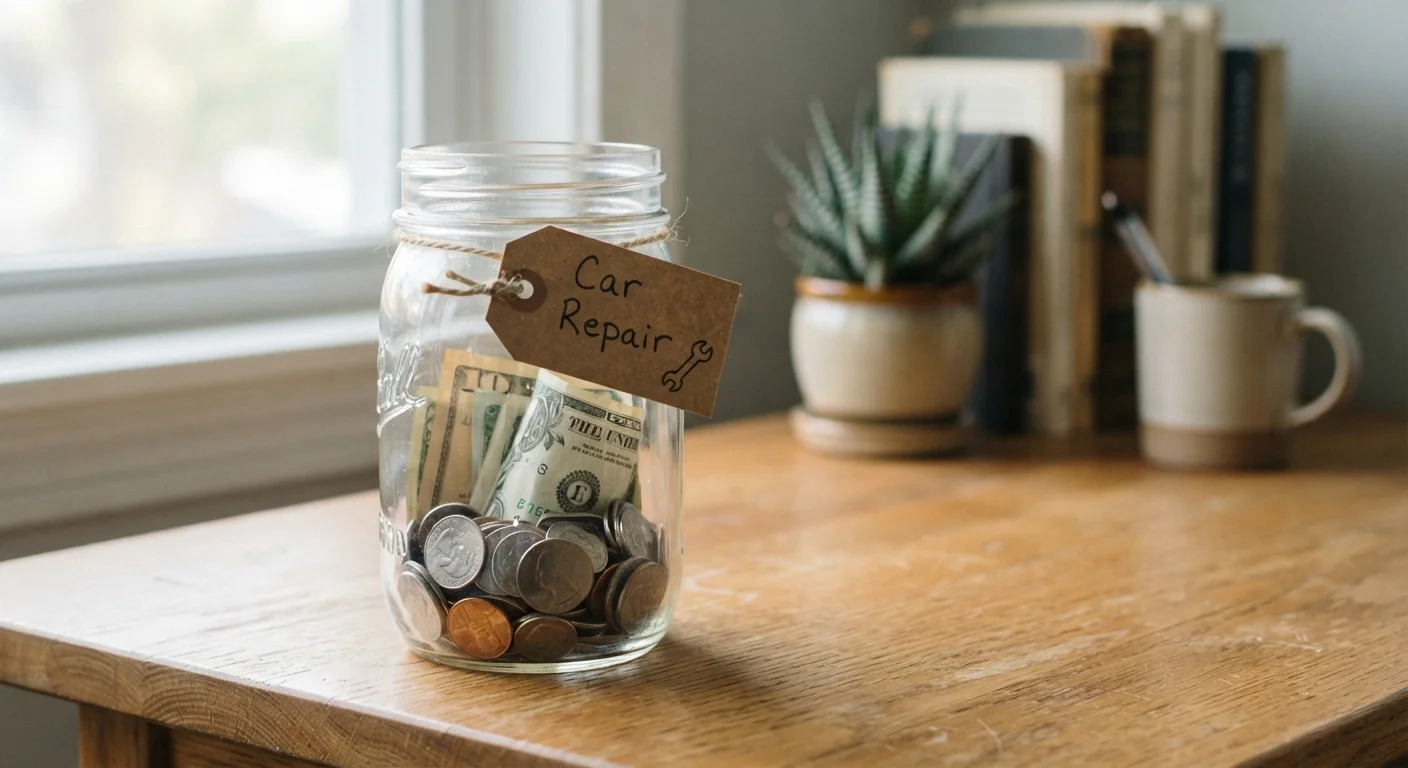
Most people already use sinking funds without knowing the name. If you've ever set aside a little money each paycheck specifically for holiday gifts, a car repair, or a planned vacation — that's exactly what a sinking fund is.
The core idea: you identify an expense you know is coming, estimate what it will cost, decide when you'll need the money, and then save a small fixed amount at regular intervals until you get there. By the time the bill arrives, the money is already waiting.
Unlike general savings, a sinking fund is earmarked. The money has a job. That specificity is what makes it useful — it removes ambiguity about what savings are for and reduces the temptation to spend the balance on something else.
The Name Sounds More Complex Than the Concept
"Sinking fund" is borrowed from accounting and corporate finance, where it describes money set aside to retire debt. In everyday personal finance, it simply means saving in advance for a specific planned expense. Don't let the name add confusion — the underlying habit is one most people can practice regardless of income level or financial experience.
How Sinking Funds Differ from Emergency Funds
It's easy to confuse sinking funds with emergency funds, but they serve different purposes. An emergency fund is a financial buffer for genuinely unexpected events — a sudden job loss, an unplanned medical expense, a broken appliance you had no reason to anticipate. The defining feature is unpredictability.
A sinking fund, by contrast, is for costs that are foreseeable. Your car will eventually need new tires. Your home insurance renews every year. You know the holidays come every December. These aren't surprises — they're just irregular.
Using emergency savings to cover predictable expenses is a common pattern that quietly erodes financial stability. Keeping the two separate helps each fund do its job properly.
Label Your Accounts to Reduce Temptation
If your bank allows account nicknames, naming a savings account after its purpose — "Car Fund" or "Vacation 2026" — makes it easier to leave the balance alone. Seeing the label before you transfer money out adds a small but useful friction that can protect the fund's intended use.
Common Uses for Sinking Funds
Sinking funds can be set up for almost any known future expense. Some of the most common include:
- Vehicle maintenance and registration — oil changes, tires, annual fees
- Home repairs and upkeep — roof work, appliance replacement, HVAC servicing
- Annual or semi-annual insurance premiums — paid in full to avoid installment fees
- Holiday and gift spending — planned well in advance to avoid debt
- Travel and vacations — so the trip doesn't go on a credit card
- Medical deductibles or dental work — if predictable procedures are on the horizon
The common thread is that all of these are known (or reasonably anticipated) costs with a rough price tag and a general timeline. That's what makes them suitable for a sinking fund rather than an emergency reserve.
~$400
Emergency expense many Americans can't cover
Federal Reserve surveys have consistently found that a significant share of U.S. adults would struggle to cover an unexpected $400 expense without borrowing — a gap that sinking funds for known costs can help narrow.
1 in 3
Americans with no dedicated savings
Various consumer finance surveys indicate roughly one-third of U.S. adults have little to no savings set aside, making irregular but predictable expenses a common source of financial stress.
How to Set One Up
Setting up a sinking fund doesn't require special accounts or software. The math is straightforward:
- Name the expense and estimate the total cost.
- Decide when you'll need the money.
- Divide the total by the number of months (or pay periods) until then.
- Set aside that amount regularly — ideally by automating the transfer so it happens without requiring a decision each time.
For example, if your car registration costs $240 and renews in 12 months, setting aside $20 per month covers it. If you want to save $900 for a vacation in 9 months, that's $100 per month.
Many people find it helpful to keep sinking funds in a separate savings account — or even multiple labeled accounts — so the balance is clearly distinct from everyday spending money. That separation also makes it easier to track progress.
For a broader look at how this fits into your overall approach to saving, see saving strategies compared and building a saving habit for practical frameworks.
Why This Approach Works
Sinking funds work partly because they make irregular costs feel manageable. A $1,200 car repair feels overwhelming when it lands without warning. The same $1,200 feels much less stressful when you've been putting $100 aside for a year specifically because you knew the repair was coming.
There's also a psychological benefit: earmarked money is harder to rationalize spending on other things. Research in behavioral economics has long noted that people treat money differently depending on how it's mentally categorized — a concept sometimes called mental accounting. Sinking funds formalize that categorization, which can reduce the kind of subtle habits that undermine saving progress over time.
If your budget is stretched, even small sinking fund contributions can reduce the financial shock of irregular expenses. Saving on a tight budget covers principles that apply even when contributions have to be modest.
This article is for general informational purposes only and does not constitute personalized financial advice. For guidance specific to your financial situation, consider consulting a licensed financial adviser.
Frequently Asked Questions
A sinking fund is for costs you know are coming — like annual car registration or a vacation. An emergency fund covers surprises you can't predict, like a job loss or an unexpected medical bill. Both serve important but distinct roles in a household budget.
Most people keep sinking funds in a savings account, sometimes a separate one labeled for that purpose. High-yield savings accounts are commonly used because they're accessible and may earn a small amount of interest while the money sits. A licensed financial adviser can help you evaluate options suited to your situation.
Divide the total amount you need by the number of months before you'll need it. For example, if you need $600 in 12 months, you'd aim to save $50 per month. Your specific budget will determine what's workable for you.
Yes. Many people run several sinking funds at once — one for car maintenance, one for holiday gifts, one for a home repair project. Each fund has a distinct purpose and its own contribution amount and timeline.
They're related but not the same. A budget category tracks how much you plan to spend in a given period. A sinking fund is an actual pool of saved money accumulating over time for a future payment. The sinking fund is what makes irregular expenses show up smoothly in your budget.
The content on this site is for informational purposes only and is not a substitute for professional advice. Always consult a qualified professional for guidance specific to your situation.