

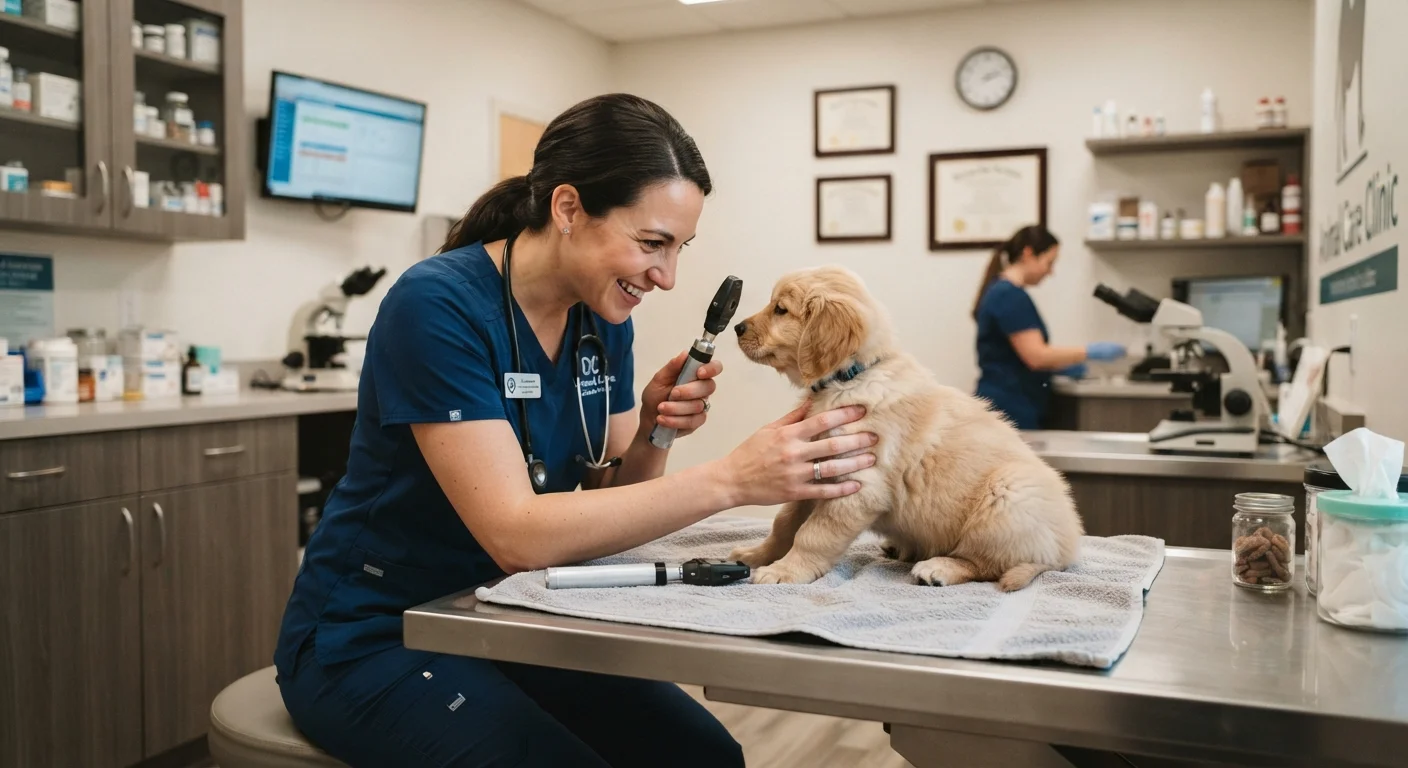
Core vs. Non-Core Vaccines: What the Terms Mean
Veterinarians and organizations like the American Animal Hospital Association (AAHA) divide dog vaccines into two categories: core and non-core.
Core vaccines are recommended for virtually every dog, regardless of lifestyle, because the diseases they prevent are widespread, serious, or transmissible to humans. Core vaccines include:
- Rabies — required by law in most U.S. states
- Distemper — attacks the respiratory, gastrointestinal, and nervous systems
- Parvovirus — a highly contagious and often fatal gastrointestinal disease
- Adenovirus (hepatitis) — causes infectious canine hepatitis
These four are commonly delivered together in a combination shot called DAP or DHP.
Non-core vaccines are recommended based on a dog's individual risk factors — where they live, what they do, and who they interact with. Examples include Bordetella (kennel cough), Leptospirosis, Lyme disease, and Canine Influenza. Your veterinarian is the right person to assess which non-core vaccines make sense for your dog's specific situation.
Core vaccine
A vaccine recommended for all dogs because the disease it prevents is serious, widespread, or a public health risk. Examples include rabies, distemper, parvovirus, and adenovirus.
Non-core vaccine
A vaccine given based on a dog's individual lifestyle and risk factors — such as exposure to other dogs, wildlife, or certain geographic regions. Examples include Bordetella and Lyme disease.
Maternal antibodies
Protective proteins passed from a mother dog to her puppies through colostrum (early milk). They provide temporary immunity but fade in the first weeks of life, which is why a vaccine series is needed.
Titer test
A blood test that measures the level of antibodies a dog has against a specific disease. It can help assess whether a dog still has protective immunity, though it does not replace all legally required vaccines.
Booster
A follow-up dose of a vaccine given after the initial series or a previous booster to maintain a dog's immunity over time.
DAP / DHP
Common abbreviations for combination vaccines that protect against Distemper, Adenovirus (Hepatitis), and Parvovirus in a single injection.
The Puppy Vaccine Series Explained
Puppies receive a series of vaccines rather than a single shot because of how their immune systems develop. Newborn dogs carry protective antibodies from their mother's milk — known as maternal antibodies — but these gradually decline over the first weeks of life. The problem is that no one can predict exactly when a puppy's maternal antibodies drop low enough for a vaccine to work. To bridge that gap reliably, vets administer vaccines every 3–4 weeks between ages 6 and 16 weeks.
| Puppy series start age | 6–8 weeks (AAHA Canine Vaccination Guidelines) |
| Puppy series completion age | 14–16 weeks (AAHA Canine Vaccination Guidelines) |
| Rabies: legally required in most U.S. states | Yes (State and local laws vary; verify with your vet) |
| Typical adult DAP booster interval | Every 3 years (AAHA Canine Vaccination Guidelines (after one-year booster)) |
| Rabies booster interval (adult) | 1 or 3 years (product- and law-dependent) (Depends on vaccine label and local regulation) |
| Non-core booster frequency | Annual or semi-annual (varies by vaccine) (Varies by disease and manufacturer recommendation) |
A typical puppy schedule looks like this:
| Age | Vaccines Typically Given |
|---|---|
| 6–8 weeks | DAP (first dose) |
| 10–12 weeks | DAP (second dose), Bordetella (if applicable) |
| 14–16 weeks | DAP (third dose), Rabies (first dose) |
| 12–16 months | DAP booster, Rabies booster |
The final dose at 14–16 weeks is critical — the series isn't complete until then. Skipping or stopping early leaves gaps in protection.
This article provides general health information for educational purposes and is not a substitute for individualized veterinary advice. Always consult a licensed veterinarian for guidance specific to your dog.
Adult Dog Boosters and Ongoing Schedule
Once a dog completes the puppy series, vaccinations shift to a booster schedule. The frequency depends on the vaccine:
- Rabies: After the initial booster at 12–16 months, subsequent doses are given every 1 or 3 years depending on the vaccine product used and local law.
- DAP (core combination): AAHA guidelines generally support a 3-year interval for adult dogs after the one-year booster, though your vet may adjust this based on your dog's health history.
- Non-core vaccines (e.g., Bordetella, Leptospirosis): Many require annual or even semi-annual boosters due to shorter duration of immunity.
Some owners ask about titer testing — a blood test that measures existing antibody levels — as an alternative to automatic re-vaccination. While titers can be informative, they are not universally accepted as a substitute for legally required vaccines like rabies. Discuss this option with your vet if you have concerns about over-vaccination.
Vaccination is one part of a broader preventive care picture. See our overview of dog ownership costs for a realistic sense of what routine vet care typically involves over a dog's lifetime. If you also care for a cat, the cat preventive health checklist follows a similar structure and may be a helpful reference.
The content on this site is for informational purposes only and is not a substitute for professional advice. Always consult a qualified professional for guidance specific to your situation.