

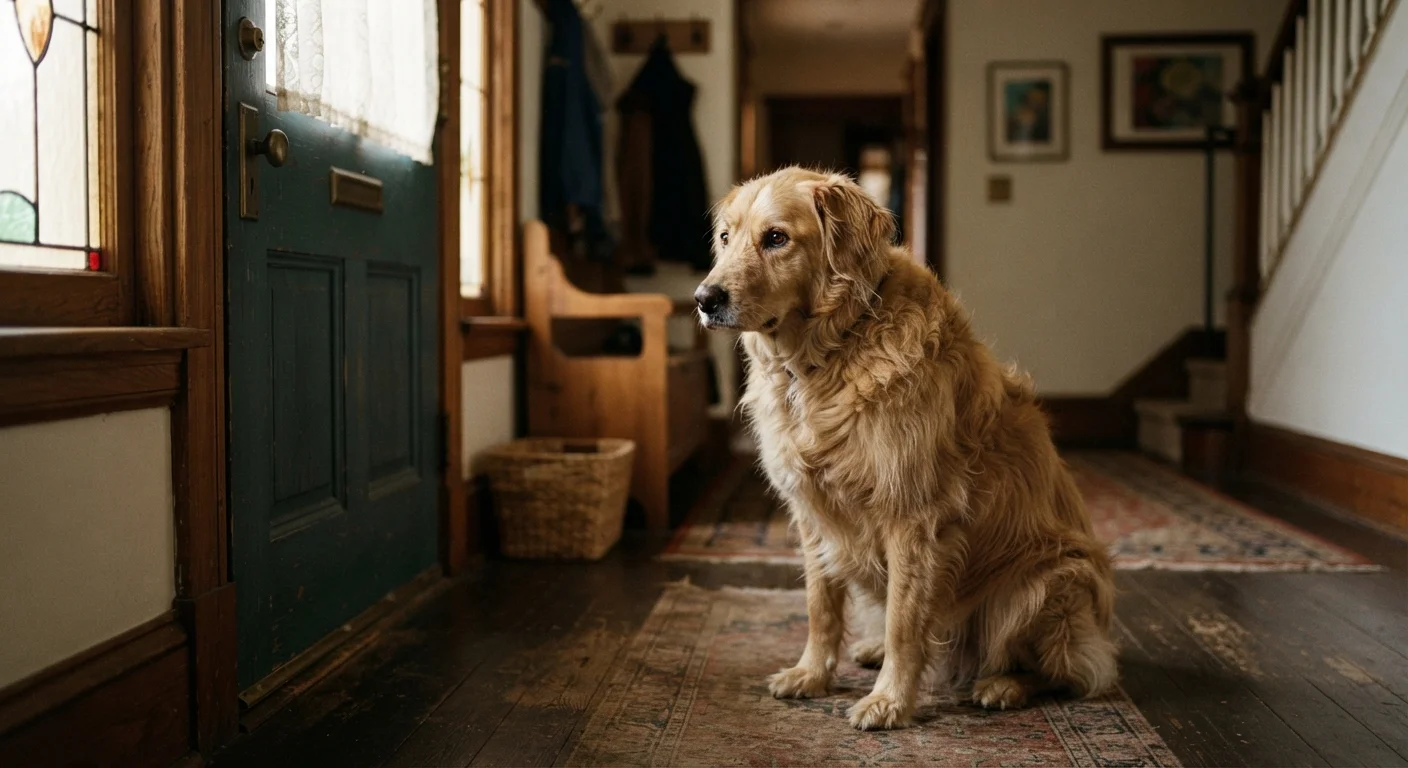
What Separation Anxiety Actually Looks Like
Separation anxiety doesn't always announce itself obviously. Some dogs destroy furniture; others pace, drool excessively, or lose control of their bladder within minutes of being alone. The key diagnostic feature is that these behaviors occur specifically during or in anticipation of separation — not as a general pattern throughout the day.
Common signs include:
- Destructive behavior focused near exits (doors, windows)
- Excessive barking, whining, or howling when alone
- House soiling despite being reliably housetrained
- Frantic greeting behaviors when you return
- Signs of distress as you prepare to leave — pacing, trembling, or following you room to room
- Refusal to eat when left alone
Because some of these behaviors overlap with other issues, it's worth recording your dog on video after you leave. What you see in that footage often tells a more accurate story than what you find when you return. You may also want to learn to read your dog's body language to catch early stress signals you might otherwise miss.
Not All Alone-Time Distress Is Separation Anxiety
Some dogs are distressed by being away from a specific person (attachment-figure anxiety) rather than being alone in general. Others show anxiety in response to sounds or environmental changes that happen to occur when owners are away. A thorough behavioral assessment helps clarify the underlying cause, which shapes which treatment approach will be most effective.
Separation Anxiety vs. Boredom: An Important Distinction
These two issues are frequently confused, but they require very different responses. A bored dog is understimulated — more exercise, enrichment, or mental engagement typically helps. A dog with separation anxiety is in a fear state, and simply tiring them out before you leave doesn't resolve the underlying panic.
The clearest distinguishing factor is when the behavior occurs. Boredom-driven destruction can happen anytime. Separation anxiety behaviors cluster around departure and absence. A dog who chews the couch on a Saturday afternoon while you're home is not showing separation anxiety — a dog who chews only when you're gone almost certainly is.
It's also worth noting that some dogs show what's called simulated separation anxiety — behavior that looks similar but is rooted in habit and low impulse control rather than genuine panic. A certified professional dog trainer can help distinguish between the two.
~17%
Dogs estimated to have separation anxiety
Research published in veterinary behavioral journals suggests roughly 14–20% of dogs seen in clinical settings display separation-related behaviors significant enough to warrant diagnosis.
Top 3
Most common reason dogs are surrendered to shelters
Behavioral issues including separation anxiety consistently rank among the leading reasons owners cite when surrendering dogs, according to shelter intake data.
What the Research Says About Effective Treatment
The most well-supported approach to separation anxiety is systematic desensitization — a gradual, structured process of exposing your dog to departures in very small, manageable increments so they learn that being alone is safe. This is paired with counterconditioning, which works to change the emotional response to alone-time from negative to neutral or positive.
Practically, this means starting with absences so brief they don't trigger anxiety — sometimes just seconds — and building up over weeks or months. Rushing the process, or returning when a dog is already distressed, can inadvertently reinforce the panic.
“Separation anxiety is one of the most emotionally distressing conditions a dog can experience. It's not a training failure — it's a welfare issue that deserves the same compassionate, evidence-based approach we'd apply to any other anxiety disorder.”
— Dr. Karen Overall, Veterinary behaviorist and author of clinical manuals on canine behavioral medicine
Punishment is not part of any evidence-based protocol. A dog who has soiled the floor in a panic state while you were away does not understand why it's being scolded — and adding fear on top of fear only worsens the condition. This is why understanding the mechanism behind the behavior matters so much before responding to it.
For dogs with moderate to severe anxiety, a veterinarian may recommend anti-anxiety medication alongside behavior modification. Medication can lower the dog's baseline stress level, giving the behavioral work a better chance to take hold. This is a conversation best had with your vet, and ideally with a board-certified veterinary behaviorist.
If you're still in the early stages of building a bond with your dog, see our guide to what new dog owners need to know — early attachment patterns can influence how separation anxiety develops.
Practical Steps You Can Take at Home
While professional guidance is often necessary for moderate to severe cases, there are evidence-informed steps owners can begin on their own for milder anxiety:
- Reduce departure drama. Low-key goodbyes and arrivals prevent you from inadvertently amplifying your dog's emotional state around your comings and goings.
- Practice absences during the day. Leave briefly, return calmly before anxiety peaks, and repeat. The goal is to reframe alone-time as uneventful.
- Create positive alone-time associations. A food-stuffed puzzle toy given only when you leave can shift the emotional tone around departures.
- Avoid inadvertently reinforcing distress. Returning solely because your dog is distressed teaches them that distress brings you back. This is a difficult balance and another reason a professional can be valuable.
- Consider a dog sitter or daycare as a temporary management strategy while you work through the training — not as a permanent solution, since the goal is for your dog to tolerate being alone.
When to Bring in a Professional
If your dog's distress is severe — injuring themselves trying to escape, losing significant weight, or showing no improvement after weeks of gradual work — it's time to consult a veterinary behaviorist or a certified applied animal behaviorist (CAAB). These professionals have specialized training beyond general dog training certification and can design a treatment plan tailored to your dog's specific presentation.
This article is for general informational purposes only and is not a substitute for professional veterinary or behavioral advice. If your dog is showing signs of severe distress, consult your veterinarian.
Frequently Asked Questions
Bored dogs tend to be destructive or vocal regardless of who's home. Dogs with separation anxiety show distress specifically when left alone — often starting before you even leave. Video recording your dog after you depart can reveal the difference clearly.
In mild cases, gradual positive experiences of being alone can reduce anxiety over time. However, moderate to severe separation anxiety rarely resolves without structured intervention. Waiting too long can allow the condition to deepen.
A crate can help some dogs feel secure, but for dogs with separation anxiety, it may intensify the panic and lead to injury as the dog attempts to escape. Introduce any confinement slowly and consult a veterinary behaviorist before making it part of your strategy.
Breeds selectively bred for close human companionship — such as Labrador Retrievers, Vizslas, and Border Collies — may be predisposed. However, any dog can develop separation anxiety regardless of breed, especially after major life changes.
Yes. Veterinarians may prescribe medications to help reduce baseline anxiety, which makes behavior modification more effective. Medication is not a standalone fix but can be an important part of a comprehensive treatment plan.
Not necessarily. While management choices can influence anxiety levels, many dogs develop the condition due to genetics, early life experiences, or environmental changes. Focus on moving forward with evidence-based support rather than assigning blame.
The content on this site is for informational purposes only and is not a substitute for professional advice. Always consult a qualified professional for guidance specific to your situation.