

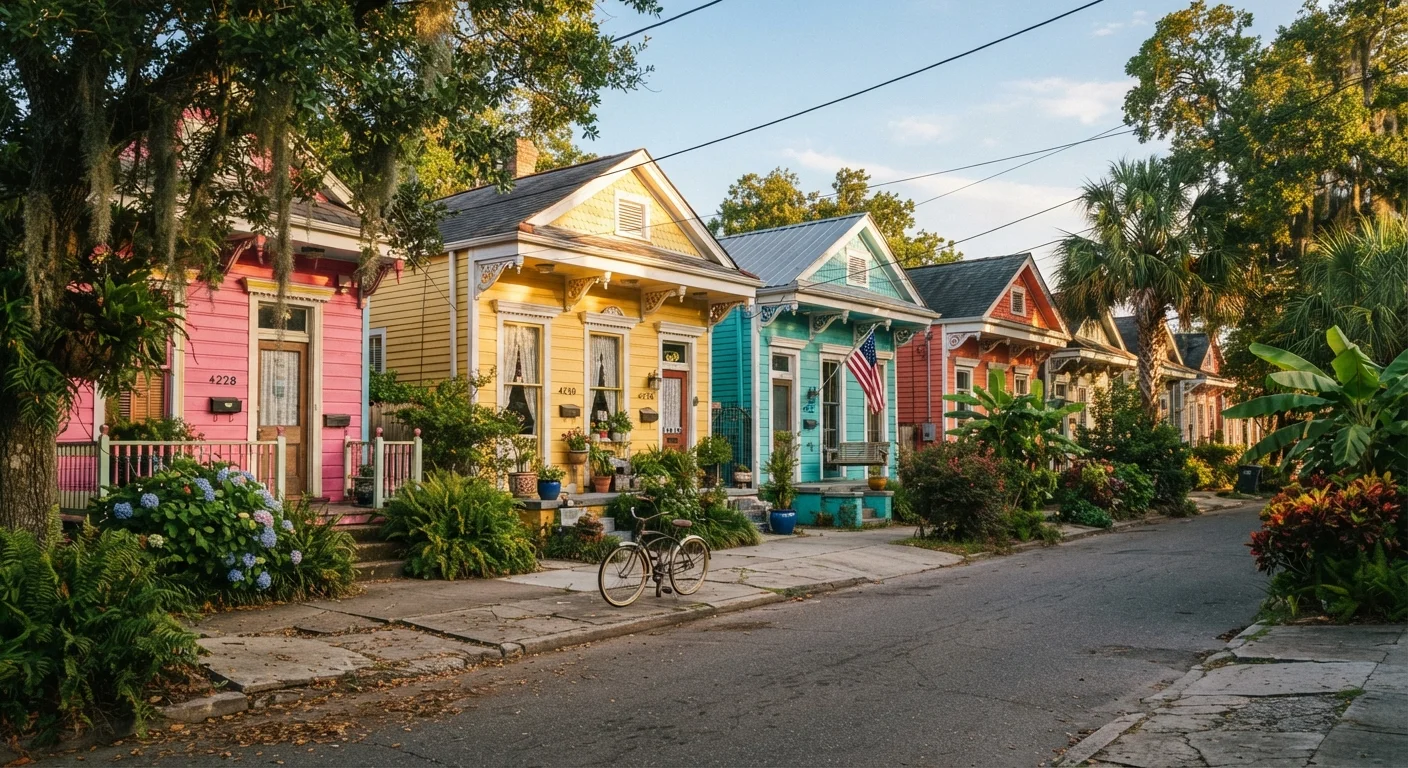
Why Bourbon Street Is Only the Beginning
Bourbon Street delivers exactly what it promises: neon, noise, and a party that never quite stops. But New Orleans is a city that rewards the curious traveler willing to walk a few blocks farther — or take the streetcar a few stops uptown. The real texture of this place lives in its neighborhoods, where architecture, food, music, and community weave together into something genuinely unlike anywhere else in America.
If you're trying to understand what New Orleans actually is, the French Quarter is a starting point, not a destination. Think of it as the city's front porch — welcoming, spectacular, and undeniably iconic — but the rooms inside are where the real story unfolds.
For a broader framework on how to orient yourself in any unfamiliar city, our guide to exploring beyond the tourist trail offers practical strategies that apply beautifully here.
72+
Recognized neighborhoods in New Orleans
The City of New Orleans officially recognizes more than 72 distinct neighborhoods, each with its own planning district and community identity.
~1 mile
Length of Bourbon Street
Bourbon Street spans roughly one mile through the French Quarter — a tiny corridor within a city that covers nearly 170 square miles.
1718
Year New Orleans was founded
Founded by French colonists in 1718, New Orleans has over 300 years of layered cultural, architectural, and musical history spread across its neighborhoods.
Tremé: The Birthplace of American Jazz
Just north of the French Quarter, the Tremé (pronounced treh-MAY) is arguably the most historically significant neighborhood in American music history. Congo Square — now part of Louis Armstrong Park — is where enslaved Africans gathered on Sundays to sing, dance, and preserve cultural traditions that would eventually evolve into jazz, blues, and gospel.
Today, Tremé is still animated by that legacy. Brass bands spill out of side streets during second-line parades, a tradition tied to jazz funerals and neighborhood celebrations. The Backstreet Cultural Museum documents Mardi Gras Indian culture with a depth and reverence that no parade float can replicate. Walking these streets feels like reading a living history of American music.
“New Orleans is the only place I know of where you ask someone what they want to be and they tell you what they want to be buried in.”
— Bunny Matthews, New Orleans cartoonist and cultural commentator
Faubourg Marigny and Bywater: Art, Architecture, and Frenchmen Street
Directly downriver from the French Quarter, the Faubourg Marigny was developed in the early 19th century and is filled with colorful Creole cottages and shotgun houses — long, narrow homes where rooms line up in a single file, front to back. The neighborhood's name is often shortened to simply the Marigny, and it's where the city's bohemian creative energy tends to concentrate.
Frenchmen Street is the Marigny's heartbeat: a four-block stretch where live jazz, funk, and brass band music pours from club doorways most nights of the week. Unlike the amplified cover bands of Bourbon Street, the performances here often feature serious local musicians playing original material for listeners who came specifically to hear it.
Continue downriver and you hit the Bywater, a neighborhood of reclaimed industrial spaces, local galleries, and community gardens that has evolved into a hub for artists and small-batch food producers alike.
Visit Frenchmen Street on a Weeknight
Weekend crowds on Frenchmen Street can rival the French Quarter in intensity. Visiting on a Tuesday or Wednesday typically means shorter lines, more intimate sets, and easier conversation with the musicians. Many clubs have no cover charge early in the evening, making it an accessible way to sample the neighborhood's musical offerings.
Garden District and Uptown: Grandeur With a Neighborhood Soul
Across Canal Street from the French Quarter lies the American Sector — the part of the city developed largely by American settlers after the Louisiana Purchase of 1803. The Garden District, accessible by the famous St. Charles Avenue streetcar, is famous for its antebellum mansions draped in wisteria and flanked by ancient live oaks. But it's more than a gallery of architectural splendor.
Magazine Street, which cuts through the neighborhood, is lined with independent bookshops, local clothing boutiques, and some of the city's most beloved neighborhood restaurants. Uptown extends further and encompasses Tulane and Loyola universities, giving it a lively, walkable residential energy year-round.
The contrast between the grandeur of the mansion-lined streets and the casual warmth of Magazine Street is itself a distinctly New Orleans experience — lavish and unpretentious at the same time.
Mid-City and Bayou St. John: A Quieter, Local Rhythm
Mid-City sits at the geographic center of New Orleans and offers a window into everyday life that most short-term visitors never see. Bayou St. John — a slow-moving waterway that once connected the Mississippi River to Lake Pontchartrain — runs through the neighborhood and draws picnickers, kayakers, and joggers on weekends.
City Park, which borders Mid-City, is one of the largest urban parks in the United States and houses the New Orleans Museum of Art, botanical gardens, and centuries-old live oak trees with trunks wide enough to sit in. The neighborhood's restaurant scene along Carrollton and Esplanade avenues is deeply local — the kind of places where regulars are on a first-name basis with their servers.
Spending even half a day in Mid-City resets your mental image of New Orleans from party destination to genuinely livable, deeply rooted American city.
Neighborhood Boundaries Shift Over Time
New Orleans neighborhoods are living, evolving communities. Some areas have experienced significant change in the years following Hurricane Katrina in 2005, with new businesses, residents, and cultural institutions reshaping their character. Before your visit, check recent local sources — neighborhood blogs, the Times-Picayune, or community organizations — for the most current picture of any area you plan to explore.
Frequently Asked Questions
Like any major city, New Orleans has areas with varying levels of foot traffic and safety. Many popular neighborhoods beyond the French Quarter — including the Garden District, Marigny, and Tremé — are well-traveled by tourists and locals alike. Always check current travel advisories, stay aware of your surroundings, and consult locals or your accommodation for up-to-date neighborhood guidance.
The Frenchmen Street corridor in the Faubourg Marigny is widely regarded as one of the best places to hear live jazz, blues, and funk in an intimate, local setting. Unlike Bourbon Street, the music here tends to be performed by seasoned local musicians for smaller, more engaged audiences.
New Orleans has a historic streetcar system with lines running through the Garden District, Mid-City, and along Canal Street. Many central neighborhoods are also walkable or bikeable. Rideshare services operate throughout the city as well.
Tremé is celebrated as the cradle of New Orleans jazz and the oldest continuously inhabited African American neighborhood in the United States. It's home to Congo Square, Backstreet Cultural Museum, and a tradition of brass band culture that predates recorded music.
Absolutely. Some of New Orleans' most celebrated restaurants are located in Uptown, Mid-City, the Bywater, and other neighborhoods. Local dining culture thrives across the city, and venturing beyond the tourist corridor often means shorter waits and more authentic experiences.
The content on this site is for informational purposes only and is not a substitute for professional advice. Always consult a qualified professional for guidance specific to your situation.