

Our Verdict
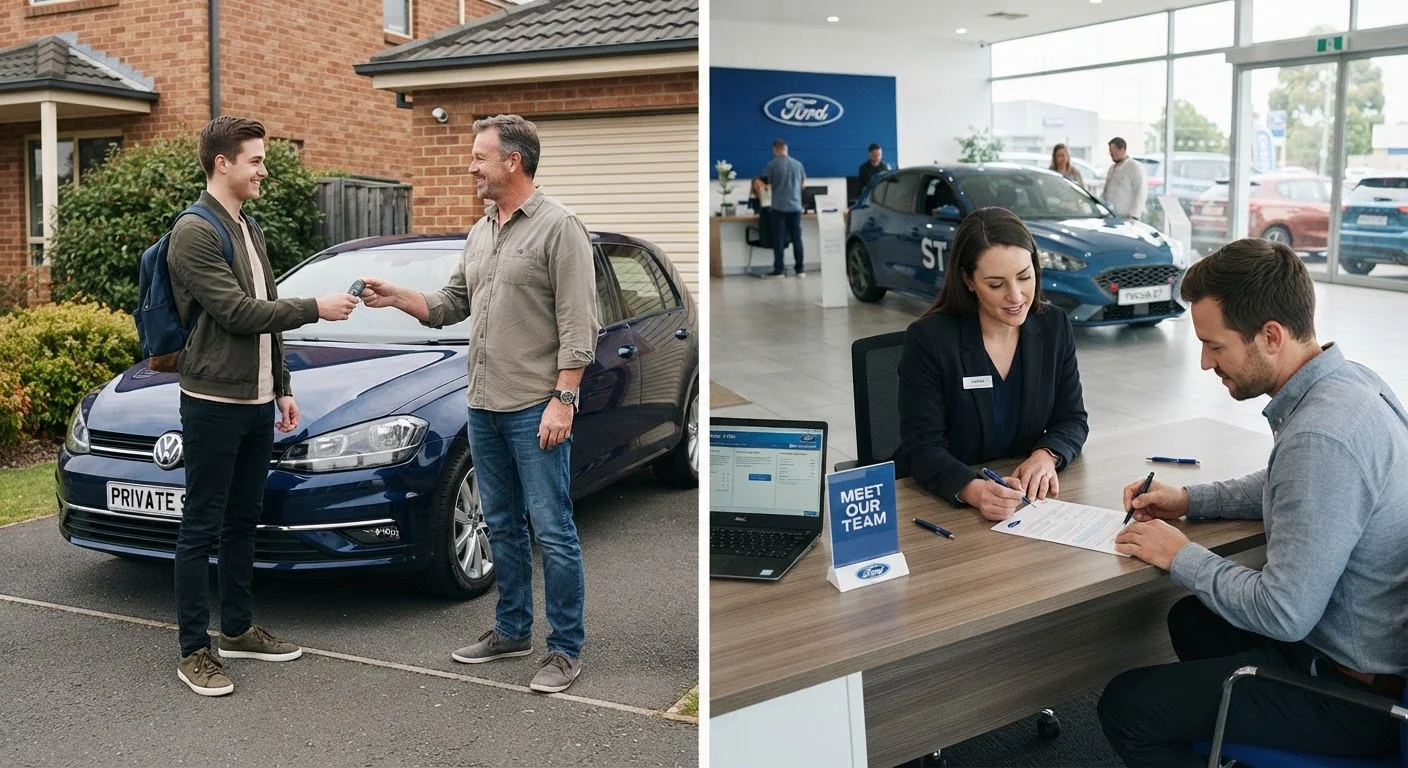
Neither buying channel is universally superior - the right choice depends on your priorities. If consumer protections, financing flexibility, and a structured process matter most, a dealership offers clear advantages. If saving money and moving fast are the priority, and you're comfortable doing your own due diligence, a private seller can be a sound path - provided you go in prepared.
| Best for | Recommended |
|---|---|
| Buyers who want legal protections, warranties, and financing in one place | Dealership |
| Budget-conscious buyers comfortable vetting vehicles independently | Private Seller |
| First-time car buyers who want a structured, documented process | Dealership |
| Experienced buyers seeking a specific used model at a lower price | Private Seller |
The Core Difference Between the Two Channels
When you buy from a dealership, you're transacting with a licensed business regulated by state and federal law. When you buy from a private seller, you're dealing with an individual - typically with far fewer obligations to you as the buyer. That distinction shapes nearly every aspect of the experience, from pricing to paperwork to what happens if something goes wrong.
Understanding these structural differences is the starting point for making a confident decision. The language used in listings also varies by channel - private ads and dealer ads carry different signals worth learning to read.
| Private Seller | Dealership | |
|---|---|---|
| Typical Price | Often below market value | At or above market; fees add up |
| Consumer Protections | Limited; usually 'as-is' | FTC Buyers Guide; state lemon laws |
| Warranty Options | Rarely available | Dealer warranty or CPO programs |
| Financing | Cash or pre-approved loan required | In-house financing available |
| Paperwork Handling | Buyer manages title/DMV steps | Dealer typically handles title/registration |
| Negotiation Dynamic | Direct, informal | Structured; finance office add-ons common |
| Vehicle History Transparency | Varies; buyer must request records | Often provided; reconditioning disclosed |
Price and Total Cost
Private sellers generally list vehicles closer to or below market value because they have no overhead - no lot fees, no commissioned sales staff, no reconditioning costs to recoup. That can translate to a meaningfully lower purchase price on the same year, make, and model.
Dealerships, by contrast, build margin into their pricing. Beyond the advertised price, buyers routinely encounter documentation fees, dealer preparation charges, and add-on products pushed in the finance office. As our guide on why the sticker price is just the starting point explains, MSRP is rarely what you actually pay. Destination fees, dealer markups, and optional extras can add hundreds or thousands to the final bill.
~$3,000-$5,000
Typical private sale price savings vs. dealer
Industry analysts generally estimate private-party used vehicle prices run several thousand dollars below dealer retail on comparable vehicles, though the gap varies by model and market conditions.
1 in 3
Used vehicles with undisclosed prior damage
Vehicle history report providers have noted that a significant share of used vehicles on the market carry prior accident or damage history not immediately disclosed by sellers.
The private sale advantage can shrink, however, if a vehicle needs immediate repairs that a dealer would have addressed during reconditioning - so factor inspection costs and likely fixes into your comparison.
Consumer Protections and Legal Recourse
This is where dealerships hold a clear structural advantage. Licensed dealers must comply with the Federal Trade Commission's Used Car Rule, which requires a Buyers Guide disclosing warranty terms or 'as-is' status. Many states add their own lemon law protections and dealer licensing requirements that give buyers a path to recourse if problems arise.
Private sales, in most states, are legally 'as-is' transactions. Once you drive away, the seller has no obligation to repair the vehicle or refund your money - even if a significant defect surfaces the next day. There are narrow exceptions involving fraud or deliberate misrepresentation, but pursuing those claims is time-consuming and uncertain.
Never Skip a Pre-Purchase Inspection
In a private sale especially, paying a trusted independent mechanic to inspect the vehicle before purchase is one of the most protective steps you can take. A few hundred dollars spent upfront can reveal hidden problems - transmission wear, frame damage, or deferred maintenance - that could cost thousands to fix. Don't waive this step because the seller seems trustworthy or the price seems fair.
For buyers interested in additional coverage through a dealer, it's worth understanding what certified pre-owned programmes actually cover - the protections vary considerably by manufacturer.
Financing Options
Dealerships can arrange financing on the spot through their lending network, which is convenient - especially for buyers who haven't secured a loan beforehand. However, convenience can come at a cost. Dealers sometimes mark up the interest rate above what the lender actually requires, pocketing the difference. Our comparison of dealer financing vs. outside lenders walks through this dynamic in detail.
Private purchases are almost always cash transactions or require a pre-approved loan from your own bank or credit union. Some lenders won't finance vehicles above a certain age or mileage, which can limit your options on older private listings. Securing pre-approval before you shop in either channel puts you in a stronger negotiating position.
Get Pre-Approved Before You Shop
Arriving at either a dealership or a private sale with a pre-approved loan from your bank or credit union gives you a concrete rate to compare against any financing offered. It also keeps the conversation focused on the vehicle price rather than monthly payments - a common tactic used to obscure the true cost of a deal.
Process Complexity and Paperwork
A dealership handles the title transfer, registration, and often the sales tax collection on your behalf - a genuine convenience, particularly for first-time buyers. The trade-off is a longer, more pressured sales process that often includes a finance office visit where add-on products are offered. Reviewing our guide to dealer add-ons before that conversation can help you evaluate each product on its merits rather than in the heat of the moment. Before finalizing anything, it's also smart to go through a pre-signing checklist to catch figures or terms that don't match what was discussed.
Private sales place the paperwork burden on the buyer. You'll need to handle the title transfer, pay applicable taxes at your state's DMV, and verify that there are no outstanding liens on the vehicle - all steps that require some research but are manageable with a little preparation. Always confirm the seller's name matches the title before exchanging any money.
The content on this site is for informational purposes only and is not a substitute for professional advice. Always consult a qualified professional for guidance specific to your situation.