

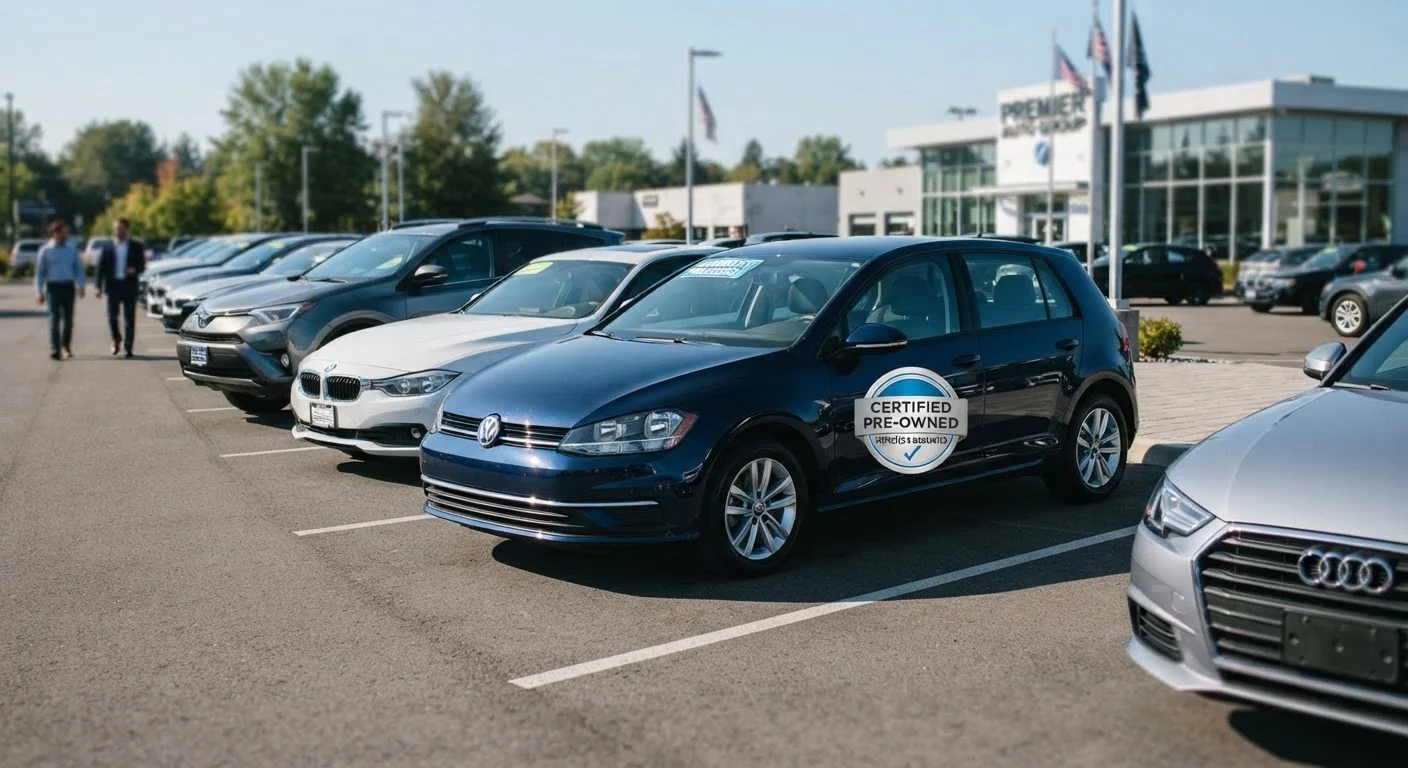
Option A
Certified Pre-Owned (CPO)
The inspected, warranted, manufacturer-backed option.
Best for: Buyers who want peace of mind and warranty coverage without paying new-car prices.
Option B
Regular Used
The flexible, lower-cost alternative with fewer built-in protections.
Best for: Budget-conscious buyers comfortable doing their own due diligence or forgoing added coverage.
What 'Certified Pre-Owned' Actually Means
The term Certified Pre-Owned (CPO) is not a loose marketing label - it refers to a formal programme administered by a vehicle manufacturer or, in some cases, a dealer group. To qualify, a used vehicle must typically meet specific age and mileage thresholds (commonly under five to six years old and under 80,000 miles), pass a multi-point inspection, and have a clean title history.
The inspection process is where CPO programmes distinguish themselves most clearly. Manufacturers publish their own checklists - Honda's covers roughly 182 points, while Toyota's covers 160. Vehicles that fail inspection must be repaired before receiving certification, or they are simply sold as regular used inventory instead. Once certified, the vehicle comes with a manufacturer-backed limited warranty that typically extends beyond any remaining factory coverage.
It's important to understand that CPO programmes vary substantially between manufacturers. Warranty length, what's covered, whether a deductible applies, and what extras (like roadside assistance or rental car reimbursement) are included all differ. Reading the actual programme terms - not just the sales pitch - is essential before deciding whether the premium is justified. See our guide to dealer add-ons if you're unsure how CPO warranty offers compare to separate extended warranty products.
| Criterion | Certified Pre-Owned (CPO) | Regular Used |
|---|---|---|
| Inspection requirement | Mandatory multi-point inspection | None required |
| Warranty included | Yes - manufacturer-backed | Typically none (as-is) |
| Price | Higher - premium for certification | Lower purchase price |
| Vehicle age/mileage limits | Strict eligibility thresholds | No limits - any age or mileage |
| Title history check | Required by programme | Buyer must verify independently |
| Roadside assistance | Often included | Not included |
| Risk borne by buyer | Lower - programme covers repairs | Higher - buyer absorbs all risk |
What You Get - and Don't Get - With a Regular Used Car
A regular used car carries no manufacturer certification. It may be sold by a franchised dealer, an independent lot, or a private seller, and it arrives with whatever condition it happens to be in at the time of sale. Most are sold as-is, meaning the buyer absorbs full responsibility for any mechanical issues discovered after purchase.
That said, "regular used" does not automatically mean risky. A well-maintained vehicle with a clean vehicle history report (from services such as Carfax or AutoCheck) and a pre-purchase inspection by an independent mechanic can represent excellent value. The buyer simply has to build those safeguards themselves rather than relying on a programme to provide them.
~$1,000-$3,000
Typical CPO price premium over comparable used
Industry estimates vary, but CPO vehicles consistently command a measurable markup over non-certified equivalents in the same segment.
160-182
Inspection points in major manufacturer CPO programmes
Published CPO checklists from manufacturers such as Toyota and Honda illustrate how rigorous - and how variable - these inspections can be.
The key difference in practice comes down to who bears the risk. With a CPO vehicle, the manufacturer has already invested in bringing the car up to a defined standard and assumes some financial liability for failures. With a regular used car, that responsibility rests entirely with the buyer from the moment of sale. For buyers comparing their options across new and used segments, our overview of new vs. used trade-offs covers how warranty coverage factors into that broader decision.
Is the CPO Premium Worth Paying?
CPO vehicles typically cost more than comparable non-certified used cars - the gap is often estimated at $1,000 to $3,000, though this varies by brand, model, and market conditions. Whether that premium is worth it depends on a few honest questions.
How long does the warranty actually run? A CPO warranty that adds only six months of coverage is worth far less than one that extends powertrain protection for five years or 100,000 miles. What does it cover? Powertrain-only plans exclude many expensive repairs. Is there a deductible per visit? Some programmes charge $0; others charge $100 or more per claim, which erodes the benefit over time.
Dealer-Certified vs. Manufacturer-Certified
Some dealerships sell vehicles under their own 'certified' label, which is separate from - and generally less rigorous than - a manufacturer CPO programme. Dealer-certified vehicles may not carry a factory-backed warranty. Always confirm whether certification is manufacturer-administered before assuming the same protections apply.
For buyers considering a vehicle that has changed significantly across model years, it's also worth understanding how the specific generation you're buying compares to earlier versions. Our article on how the same model can change across generations is a useful reference when evaluating a CPO vehicle's production year. And if you're still deciding between buying from a dealer versus a private party, the private seller vs. dealership comparison explains the protections and trade-offs involved in each channel.
This article is for general informational purposes only and does not constitute financial or legal advice. Vehicle pricing, programme terms, and warranty details vary by manufacturer and dealer. Always review official programme documentation and consult qualified professionals before making significant purchasing decisions.
The content on this site is for informational purposes only and is not a substitute for professional advice. Always consult a qualified professional for guidance specific to your situation.