

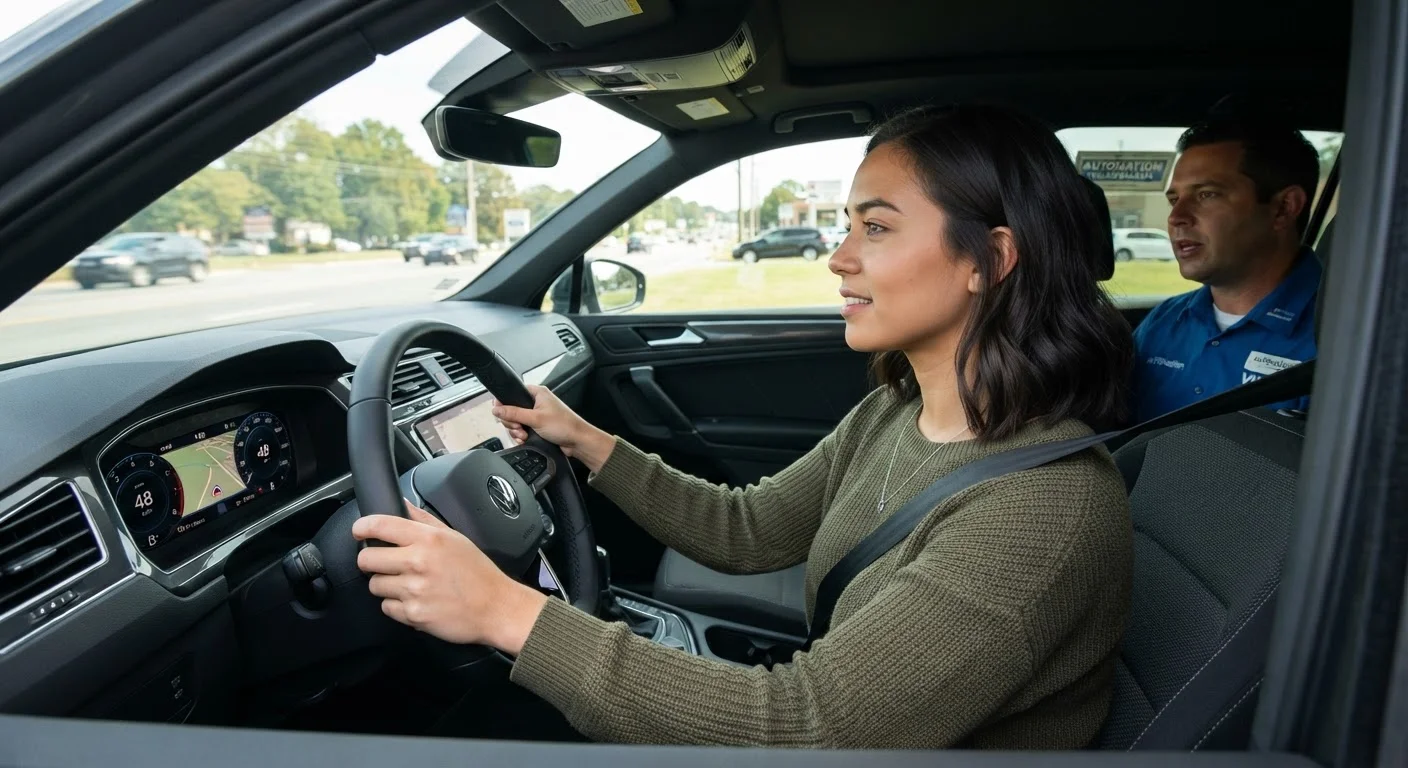
Why the Test Drive Is a Research Tool, Not a Formality
Most car shoppers spend hours reading reviews, comparing specs, and watching videos - then spend fewer than 15 minutes actually driving the car they are about to commit to for five or more years. That imbalance is one of the most common errors buyers make, as noted in our guide to things first-time car buyers routinely overlook.
A test drive answers questions that no spec sheet can: Does this cabin feel claustrophobic to you? Does the brake pedal inspire confidence? Is road noise at highway speed acceptable for your tolerance? Does the seat accommodate your body well enough for a long drive? These are personal, physical assessments - and they are only possible when you are behind the wheel.
The goal is not to enjoy the novelty of the drive. The goal is to gather specific, actionable information about a specific vehicle. That requires preparation, a clear route, and the right questions. As part of the broader car-buying process, the test drive is the moment you shift from researching a model to evaluating the actual unit in front of you.
What you will need
What to Listen For, Feel For, and Ask
Effective test driving is a sensory and conversational exercise. On the sensory side, pay attention to:
- Steering feel: Does the wheel return to center naturally? Is there excessive play or pulling to one side?
- Brake response: Does the pedal feel firm and progressive, or soft and vague?
- Suspension behavior: Does the car absorb bumps in a way that feels controlled, or does it crash and bounce?
- Cabin noise: At 65 mph, is conversation easy, or is the interior notably loud?
On the conversational side, the questions you ask reveal as much as the drive itself. Come prepared with specifics - not just "how is the reliability?" but "has this vehicle had any powertrain or transmission repairs?" For used vehicles especially, the answers to direct factual questions matter significantly.
Bring Your Checklist - and Use It
Write down your priority questions and sensory checkpoints before you arrive. It's easy to get caught up in conversation and forget to test something specific, like rear headroom or the blind-spot sightlines. A short written list keeps you objective and ensures nothing slips by under the pressure of a sales environment.
After the test drive, cross-reference what you experienced against what the research says. If a model is frequently noted for transmission hesitation in owner forums and you felt it during the drive, that is meaningful data - not a fluke.
Test the Exact Vehicle You Plan to Buy
Trim levels, optional packages, and even production runs can create meaningful differences between two vehicles with the same model name. Always drive the specific unit - same trim, same configuration - that you intend to purchase. If the dealership insists on a different example, note that and factor it into your confidence level.
How to Structure Your Test Drive Approach
Follow the steps below to cover the key ground systematically. Each step addresses a distinct layer of the evaluation - exterior condition, ergonomics, vehicle history, driving dynamics, feature usability, and final questions. Skipping any layer leaves a gap in your understanding of what you are buying.
Notepad or phone notes app
Record observations and questions during or immediately after the drive while impressions are fresh.
Prepared question list
Keeps you focused on the information you need rather than letting the sales environment set the agenda.
Tape measure
Verify cargo dimensions, seat depth, or other measurements relevant to your specific hauling or comfort needs.
Inspect the vehicle before you start the engine
Walk around the exterior and note any paint irregularities, panel gaps, or signs of prior repair. Check tire wear - uneven wear patterns can indicate alignment or suspension issues. Open and close every door, the hood, and the trunk to assess fit and hinge quality. This pre-drive inspection tells you about this specific vehicle's history, not just the model.
Adjust the seating position and assess ergonomics
Before moving, get your seat, mirrors, and steering column positioned exactly as you would for everyday driving. Ask yourself: Can you reach all controls naturally? Is the infotainment screen at a readable angle without glare? Does the headrest sit comfortably without pushing your head forward? If you plan to carry passengers frequently, have someone sit in the back seat and report on legroom and comfort.
Ask about the vehicle's specific history
For a used vehicle, ask directly: Has this car been in any accidents? What does the service record show? Request a vehicle history report - a reputable seller should have one available or be willing to obtain one. For a new vehicle, ask whether it has been sitting on the lot for an extended period, as certain components can be affected by prolonged storage. These are factual questions you are entitled to ask.
Drive a route that reflects your real-world use
Request a route that includes at least some of the following: a stretch of highway for acceleration and cruising noise, surface streets with bumps or rail crossings, a parking maneuver, and a hill if one is nearby. Accelerate to highway speed and note how the transmission shifts and how much wind or road noise enters the cabin. Brake firmly (in a safe, clear area) to check pedal feel and straight-line tracking.
Test every feature you plan to use regularly
Activate the climate control, heated seats, driver-assistance features, and infotainment system. Pair your phone via Bluetooth. Check rearview camera clarity. If the vehicle has adaptive cruise control or lane-keeping assist, engage them briefly so you understand how they behave. Discovering that a feature is counterintuitive or slow to respond is far more useful on a test drive than after delivery.
Ask follow-up questions after the drive
Once parked, revisit anything that felt uncertain. Ask the salesperson: What warranty coverage applies to this vehicle? What is included in any certified pre-owned designation? Are there open recalls on this vehicle, and have they been addressed? You can verify recall status independently through the National Highway Traffic Safety Administration (NHTSA) website using the vehicle's VIN. These questions separate detail-oriented buyers from those who rely solely on first impressions.
Don't Let the Salesperson Control the Route
A short, pre-planned loop designed by the dealership may avoid the highway, rough pavement, or tight parking scenarios that matter most to your real daily use. Politely request a route that reflects how you actually drive - including a stretch of highway if possible. You are entitled to a meaningful evaluation of the vehicle.
Buying a car involves several interconnected decisions beyond the drive itself. If you have a trade-in, be aware that trade-in myths can cost buyers money if you enter that conversation unprepared. The test drive is one strong layer of due diligence - pair it with equally careful attention to the financial terms before you sign.
The content on this site is for informational purposes only and is not a substitute for professional advice. Always consult a qualified professional for guidance specific to your situation.