

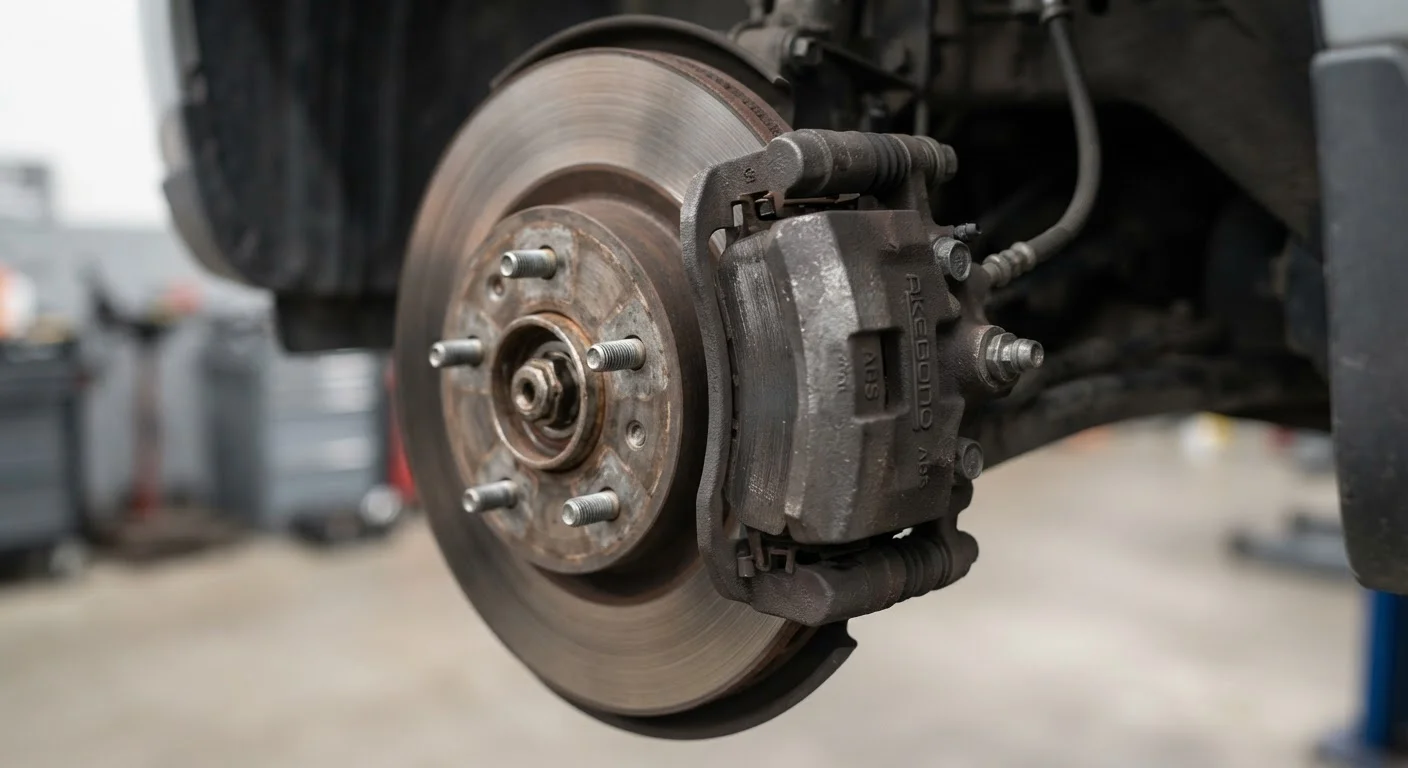
What Actually Causes That Squeal
Brakes make noise for several distinct reasons, and lumping them all together as "a brake problem" misses important nuance. Understanding the source helps you judge the urgency.
Surface rust and moisture. Rotors are made of iron and develop a thin rust film quickly when parked in damp or cold conditions. The first few brake applications grind this layer off, producing a brief metallic squeal or scrape. If the noise clears up within a minute of driving, this is almost certainly the cause and requires no action.
Worn pad material and wear indicators. Most brake pads contain a small metal tab called a wear indicator. When the pad wears down to a low threshold, this tab contacts the rotor and produces a deliberate, persistent squeal - your car's engineered warning that it is time for new pads. This sound appears consistently, not just on cold starts.
Glazed pads or rotors. Hard braking, riding the brakes downhill, or certain driving habits can harden the surface of pads or rotors through excessive heat. Glazed surfaces can squeal even when material thickness is still adequate. Everyday driving habits like riding the brakes contribute to this more often than drivers realize.
Dust, debris, or pad composition. Ceramic and semi-metallic pads are more prone to noise than some organic formulations. A small stone lodged between pad and rotor can also produce a sudden squeal or scrape.
Listen for Pattern, Not Just Sound
Pay attention to when the squeal occurs - only in cold or damp mornings, or every single time you brake. Does it go away after the first few stops, or persist all day? Does the pitch or intensity change as you brake harder? These patterns give a mechanic much more useful diagnostic information than simply reporting "my brakes are noisy."
When Squealing Becomes a Serious Warning
Not all squealing demands emergency action - but certain patterns and combinations of symptoms do.
- Consistent squealing at every stop: If the noise happens every time you brake, regardless of weather or temperature, assume the wear indicator is active and schedule an inspection promptly.
- Squealing that has turned to grinding: Grinding means pad material is likely gone and metal is contacting metal. This can score the rotor rapidly and dramatically increase repair costs. Do not delay - have the vehicle inspected by a qualified mechanic as soon as possible.
- Pulling to one side when braking: Uneven brake wear or a seized caliper can cause the vehicle to drift left or right during stops. This is a handling safety concern, not just a noise issue.
- Brake pedal feels soft, spongy, or low: A pedal that sinks too easily or pulses underfoot points to hydraulic or rotor issues. Squealing alongside a soft pedal warrants immediate professional attention.
- Vibration through the steering wheel when stopping: Warped rotors produce a pulsing sensation during braking. When paired with noise, this signals more than simple pad wear.
Dashboard warning lights can appear alongside brake symptoms - a brake warning lamp is an additional reason not to delay inspection.
25,000-65,000 mi
Typical brake pad lifespan range
Pad longevity varies significantly based on driving style, vehicle weight, and pad material composition.
~2-3 mm
Pad thickness that triggers wear indicator
Most OEM wear indicator tabs are engineered to contact the rotor when remaining pad material reaches approximately 2-3 mm.
2x+
Cost increase from delaying pad replacement
Allowing pads to wear through to the backing plate can score rotors, turning a pad-only job into a combined pad-and-rotor replacement that roughly doubles the cost.
DIY Assessment vs. Professional Inspection
You can gather useful information without removing a wheel. Look through the spokes of the wheel and observe the brake pad pressed against the rotor. Most mechanics recommend replacement when the pad material visible appears thinner than about a quarter-inch. If you cannot see pad material at all, that is an urgent sign.
Beyond visual checks, a trusted mechanic should measure pad thickness with a gauge and inspect rotor condition during routine service. Most shops check brakes at every oil change or tire rotation - do not skip these opportunities. Knowing where the DIY line sits helps you decide what you can reasonably observe yourself and what requires professional tools and expertise.
“The brake system is one of the few areas where deferred maintenance can rapidly escalate from an inconvenience to a genuine safety issue. A squeal today that becomes a grind tomorrow means the margin for action has already narrowed considerably.”
— ASE-Certified Master Technician, Automotive Service Excellence (ASE) Certified Master Technician
This article provides general vehicle maintenance information for educational purposes only. For diagnosis or repair of your specific vehicle, consult a qualified, licensed mechanic.
Frequently Asked Questions
It depends on the cause. Occasional squealing in wet or cold conditions is generally harmless. However, persistent squealing at every stop, squealing combined with grinding, or any brake-related pulling or pedal softness should be inspected by a qualified mechanic before continued driving.
Light surface rust or moisture can build up on rotors overnight. The first few brake applications of the day typically scrub this off, and the noise disappears. If the squeal goes away after a few stops, morning moisture is likely the culprit.
There is no reliable universal answer - it depends on how much pad material remains. Squealing from a wear indicator may give you several hundred miles of warning, but continuing to ignore it risks rotor damage and significantly higher repair bills. Have the pads inspected promptly.
Yes. New brake pads can squeal for a short break-in period as the pad surface seats against the rotor. This typically fades after several normal stops and is not a cause for concern unless it persists for more than a week or two of regular driving.
Squealing is usually a high-pitched friction sound and may indicate early-to-moderate pad wear or surface conditions. Grinding is a harsh, low metallic sound indicating the pad material is gone and metal is contacting metal - this requires immediate attention to prevent rotor damage.
Brake pad lifespan varies widely based on driving style, vehicle type, and pad material - commonly ranging from 25,000 to 65,000 miles. Have your brakes visually inspected at every tire rotation or oil change so a mechanic can flag wear before it becomes a safety issue.
The content on this site is for informational purposes only and is not a substitute for professional advice. Always consult a qualified professional for guidance specific to your situation.