

Our Verdict
DIY maintenance works well for simple, low-risk tasks that require basic tools and follow clear manufacturer instructions. For anything affecting safety systems, requiring specialized equipment, or involving modern vehicle electronics, a qualified mechanic is the appropriate choice. The goal is not to prove capability - it is to keep your vehicle safe and reliable.
| Best for | Recommended |
|---|---|
| Drivers comfortable with routine upkeep and basic tools | DIY maintenance |
| Safety-critical repairs such as brakes, steering, or suspension | Professional mechanic |
| Modern vehicles with complex electronics or ADAS systems | Professional mechanic |
| Budget-conscious owners handling simple consumable replacements | DIY maintenance |
Why the DIY vs. Professional Question Actually Matters
Every driver eventually faces the question: can I handle this myself, or do I need to call a shop? Getting that answer wrong in either direction has real consequences. Paying a mechanic for a wiper blade swap is an unnecessary expense; attempting a brake job without proper training is a safety risk. The decision deserves a clear framework rather than guesswork.
Modern vehicles are more sophisticated than they were even a decade ago. Advanced driver-assistance systems (ADAS), electronic throttle controls, and complex transmission software mean that some jobs once considered straightforward - like replacing a battery - may now require computer recalibration. At the same time, many routine maintenance tasks remain simple and well within reach for anyone willing to consult their owner's manual and follow instructions carefully.
For a broader look at how service interval myths can lead drivers astray, see The Maintenance Myths That Are Costing Drivers Unnecessary Money.
Tasks That Most Drivers Can Handle at Home
Several routine maintenance tasks are well-suited to a careful, informed DIY approach. These jobs share common traits: they involve accessible components, use inexpensive and widely available tools, and have minimal consequences if a minor mistake is made during the process.
- Air filter replacement: Engine and cabin air filters are typically located in accessible housings and require no special tools. Your owner's manual will specify the correct filter type and replacement interval.
- Windshield wiper blades: Most wiper arms use a standard clip mechanism. Replacement blades include clear instructions, and the process usually takes under five minutes per blade.
- Checking and topping up fluids: Engine coolant, washer fluid, and power steering fluid (where applicable) have clearly marked reservoirs with min/max indicators. Always use the fluid type specified in your owner's manual - mixing incompatible fluids can cause damage.
- Tire pressure checks: A basic digital tire pressure gauge costs a few dollars. Checking and adjusting tire pressure monthly is one of the highest-impact, lowest-effort maintenance habits a driver can develop.
- Light bulb replacement: On many vehicles, exterior bulbs such as turn signals or reverse lights can be swapped without tools. However, some modern vehicles require bumper or panel removal - check your manual first.
Keep Your Owner's Manual Handy
Your vehicle's owner's manual is the single most reliable source for service intervals, fluid specifications, and component locations. Before starting any maintenance task - or deciding whether to attempt it - check what the manufacturer specifies. Many drivers find a digital copy of their manual through the manufacturer's website if the printed version is missing.
Building a consistent schedule around these simple tasks helps prevent larger problems from developing unnoticed. How to Build a Maintenance Schedule Around Your Actual Driving Patterns offers a practical starting point.
Jobs That Belong in a Professional's Hands
Some maintenance and repair work sits firmly in professional territory - not because the tasks are mysterious, but because the risks of errors are significant and the required equipment is specialized.
| DIY at Home | Professional Mechanic | |
|---|---|---|
| Air filter replacement | Yes - simple, low risk | Not necessary for most vehicles |
| Wiper blade replacement | Yes - minimal tools needed | Not necessary |
| Brake pad replacement | Risky without proper tools/torque specs | Recommended for safety-critical accuracy |
| Tire pressure checks | Yes - requires only a gauge | Optional; done at most shops for free |
| Timing belt/chain service | Not recommended - high consequence if wrong | Required; specialised procedure |
| AC refrigerant handling | Illegal without EPA certification | Required by federal law |
| Warning light diagnosis | Limited - basic code readers available | Full diagnosis requires professional tools |
| Oil change | Possible with right setup and disposal plan | Convenient; cost gap has narrowed |
- Brake system repairs: Brake pad replacement is often cited as a manageable DIY task, but it requires correct torque specifications, proper bedding procedures, and - for vehicles with electronic parking brakes - often a scan tool to retract the caliper piston. Errors in brake work can compromise stopping ability.
- Suspension and steering components: Ball joints, tie rods, and wheel bearings require precise installation and professional alignment equipment afterward. Incorrect alignment accelerates tire wear and can affect vehicle handling.
- Timing belt or chain service: On interference engines (where the pistons and valves share space), a timing belt that slips or breaks can cause immediate, severe engine damage. This job demands exacting procedure and is not forgiving of errors.
- Electrical and module diagnostics: When a warning light appears, the underlying fault code is only a starting point. Proper diagnosis requires professional-grade scan tools and experience interpreting live data. Replacing parts based on guesswork often wastes money without fixing the root cause.
- HVAC system (air conditioning) repairs: Handling refrigerant is regulated under federal law (EPA Section 609). This work requires certified equipment and technician credentials - it is not a legal DIY task.
If you ever receive a repair estimate that feels unclear, Reading a Mechanic's Service Quote Without Feeling Lost can help you understand exactly what you are being charged for.
The Gray Zone: Oil Changes and Intermediate Tasks
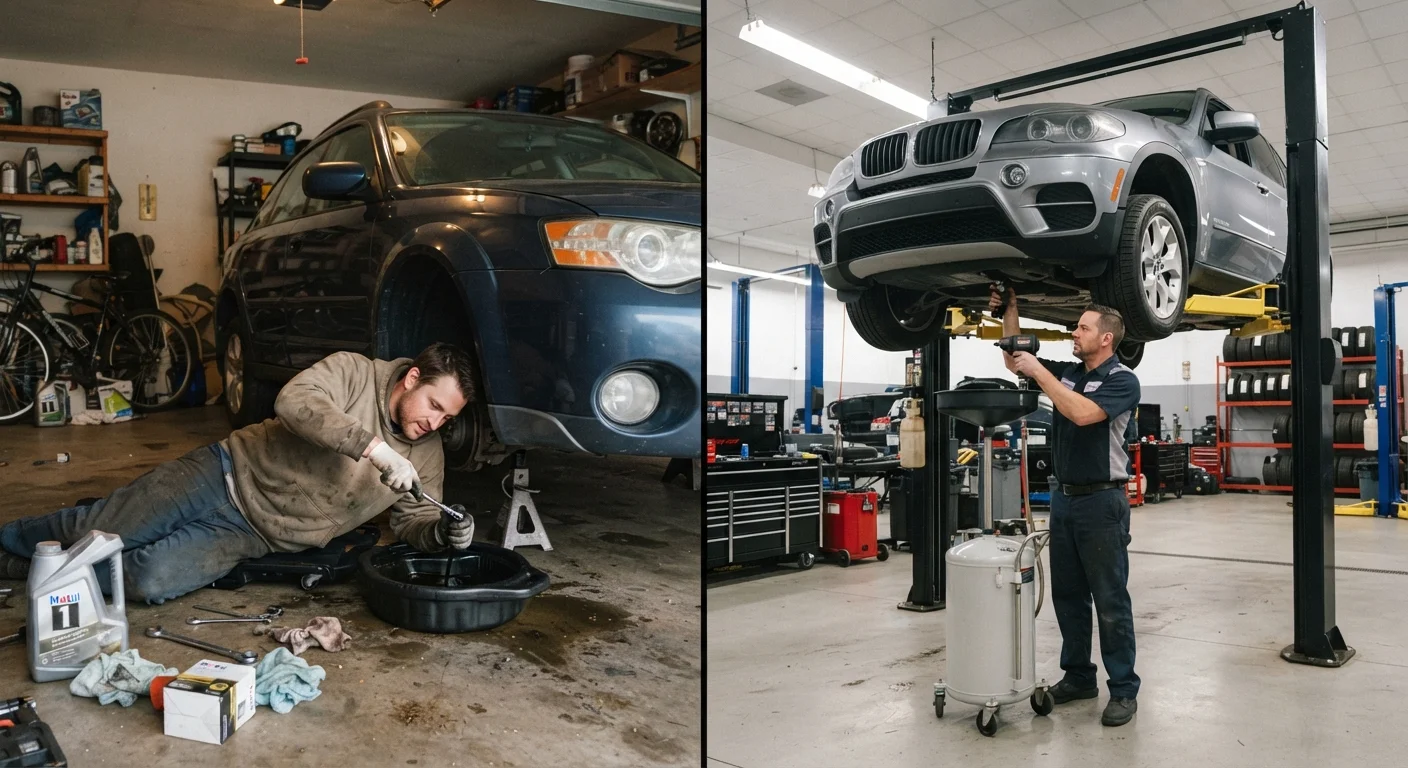
Oil changes sit in an interesting middle ground. Mechanically, the process is straightforward: drain old oil, replace the filter, add new oil of the correct specification. For drivers with a safe way to raise and support the vehicle, the right tools, and a proper oil disposal plan, it is manageable. However, the cost difference between DIY and a shop oil change has narrowed in many areas, and some vehicles have low-clearance designs that make access genuinely awkward.
The key principle for any gray-zone task: assess whether you have the right tools, a safe working environment, and a clear understanding of the procedure before starting. Partial jobs - for instance, removing a component and then finding you lack the tool to complete the repair - can leave your vehicle undrivable and may create additional damage.
Never Work Under an Unsupported Vehicle
A floor jack alone is not a safe support for working underneath a vehicle. Always use properly rated jack stands placed at manufacturer-specified lift points. Each year, people are seriously injured by vehicles that slip off jacks. If you do not have the right equipment or a safe, level surface to work on, take the vehicle to a shop rather than improvising.
It is also worth noting that the rise of synthetic oil and longer manufacturer-specified drain intervals means many vehicles no longer need oil changes as frequently as older guidance suggested. Always defer to your owner's manual, not general rules of thumb. For more on service interval misconceptions, see The Maintenance Myths That Are Costing Drivers Unnecessary Money.
Making the Call: A Practical Decision Framework
When you are unsure which side of the line a job falls on, work through these questions:
- Does this task involve a safety system? Brakes, steering, tires, and lights directly affect your ability to control the vehicle and avoid accidents. Treat these with extra caution.
- Do I have the correct tools? Improvising with the wrong tools often damages fasteners or components, turning a minor job into a larger one.
- Is the procedure clearly documented? Your owner's manual and manufacturer service documentation are authoritative sources. General online tutorials vary widely in accuracy and may not reflect your specific vehicle's requirements.
- What is the consequence of a mistake? A slightly misaligned wiper blade is a nuisance; an improperly torqued wheel bearing is a hazard. Weight the stakes accordingly.
- Will this affect my warranty? On vehicles still under a manufacturer or extended warranty, confirm that DIY work will not create coverage complications. Keep records of any parts purchased and work performed.
The dividing line between DIY and professional work is ultimately about honest self-assessment, not mechanical pride. Drivers who know their limits - and stay within them - tend to spend less overall and keep their vehicles running more reliably. For a parallel perspective on this principle in a home improvement context, When to DIY and When to Hire a Licensed Tradesperson covers the same decision framework for household repairs.
The content on this site is for informational purposes only and is not a substitute for professional advice. Always consult a qualified professional for guidance specific to your situation.