

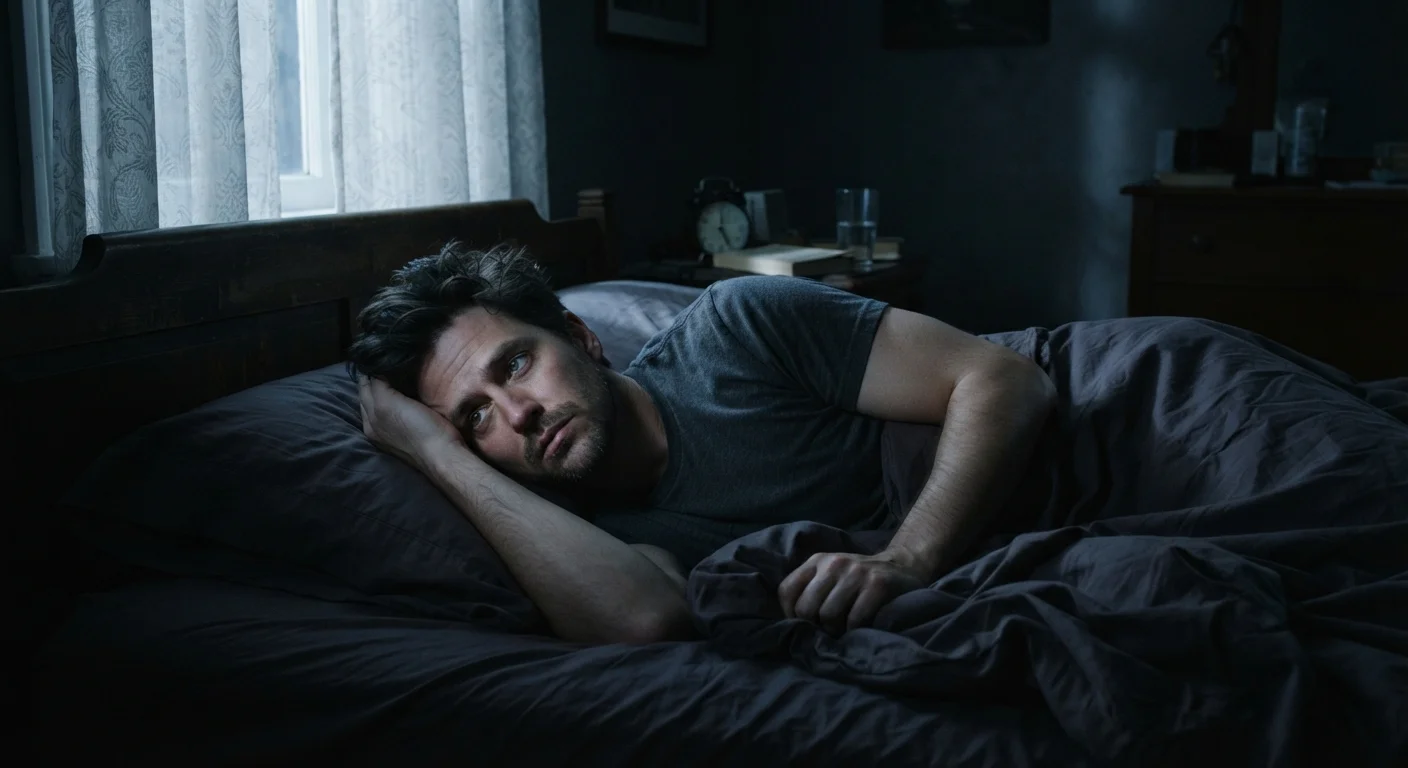
Why Sleep Is a Men's Health Issue Worth Taking Seriously
Sleep often gets treated as a lifestyle preference rather than a health priority - something to sacrifice for work, family, or social commitments. Among men in particular, cultural narratives around toughness and productivity have historically made poor sleep seem like a badge of dedication rather than a warning sign.
The biology tells a different story. Sleep is not passive downtime. It is when the body performs essential maintenance - consolidating memory, regulating hormones, repairing tissue, and clearing metabolic waste from the brain. When that process is repeatedly cut short or disrupted, the downstream effects touch virtually every major system in the body.
Understanding this connection is a first step. The sections below break down what the research shows across several key areas of men's health.
Hormones: What Happens While You Sleep
Testosterone - a hormone central to muscle maintenance, bone density, libido, mood, and energy - is predominantly released during sleep. The majority of daily testosterone secretion occurs in pulses tied to slow-wave and REM sleep stages. When sleep is shortened or fragmented, this hormonal output is disrupted.
Research has indicated that even short-term sleep restriction can produce measurable decreases in testosterone levels in otherwise healthy men. This matters because chronically suppressed testosterone is associated with fatigue, reduced muscle mass, mood changes, and other effects that are often attributed to aging when sleep may be a contributing factor.
For a broader look at how testosterone functions and when levels become clinically relevant, see what testosterone actually does.
~2x
Men's relative rate of sleep apnea diagnosis
Men are diagnosed with obstructive sleep apnea at approximately twice the rate of women, according to data from sleep medicine research.
15%
Testosterone reduction after sleep restriction
A study published in JAMA found that young men who slept five hours per night for one week showed daytime testosterone levels 10-15% lower than when fully rested.
7-9 hrs
Recommended nightly sleep for adults
The American Academy of Sleep Medicine and Sleep Research Society recommend 7 or more hours of sleep per night for adults to promote optimal health.
Cardiovascular Health and the Sleep Connection
Heart health and sleep quality are deeply intertwined. Chronic short sleep - generally defined in research as fewer than 7 hours per night - has been associated in population studies with higher rates of hypertension, coronary artery disease, and stroke. The mechanisms include elevated cortisol (the body's primary stress hormone), increased inflammation, and impaired glucose regulation, all of which are risk factors for cardiovascular disease.
Sleep apnea deserves particular attention here. This condition, in which breathing repeatedly stops and starts during sleep, places sustained physiological stress on the cardiovascular system. Men are diagnosed with obstructive sleep apnea at roughly twice the rate of women. Left unaddressed, it is linked to elevated blood pressure, irregular heart rhythms, and increased heart disease risk.
Men who are already navigating cardiovascular risk factors should be aware of how sleep fits into that picture. For more context on the broader landscape, see cardiovascular risk factors in men.
Talk to a Doctor About Loud Snoring
Loud or disruptive snoring - especially when paired with daytime exhaustion - can be a sign of sleep apnea rather than a minor annoyance. Because sleep apnea carries cardiovascular implications, it is worth raising with a healthcare provider. Effective diagnostic and treatment options exist and are worth exploring.
Mental Health: The Underestimated Overlap
The relationship between sleep and mental health runs in both directions. Poor sleep worsens mood, impairs emotional regulation, and amplifies anxiety and depressive symptoms. Conversely, depression and anxiety frequently disrupt sleep - creating cycles that can be difficult to untangle without professional support.
For men, this overlap carries added complexity. Men are less likely than women to recognize or disclose mental health symptoms, and poor sleep can mask or mimic those symptoms in ways that go unaddressed for years. Irritability, low motivation, difficulty concentrating, and emotional withdrawal - all of which can stem from sleep deprivation - are also common presentations of depression in men.
If you are navigating mental health concerns alongside sleep difficulties, the two may be connected. See mental health in men for a broader discussion of how these issues present and how support works.
What Good Sleep Actually Looks Like
Duration is only part of the picture. Sleep quality - how uninterrupted and restorative your sleep is - matters significantly. A night of seven fragmented hours is generally less beneficial than seven hours of consolidated, cycling sleep.
General evidence-based principles for sleep health include maintaining a consistent sleep and wake schedule, limiting alcohol (which disrupts sleep architecture even when it initially promotes drowsiness), avoiding screens close to bedtime, and keeping the sleep environment cool and dark. For context on how alcohol specifically affects sleep and other aspects of health, see how alcohol affects men's health over time.
If sleep problems are persistent - difficulty falling asleep, staying asleep, excessive daytime sleepiness, or loud snoring reported by a partner - these are worth discussing with a healthcare provider. Conditions like sleep apnea are diagnosable and treatable; ongoing sleep difficulty is not something to simply push through.
This article is for general informational and educational purposes only and is not a substitute for professional medical advice, diagnosis, or treatment. Always consult a qualified healthcare provider with any questions you have about a medical condition or before making health-related decisions.
Frequently Asked Questions
Most adults, including men, need between 7 and 9 hours of sleep per night according to general guidance from sleep researchers. Individual needs vary, but consistently getting fewer than 7 hours is associated with measurable health risks. Quality matters alongside quantity - fragmented sleep can still leave the body under-recovered.
Research suggests that sleep restriction can reduce testosterone levels, since most testosterone release occurs during sleep. One frequently cited study found that young men who slept five hours per night for a week showed significantly lower testosterone levels than when they slept a full night. This is general educational information - speak with a doctor if you have specific hormonal concerns.
Obstructive sleep apnea is a condition where the airway partially or fully collapses during sleep, causing repeated breathing disruptions. Men are diagnosed at higher rates, partly due to differences in airway anatomy and fat distribution patterns. It is strongly associated with high blood pressure, heart disease, and metabolic problems if left untreated.
Yes. Sleep deprivation is closely linked to increased irritability, anxiety, and depressive symptoms. Men already face barriers to recognizing and reporting mental health struggles, and sleep disruption can worsen emotional regulation. Treating underlying sleep problems is often a meaningful component of mental wellness care.
Sleep patterns do shift with age - older adults often experience lighter sleep and wake more frequently. However, this does not mean reduced sleep is harmless or inevitable. Persistent sleep problems at any age are worth discussing with a healthcare provider rather than accepting as normal.
The content on this site is for informational purposes only and is not a substitute for professional advice. Always consult a qualified professional for guidance specific to your situation.