

Our Verdict
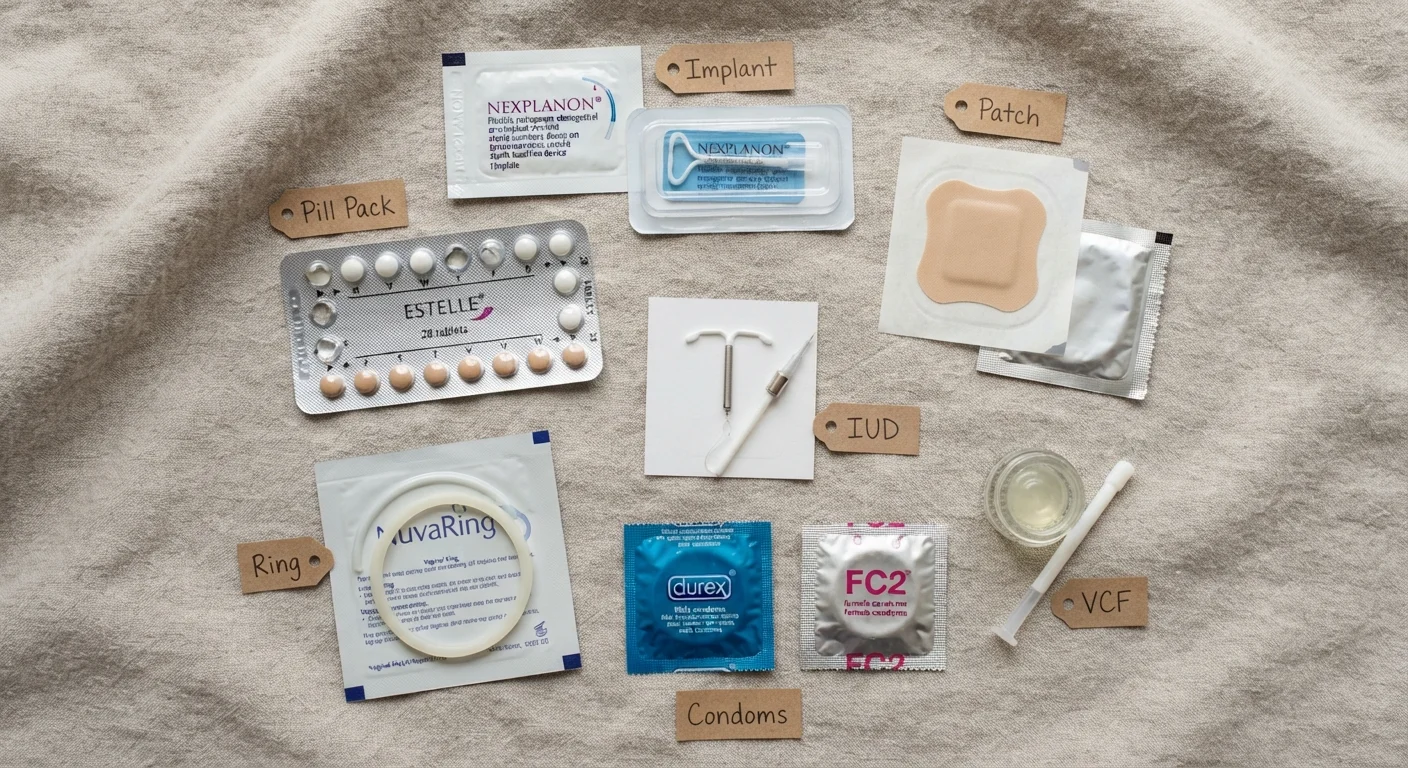
Hormonal contraception spans a wide range of methods - from daily pills to multi-year implants - each with distinct mechanisms, hormone profiles, and practical considerations. No method is universally superior; the right fit depends on an individual's health history, preferences, and life circumstances. A qualified healthcare provider is the appropriate guide for any personal decision.
| Best for | Recommended |
|---|---|
| Those wanting a short-term, reversible option with daily involvement | Combined oral contraceptive pill |
| Those preferring a weekly routine without daily pills | Contraceptive patch |
| Those wanting longer-term contraception without daily management | Hormonal IUD or implant |
| Those comfortable with quarterly clinic visits | Injectable contraception |
How Hormonal Contraception Works
Hormonal contraception uses synthetic versions of estrogen, progestin, or both to interfere with the body's reproductive processes. The primary mechanisms include suppressing ovulation (so no egg is released), thickening cervical mucus (making it harder for sperm to reach an egg), and thinning the uterine lining. Different methods rely on one or more of these pathways in varying degrees.
It's worth noting that hormonal contraception does not protect against sexually transmitted infections (STIs). For STI prevention, barrier methods such as condoms remain necessary. This article provides general educational information - it is not medical advice, and individuals should consult a healthcare provider to understand which options are appropriate for their specific circumstances.
Talk to Your Provider About Your Full Health History
Certain hormonal methods are not recommended for individuals with specific medical conditions, such as a history of blood clots, certain migraines, or particular cardiovascular risk factors. Always share your complete health history with your provider before selecting a method. What works well for one person may not be appropriate for another.
The Pill: Combined and Progestin-Only
Oral contraceptives are the most widely recognized hormonal method. The combined oral contraceptive pill (COC) contains synthetic estrogen and progestin. Taken daily, it primarily works by suppressing ovulation. When used consistently and correctly, typical effectiveness is cited at around 91-99% in published clinical literature.
The progestin-only pill (sometimes called the mini-pill) is an option for those who cannot or prefer not to use estrogen. It works mainly by thickening cervical mucus, and in some individuals also suppresses ovulation. It requires stricter daily timing than the combined pill. Both pill types are reversible - fertility generally returns relatively quickly after stopping, though individual timelines vary. Understanding your cycle can be informative context alongside any contraceptive decision.
Patch, Injection, and Implant
These methods offer alternatives for those who find daily pills inconvenient or inconsistent.
The contraceptive patch is a small adhesive worn on the skin, typically changed weekly for three weeks followed by a patch-free week. It releases estrogen and progestin transdermally (through the skin) into the bloodstream, working similarly to the combined pill.
The injectable contraceptive (commonly a progestin-only shot) is administered by a healthcare provider, typically every 8-13 weeks depending on the formulation. It is highly effective when administered on schedule, but fertility may take longer to return after stopping compared to other methods - sometimes several months to over a year, according to available research.
The hormonal implant is a small, flexible rod inserted under the skin of the upper arm by a clinician. It releases a low, steady dose of progestin and is typically effective for up to three years. It is one of the most effective methods available and is reversible upon removal by a healthcare provider.
| Combined Pill | Progestin-Only Pill | Patch | Injection | Implant | Hormonal IUD | |
|---|---|---|---|---|---|---|
| Hormone type | Estrogen + progestin | Progestin only | Estrogen + progestin | Progestin only | Progestin only | Progestin only |
| Administration frequency | Daily | Daily (strict timing) | Weekly | Every 8-13 weeks | Once (lasts ~3 years) | Once (lasts 3-8 years) |
| Requires clinician procedure | No | No | No | Yes (injection) | Yes (insertion/removal) | Yes (insertion/removal) |
| Speed of fertility return | Relatively quick | Relatively quick | Relatively quick | Months to over a year | Quick after removal | Quick after removal |
| Primary mechanism | Suppresses ovulation | Thickens mucus | Suppresses ovulation | Suppresses ovulation | Thickens mucus | Thickens mucus, thins lining |
Hormonal IUDs
The hormonal intrauterine device (IUD) is a small, T-shaped device inserted into the uterus by a clinician. It releases a localized low dose of progestin, which primarily thickens cervical mucus and thins the uterine lining, with limited systemic absorption compared to other hormonal methods. Different formulations are approved for varying durations, ranging from roughly three to eight years depending on the specific device.
Hormonal IUDs are among the most effective contraceptive methods available. Many users experience lighter periods or no periods after the first few months of use. Insertion and removal must be performed by a trained healthcare provider, and some individuals experience cramping around insertion. Fertility typically returns quickly after removal.
For those interested in non-hormonal cycle-based approaches as a contrast or complement, cycle tracking methods and their limitations offer useful background reading.
Key Considerations Across All Methods
Each hormonal contraceptive method carries its own profile of potential side effects, contraindications, and practical demands. Some individuals tolerate one method well but not another. Factors that commonly matter in clinical discussions include:
- Personal and family medical history (including cardiovascular history and certain cancers)
- Whether estrogen-containing methods are appropriate
- Desired duration of contraception and plans for future pregnancy
- Tolerance for clinic visits versus daily self-management
- How quickly reversibility may be needed
~91-99%
Typical effectiveness of combined oral pill
Effectiveness ranges from typical use (~91%) to perfect use (~99%), per published reproductive health literature.
>99%
Effectiveness of hormonal IUD and implant
Long-acting reversible methods are cited as among the most effective contraceptives in clinical research, with over 99% effectiveness.
None of these decisions should be made without input from a qualified healthcare provider who can review individual health history, discuss risks and benefits, and outline all available options. This content is for general educational purposes only and does not constitute medical advice.
Always consult a licensed healthcare professional before starting, stopping, or changing any contraceptive method.
The content on this site is for informational purposes only and is not a substitute for professional advice. Always consult a qualified professional for guidance specific to your situation.