

Our Verdict
Cycle tracking offers genuine insight into menstrual health patterns, mood, energy, and potential reproductive health concerns. However, every approach - whether paper-based, app-driven, or sensor-assisted - has meaningful limitations in precision and reliability. Using multiple complementary methods and discussing findings with a healthcare provider yields the most useful picture.
Anyone wanting to better understand their own cycle patterns, communicate more effectively with their healthcare provider, or monitor changes in menstrual health over time.
What Cycle Tracking Actually Measures
Menstrual cycle tracking involves recording physiological and behavioral data - period start and end dates, flow intensity, symptoms, basal body temperature (BBT), and cervical mucus characteristics - with the goal of identifying patterns over time. A typical cycle runs anywhere from 21 to 35 days, and significant variation is normal. Tracking helps surface what is typical for an individual, which is more clinically meaningful than comparing to population averages.
Some methods focus purely on calendar data. Others incorporate physical signs of hormonal shifts. Understanding what each approach actually captures - versus what it estimates or infers - is essential before placing too much weight on any single reading.
This article is general health information, not medical advice. Consult a qualified healthcare professional for guidance specific to your situation.
Common Tracking Approaches
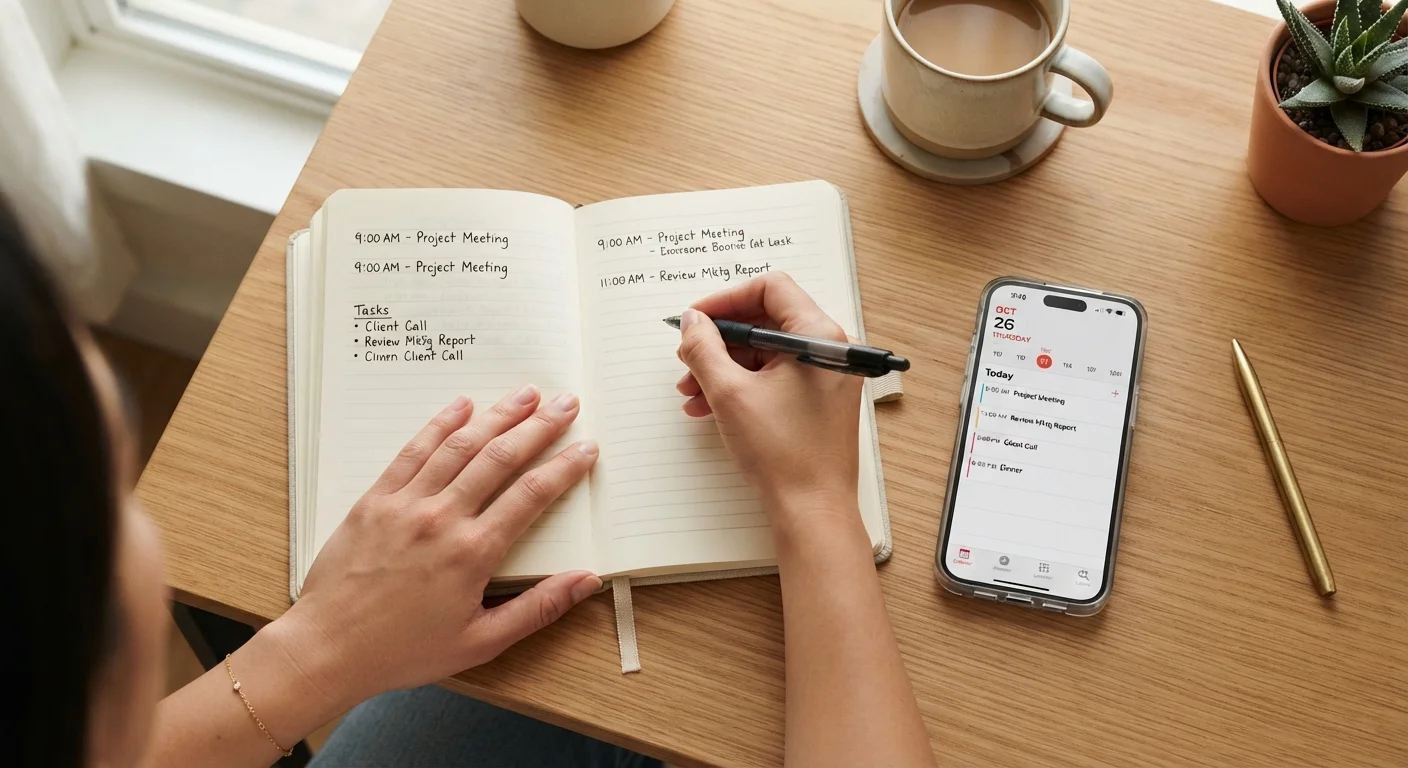
Paper diaries and calendars remain a low-tech but reliable way to log period dates and symptoms. They carry no data privacy risk and encourage deliberate, self-aware observation. The limitation is that they offer no predictive analysis and require the user to interpret patterns manually.
Dedicated cycle-tracking apps use entered data to generate predictions for fertile windows and next periods. Some integrate with wearables to pull in heart rate variability or skin temperature data. Convenience is high, but algorithmic predictions are estimates based on past data - not real-time hormone measurement. For a deeper look at what digital health tools can and cannot offer, see The Honest Trade-Offs of Digital Mental Health Apps.
Basal body temperature (BBT) charting involves taking temperature every morning before getting out of bed. A sustained rise of roughly 0.2°C (0.4°F) typically signals that ovulation has already occurred. This method confirms past ovulation rather than predicting future ovulation, and it is sensitive to sleep disruption, illness, and alcohol consumption.
Hormone test strips (OPKs - ovulation predictor kits) detect the luteinizing hormone (LH) surge that precedes ovulation by 24-36 hours. They are more objective than symptom-based methods but can produce false positives in people with conditions such as polycystic ovary syndrome (PCOS), where LH levels fluctuate unpredictably.
Builds meaningful awareness of personal cycle patterns
Consistent tracking over several months reveals what is normal for a specific individual - information that is often more useful than textbook averages when discussing concerns with a provider.
Can support earlier identification of cycle irregularities
Documented changes in cycle length, flow, or symptoms create a concrete record that helps clinicians assess potential conditions such as PCOS, endometriosis, or thyroid-related disruption.
Low-cost and accessible entry points exist
Paper-based tracking requires no technology investment and can be started immediately; many basic app features are free, making this an accessible health habit for most people.
Encourages mind-body connection and self-advocacy
Regularly logging mood, energy, and physical symptoms alongside cycle data helps people notice patterns linking hormonal phases to wellbeing - supporting more informed conversations with healthcare providers.
Where Each Approach Falls Short
Predictions are estimates, not medical measurements
Most apps calculate fertile windows and ovulation dates using statistical averages from past data, not real-time hormone levels. Any given cycle can deviate significantly from the predicted pattern.
Accuracy requires consistency and correct technique
BBT charting is especially sensitive to sleep disruption, fever, and timing errors; even small deviations in method reduce reliability and can produce misleading patterns.
Health conditions can distort common indicators
Conditions such as PCOS, thyroid disorders, or perimenopause affect hormone levels and cycle regularity in ways that make standard tracking signals - including LH surge tests - harder to interpret accurately.
Data privacy protections vary widely across apps
Reproductive health data entered into commercial apps may be stored, sold, or shared according to terms that users may not fully review; protections differ by jurisdiction and can change over time.
Not a reliable contraceptive method without professional training
Fertility awareness-based methods require formal instruction and multi-sign tracking; app-based fertile window estimates alone have substantially higher failure rates than clinically supervised approaches.
Across all methods, a fundamental limitation is that cycle length and ovulation timing can shift month to month due to stress, illness, travel, weight changes, or underlying health conditions. Apps that use historical averages cannot account for these real-time variables.
People who are also using or considering hormonal contraception should be aware that hormonal methods suppress the natural hormonal fluctuations that many tracking tools rely on. Hormonal Contraception: What the Main Methods Involve explains how different methods affect the cycle, which has direct implications for tracking.
A Note on Special Populations
Cycle patterns during adolescence, perimenopause, postpartum recovery, or while managing a chronic health condition can be highly irregular, making standard tracking predictions less reliable. If you fall into one of these categories, discuss tracking goals and appropriate methods with a healthcare provider before drawing conclusions from your data.
Privacy and Data Considerations
Many cycle-tracking apps collect detailed personal health data - including sexual activity, pregnancy intentions, and mood - and store it on third-party servers. Privacy policies differ significantly between apps, and in some jurisdictions, the legal protections around reproductive health data remain uncertain. Before using any app, it is worth reviewing its data-sharing practices and whether data can be deleted on request.
For those who value the reflective benefits of self-tracking without digital data exposure, a handwritten journal can serve a similar purpose. Journalling for Mental Wellness explores how structured self-recording - including symptom and mood logging - supports self-awareness beyond the health context.
21-35 days
Normal range for menstrual cycle length
According to the American College of Obstetricians and Gynecologists, this range reflects typical variation; individual patterns matter more than comparing to averages.
~24-36 hours
Window before ovulation that LH surge predicts
Ovulation predictor kits detect the LH surge, offering a short advance window - but the surge does not guarantee ovulation will follow in every cycle.
How to Use Tracking Data Productively
The most productive use of cycle data is longitudinal pattern recognition, not day-to-day prediction. Tracking consistently for at least three full cycles before drawing conclusions gives a more reliable baseline. Noting when patterns change - significantly shorter or longer cycles, new symptoms, changes in flow - provides useful information to share with a healthcare provider.
Cycle tracking is not a medically validated standalone contraceptive method for most people. Fertility awareness-based methods (FABMs) that incorporate multiple physiological signs can be used with this intention, but they require formal instruction from a qualified practitioner and carry higher typical-use failure rates than most hormonal or barrier contraceptive methods. Never rely on an app's fertile window prediction alone as a contraceptive strategy without professional guidance.
The content on this site is for informational purposes only and is not a substitute for professional advice. Always consult a qualified professional for guidance specific to your situation.