

Start here
What Is the Pelvic Floor?
Next
Signs of Pelvic Floor Dysfunction
Dig deeper
Who Is Affected - and When
Take action
How Pelvic Floor Health Is Assessed and Supported
Build habits
Building Long-Term Pelvic Floor Awareness
What Is the Pelvic Floor?
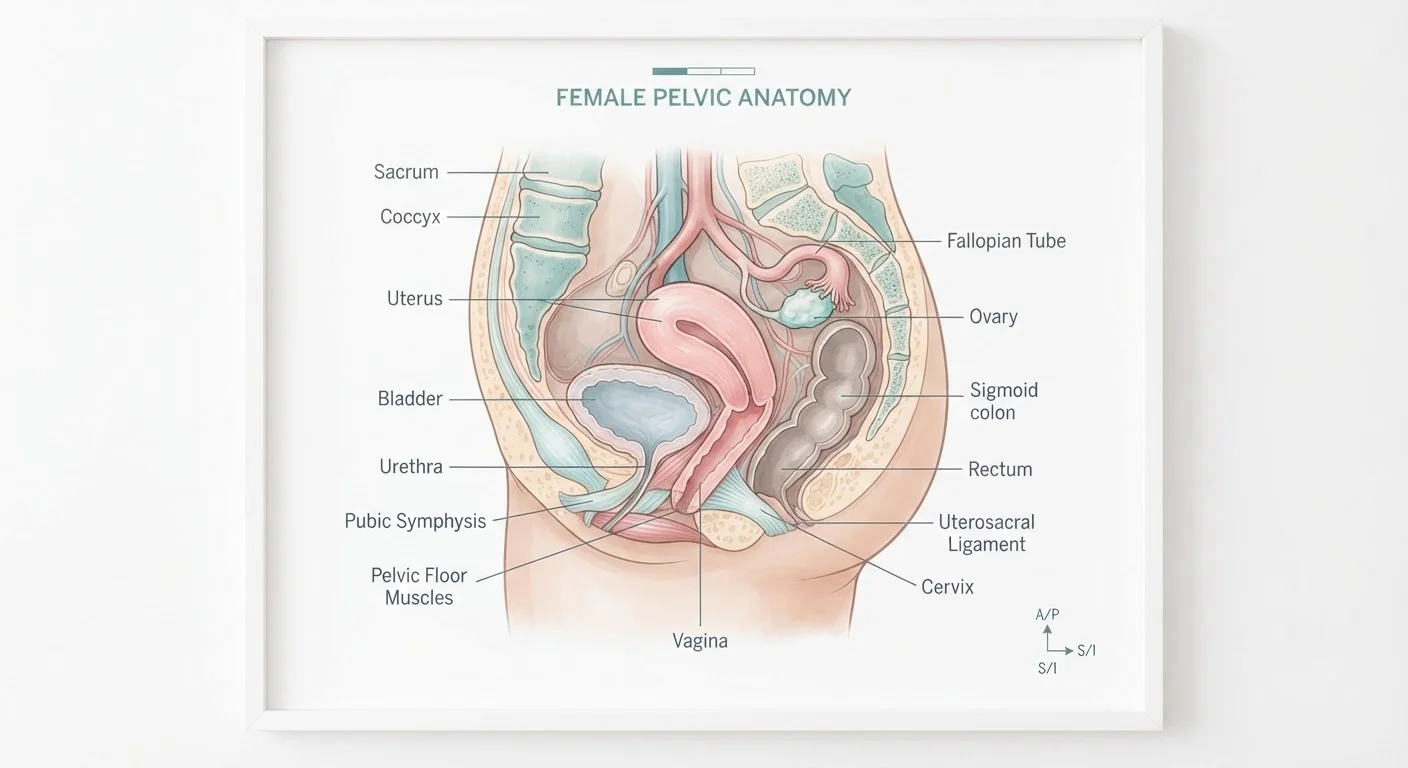
The pelvic floor is a hammock-like group of muscles, ligaments, and connective tissues that stretches across the base of the pelvis. In women, these structures support three key organs: the bladder, the uterus, and the rectum. They also play a role in bladder and bowel control, sexual function, and stabilizing the spine and hips during everyday movement.
Pelvic floor
A group of muscles and connective tissues at the base of the pelvis that support the bladder, uterus, and bowel and help control their function.
Pelvic floor dysfunction
A broad term for conditions that arise when pelvic floor muscles are too weak, too tight, or poorly coordinated - leading to symptoms like leakage, pain, or prolapse.
Pelvic organ prolapse
A condition in which one or more pelvic organs (bladder, uterus, or rectum) descend from their normal position and press against or into the vaginal wall.
Stress urinary incontinence
Leakage of urine triggered by physical pressure on the bladder - such as coughing, sneezing, laughing, or exercising - rather than a strong urge to urinate.
Hypertonicity
A state in which muscles are chronically too tight or contracted. In the pelvic floor, this can cause pain, difficulty with penetration, and bowel or bladder discomfort.
Pelvic floor physical therapist
A licensed physical therapist with advanced training in evaluating and treating conditions related to the pelvic floor muscles and surrounding structures.
Unlike muscles you can easily feel working - like your biceps during a curl - the pelvic floor operates largely below conscious awareness. That invisibility is partly why problems in this area are underreported and undertreated. Many women assume discomfort or leakage is simply a normal part of life. It is common, but it is not something that must be accepted without support.
Signs of Pelvic Floor Dysfunction
Pelvic floor dysfunction refers to a broad range of conditions that arise when these muscles are too weak, too tight, or fail to coordinate properly. Symptoms can be surprisingly varied:
- Stress urinary incontinence: leaking urine during coughing, sneezing, laughing, or physical activity
- Urgency incontinence: a sudden, intense urge to urinate that is difficult to defer
- Pelvic organ prolapse: a sensation of bulging, heaviness, or pressure in the vaginal area, sometimes visible as tissue at or near the vaginal opening
- Pelvic pain: chronic discomfort in the lower abdomen, tailbone, or vulvar area
- Pain during or after sex (dyspareunia)
- Difficulty with bowel function: straining, incomplete emptying, or fecal urgency
Don't Dismiss Symptoms as Normal
Leaking urine, pelvic pressure, or pain during sex are frequently described as 'just part of being a woman' - but these experiences are not inevitable and are often treatable. Normalizing symptoms that go unaddressed can delay care that makes a meaningful difference in quality of life. Bring any of these concerns to your healthcare provider rather than waiting for them to resolve on their own.
Because many of these symptoms overlap with other conditions, self-diagnosis is unreliable. A healthcare provider is the appropriate first step for accurate evaluation.
Who Is Affected - and When
Childbirth - especially vaginal delivery - is the most widely recognized risk factor for pelvic floor dysfunction, which is why the conversation so often centers on postpartum recovery. But the reality is more expansive. Pelvic floor problems can emerge at almost any stage of adult life.
Adolescents and young adults can experience pelvic floor tension or pain linked to athletic training, endometriosis, or vulvodynia - a chronic pain condition affecting the vulva. Perimenopausal and postmenopausal women face a distinct set of risks: declining estrogen leads to changes in tissue elasticity and muscle tone that raise the likelihood of incontinence and prolapse. This is worth discussing alongside other midlife health priorities - see our guide to bone health through the decades for another example of how hormonal shifts affect the whole body over time.
Other risk factors across all ages include:
- Chronic constipation and habitual straining
- High-impact exercise without adequate core and pelvic support
- Obesity, which increases downward pressure on pelvic structures
- Connective tissue disorders such as hypermobility syndromes
- Pelvic surgeries, including hysterectomy
How Pelvic Floor Health Is Assessed and Supported
Assessment typically begins with a conversation with a primary care provider or gynecologist about symptoms. From there, a referral to a pelvic floor physical therapist - a clinician with specialized training in musculoskeletal evaluation of the pelvic region - is often the most direct route to a thorough evaluation and individualized treatment plan.
Kegels Aren't One-Size-Fits-All
Many women are told to simply 'do Kegels,' but squeezing an already-tight pelvic floor can worsen symptoms like pelvic pain or urgency. A pelvic floor physical therapist can identify whether strengthening or relaxation - or a combination - is the right approach for your specific situation. Getting an accurate assessment before starting any exercise program for this area is worth the effort.
A pelvic floor physical therapist will typically take a detailed history and may perform an internal examination (with informed consent) to assess muscle tone, strength, coordination, and sensitivity. Treatment depends entirely on what is found:
- Weakness or underactivity: targeted strengthening exercises, which may include Kegel contractions done correctly and in the right context
- Tightness or hypertonicity: relaxation techniques, manual therapy, and breathing work
- Coordination issues: neuromuscular retraining to improve timing between muscles
For prolapse or significant incontinence, additional medical options - including pessaries (supportive devices worn inside the vagina) or surgical consultation - may be discussed with a urogynecologist. The annual women's health checks guide outlines when and how to raise these concerns during routine appointments.
Building Long-Term Pelvic Floor Awareness
Pelvic floor health is not a one-time fix but an ongoing aspect of overall physical wellness. Several everyday habits contribute meaningfully over time:
- Breathing mechanics: The diaphragm and pelvic floor work together. Shallow chest breathing can contribute to chronic pelvic floor tension. Practicing diaphragmatic (belly) breathing supports relaxation in both systems.
- Bowel habits: Straining at the toilet repeatedly puts significant downward pressure on pelvic structures. Adequate fiber, hydration, and correct toileting posture (feet elevated slightly, leaning forward) reduce this load.
- Exercise selection: Most forms of exercise are pelvic-floor-friendly when appropriate load and technique are applied. Heavy lifting with poor bracing, or high-impact activity during active dysfunction, may warrant modifications - a pelvic health specialist can advise.
- Weight management: Maintaining a healthy weight reduces chronic pressure on pelvic structures, though any weight-related goals should be discussed with a healthcare provider in the context of overall health.
Pelvic floor symptoms are often treatable, and they need not be a silent fact of life. Raising concerns openly with a healthcare provider - ideally as part of routine check-ins at each life stage - is the most reliable path toward informed, effective care.
This article is for general informational and educational purposes only and is not a substitute for professional medical advice, diagnosis, or treatment. If you have symptoms or concerns about your pelvic floor health, please consult a qualified healthcare provider.
Frequently Asked Questions
Yes. Pregnancy is one risk factor, but pelvic floor dysfunction also occurs in women who have never been pregnant. High-impact exercise, chronic constipation, hormonal changes, and connective tissue differences can all contribute regardless of childbirth history.
Common experiences include leaking urine when coughing, sneezing, or exercising, a feeling of heaviness or pressure in the pelvis, and difficulty emptying the bladder or bowel fully. Some women notice no symptoms until dysfunction is more advanced.
Not always. Kegels - repeated contractions of pelvic floor muscles - are helpful when the muscles are weak, but some women have an overly tight or hypertonic pelvic floor, for which further contraction can worsen symptoms. A pelvic floor physical therapist can identify which approach is appropriate.
If you notice leakage, pelvic pain, pain during sex, or a sensation of prolapse (bulging or pressure in the vaginal area), it is worth bringing up with your healthcare provider. These issues are common but treatable, and early assessment generally leads to better outcomes.
Yes. The drop in estrogen during menopause can cause pelvic floor muscles and surrounding tissues to lose tone and elasticity. This increases the risk of urinary incontinence and pelvic organ prolapse. Discussing these changes with a gynecologist or pelvic health specialist is recommended.
Coverage varies by plan, provider, and diagnosis. Many insurance plans cover pelvic floor physical therapy when it is prescribed by a physician for a documented condition. Checking with your insurer and obtaining a referral from your doctor is the best starting point.
The content on this site is for informational purposes only and is not a substitute for professional advice. Always consult a qualified professional for guidance specific to your situation.