

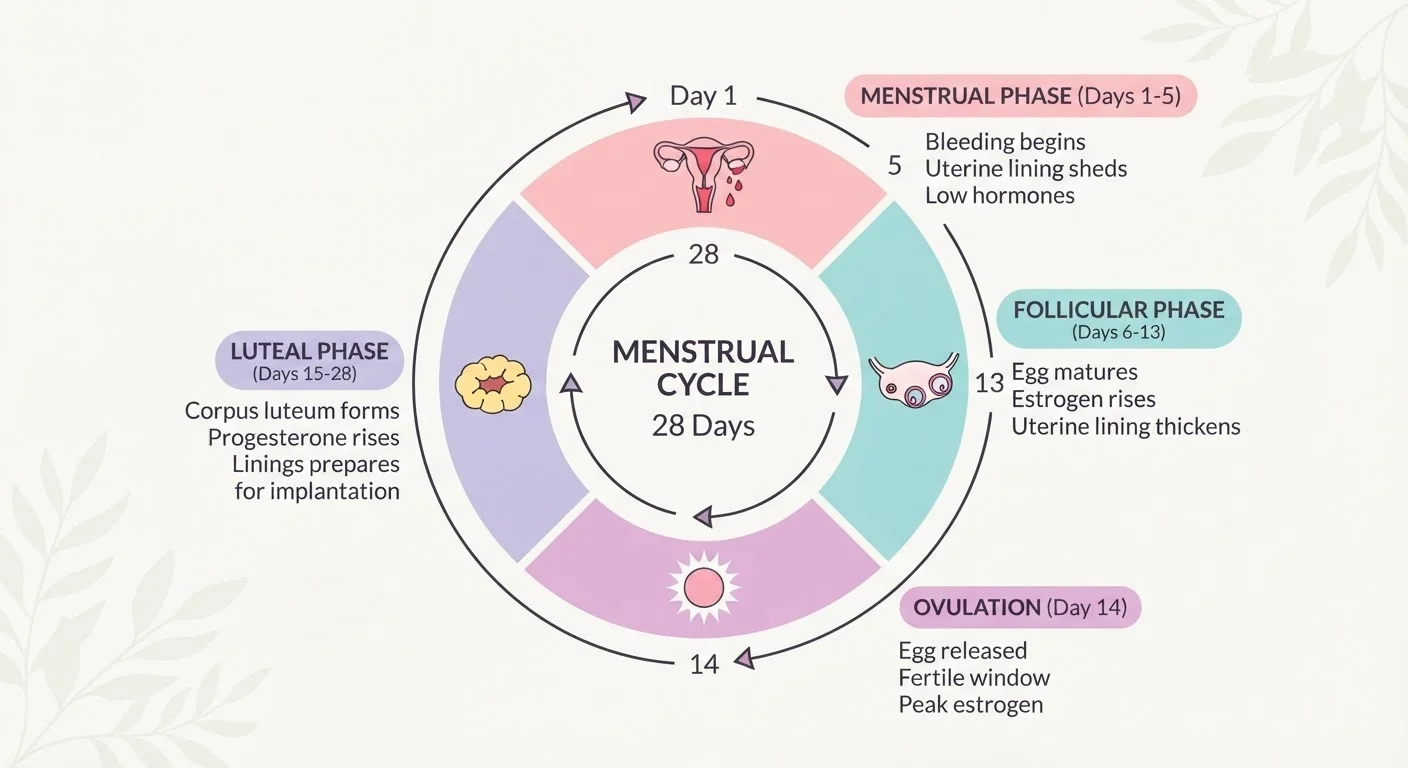
Phase 1: Menstrual Phase (Days 1-5)
The cycle officially begins on the first day of your period. During this phase, the uterine lining - called the endometrium - sheds because a fertilized egg did not implant. This shedding is what produces menstrual bleeding, which typically lasts three to seven days.
Estrogen and progesterone are at their lowest during this phase, which is why many people experience fatigue, cramping, or low mood around this time. The uterus contracts to help expel its lining, and these contractions are the source of menstrual cramps (medically known as dysmenorrhea).
Consider Keeping a Symptom Log
Tracking your cycle - including bleeding days, energy levels, mood changes, and physical symptoms - over several months creates a useful record. This information can be genuinely helpful when speaking with a gynecologist or primary care provider about patterns or concerns.
Light to moderate cramping during menstruation is common. However, severe pain that disrupts daily life can be a sign of conditions like endometriosis and deserves professional evaluation - not just tolerance.
Phase 2: Follicular Phase (Days 1-13)
The follicular phase actually overlaps with menstruation and continues after bleeding stops. The pituitary gland releases follicle-stimulating hormone (FSH), which signals the ovaries to develop several follicles - small fluid-filled sacs, each containing an immature egg. Usually, one dominant follicle emerges and matures.
As these follicles develop, they produce increasing amounts of estrogen, which causes the uterine lining to thicken and rebuild in preparation for a potential pregnancy. Rising estrogen is also associated with improved energy, elevated mood, and sharper cognitive focus - many people report feeling their best during this phase.
21-35 days
Normal menstrual cycle length range
According to the American College of Obstetricians and Gynecologists, cycle length varies considerably among individuals.
~6 days
Approximate fertile window per cycle
Research published in reproductive medicine literature identifies the five days before ovulation and the day of ovulation as the window during which conception is possible.
80%
Of people who menstruate report PMS symptoms
Estimates suggest the large majority of people with menstrual cycles experience some premenstrual symptoms, ranging from mild to severe.
Phase 3: Ovulatory Phase (Around Day 14)
Ovulation is triggered by a sharp surge in luteinizing hormone (LH), which causes the dominant follicle to rupture and release a mature egg into the fallopian tube. This phase is brief - ovulation itself occurs within 24 to 36 hours - but it marks the most fertile point in the cycle.
The released egg can survive for roughly 12 to 24 hours. Sperm, however, can survive in the reproductive tract for up to five days, which is why the fertile window extends several days before ovulation. Some people notice mild pelvic discomfort (called mittelschmerz), increased vaginal discharge, or a slight rise in basal body temperature around ovulation.
Cycle Length Affects Ovulation Timing
Day 14 is only an average estimate for ovulation based on a 28-day cycle. If your cycle is shorter or longer, ovulation will occur at a different point. For those tracking fertility, methods such as monitoring LH levels or basal body temperature can provide more personalized data than calendar counting alone.
Phase 4: Luteal Phase (Days 15-28)
After ovulation, the ruptured follicle transforms into a temporary glandular structure called the corpus luteum, which secretes progesterone - along with some estrogen. Progesterone's main job is to maintain the thickened uterine lining, keeping it ready for a fertilized egg to implant.
If pregnancy does not occur, the corpus luteum breaks down, progesterone and estrogen levels fall sharply, and the cycle restarts. This hormonal drop in the days before menstruation is closely associated with premenstrual symptoms (PMS), including bloating, breast tenderness, irritability, and fatigue. For some people, these symptoms are more severe - a topic explored further in our article on mental health and hormones.
Understanding how these four phases connect also has implications beyond reproduction. The pelvic structures involved throughout the cycle - including the pelvic floor - play a role in overall women's health. Learn more in our guide on pelvic floor health.
This article is for general informational purposes only and does not constitute medical advice. Always consult a qualified healthcare professional for concerns about your menstrual health or any symptoms you may be experiencing.
Frequently Asked Questions
A typical cycle ranges from 21 to 35 days, with an average around 28 days. Both shorter and longer cycles can be normal depending on the individual. Significant changes in your usual cycle length are worth discussing with a healthcare provider.
The four primary hormones are estrogen, progesterone, follicle-stimulating hormone (FSH), and luteinizing hormone (LH). These rise and fall at different points across the cycle, triggering each phase and coordinating the body's preparation for a potential pregnancy.
Yes. Hormonal shifts throughout the cycle are known to influence mood, sleep, energy, and focus for many people. The drop in estrogen and progesterone just before menstruation is closely linked to premenstrual symptoms. For more detail, see information on the premenstrual spectrum.
Fertility peaks around ovulation, typically around day 14 of a 28-day cycle. However, the fertile window generally spans about six days - the five days before ovulation and the day of. This window shifts depending on actual cycle length.
Some variation is normal, and cycles can temporarily shift due to stress, illness, significant weight changes, or travel. Persistently irregular cycles, very heavy bleeding, or missed periods should be evaluated by a healthcare professional.
Cycle tracking can reveal patterns in symptoms, energy, and mood - making it easier to anticipate changes and have more informed conversations with your doctor. It can also help identify irregularities that may warrant medical attention.
The content on this site is for informational purposes only and is not a substitute for professional advice. Always consult a qualified professional for guidance specific to your situation.