

Why People Get This Wrong
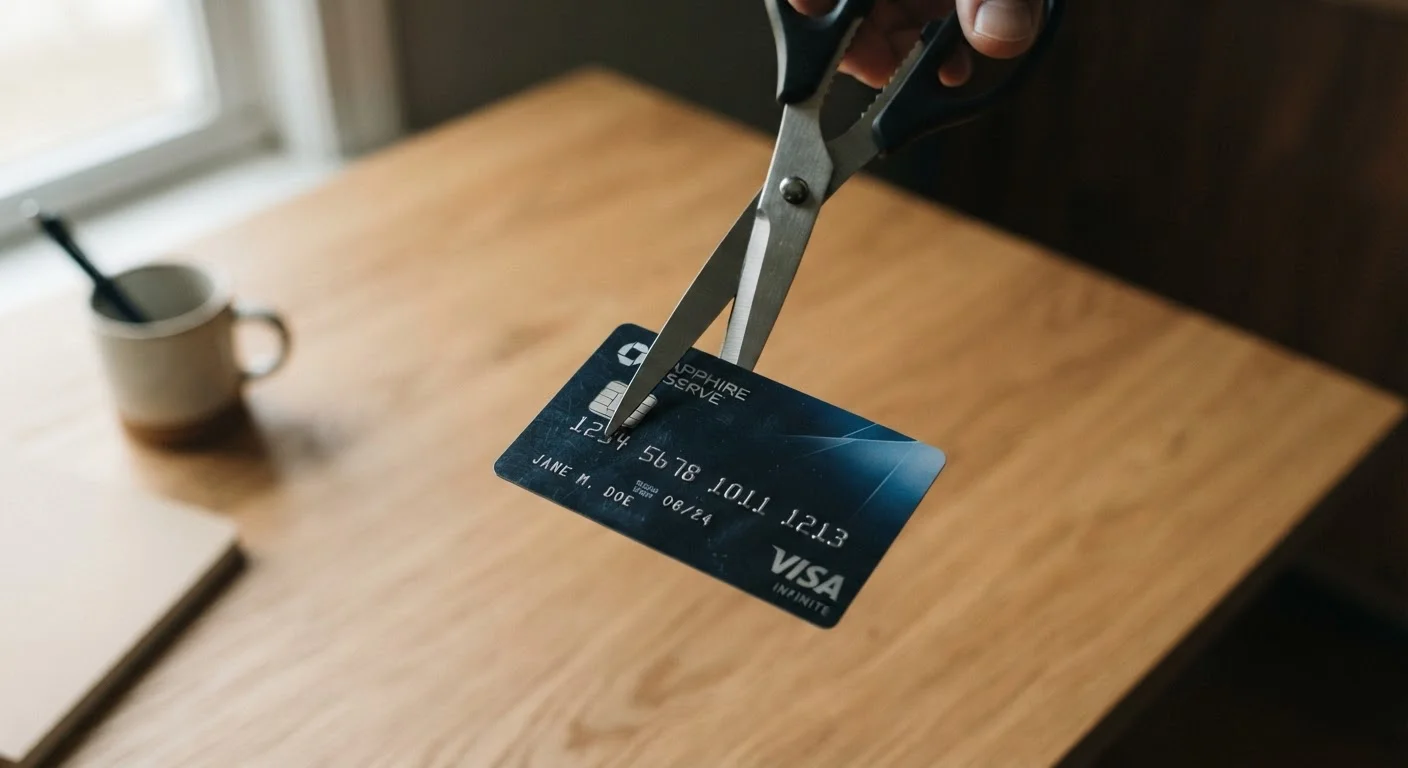
The decision to close a credit card seems simple — you stop using it, you close it, and you move on. But that reasoning skips over how credit scoring and account mechanics actually work. Misunderstanding the real effects leads some people to close cards at exactly the wrong time, and leads others to keep cards open out of fear that turns out to be unfounded.
This article walks through the most common misconceptions, paired with what's actually true. As with any financial decision, your individual situation matters — consider speaking with a qualified financial professional before making changes you're unsure about.
For a broader look at the everyday habits that chip away at scores over time, see The Habits That Tend to Quietly Damage a Credit Score Over Time.
Myth
Closing a credit card immediately removes it from your credit report.
Fact
A closed account — especially one in good standing — typically remains on your credit report for up to 10 years.
Credit bureaus don't erase your history the moment an account closes. A positive closed account can continue to contribute to your credit history length during that window. What changes is that the account's credit limit no longer counts toward your available credit, which affects utilization — not your history of on-time payments.
Myth
Closing a card always damages your credit score significantly.
Fact
The impact depends on your overall credit profile — for some people, the effect is minimal.
If you have many open accounts with high combined credit limits, closing one card with a small limit may barely move your utilization ratio. Score impact is not uniform. The concern is real, but the word "always" overstates it. Someone with a thin credit file or high existing utilization faces more risk than someone with a robust, low-utilization profile.
Myth
Closing a card means you no longer owe the balance on it.
Fact
Closing an account does not cancel or forgive any outstanding balance — you still owe what you charged.
This is one of the more costly misconceptions. When you close a card that carries a balance, that balance doesn't disappear. You're still obligated to pay it, interest continues to accrue under the original terms (unless the card issuer specifies otherwise), and missed payments will still be reported. Closing a card is an account status change, not a debt erasure.
Myth
Keeping every card open forever is always the smart move.
Fact
Cards with high annual fees and no practical benefit can cost more than the marginal credit score value they provide.
The idea that open cards are always better ignores the real cost of annual fees on cards you don't use. If a card charges $95 a year and you receive no rewards or benefits from it, keeping it open purely for credit score reasons may not make financial sense — particularly if your score is already strong. The calculus changes when a card has no fee or when its limit meaningfully lowers your utilization.
Myth
The age of your oldest card is the only thing that matters for credit history.
Fact
Credit scoring models consider the average age of all your accounts, not just the oldest one.
While having a long-standing account does help, scoring models — including those from FICO — look at the average age of all open accounts in your file. Opening several new accounts can pull that average down even if your oldest card remains open. Conversely, closing a newer card has less impact on your average age than closing an older one. It's a portfolio-level metric, not a single-card calculation.
Myth
You can reopen a closed credit card account whenever you want.
Fact
Whether a closed account can be reopened depends entirely on the card issuer's policies — and many won't reopen them.
Some issuers will reinstate a recently closed account if requested quickly — sometimes within 30 days — but this is not guaranteed and varies widely by institution. After a certain period, a closed account is generally permanent from the consumer's side. Don't assume you have a safety net to reverse the decision after the fact.
What Actually Matters When You're Deciding
Once you've sorted myth from fact, the real question is: does closing this particular card make sense for you? A few factors are worth weighing honestly.
30%
Weight of credit utilization in FICO scoring
According to FICO, amounts owed — primarily credit utilization — accounts for roughly 30% of a standard FICO score calculation.
15%
Weight of credit history length in FICO scoring
FICO attributes approximately 15% of a standard score to the length of credit history, which includes average account age and age of oldest account.
10 years
How long positive closed accounts stay on report
The Consumer Financial Protection Bureau (CFPB) notes that closed accounts with positive history generally remain on credit reports for up to 10 years.
Your overall credit utilization. If the card you're closing carries a significant portion of your total available credit, shutting it down raises your utilization ratio — which can hurt your score. If the card has a low limit relative to your total credit, the impact may be modest.
The account's age. Closing your oldest card removes it from your average account age calculation once it eventually drops off your report. If that card is decades old, think carefully. A newer card has less impact on this metric.
Annual fees versus actual use. If a card charges an annual fee and you're getting no real value from it, closing it can be a sensible choice even with a minor score dip — especially if your score is strong enough to absorb it.
Understanding the difference between card types can also help frame this decision. Secured vs. Unsecured Credit Cards: How the Mechanics Differ explains how these accounts are structured differently and what that means in practice.
Closing a Card Won't Erase What You Owe
If you close a credit card with an outstanding balance, you remain fully responsible for repaying that debt. Interest will typically continue to accrue, and missed payments on a closed account will still be reported to credit bureaus and can harm your score. Never close a card assuming the balance goes away with it.
This article is for general informational purposes only and does not constitute personalized financial or credit advice. Individual outcomes vary. Consult a licensed financial professional for guidance specific to your situation.
The content on this site is for informational purposes only and is not a substitute for professional advice. Always consult a qualified professional for guidance specific to your situation.