

Why Underinsurance Is So Easy to Miss
Underinsurance doesn't usually happen because someone made a reckless choice. It creeps in quietly — through policies bought years ago, coverage limits that haven't kept pace with inflation, or fine print that wasn't fully read. By the time a gap becomes visible, it's often because a claim has been filed and the payout falls short.
According to research cited by insurance industry groups, a significant share of US homeowners are underinsured relative to their home's actual rebuild cost — some estimates suggest the gap runs into the tens of thousands of dollars on average. The pattern is similar for renters, drivers, and small business owners who carry coverage that looked adequate when they bought it but no longer reflects their real risk exposure.
Understanding why these gaps form is the first step toward closing them. The mistakes below are among the most common — and most fixable. For a broader foundation, see an overview of the main insurance types and what each protects.
Choosing the minimum required coverage and assuming it's enough.
Why it happens: State minimums for auto insurance or lender-required minimums for home coverage are often framed as the baseline — which makes them feel sufficient. In practice, they're floors set by regulation or lender requirement, not benchmarks for adequate protection.
Never updating a policy after major life changes.
Why it happens: Insurance tends to be set-and-forget. Once a policy is in place, most people don't revisit it unless they receive a renewal notice — and even then, they often just pay the new premium without reviewing what's covered.
Underestimating home rebuild costs when setting dwelling coverage.
Why it happens: Homeowners often confuse market value (what someone would pay for the home) with rebuild cost (what it would take to reconstruct it from scratch). These figures can differ dramatically, especially after construction costs rise.
Skipping renters insurance or assuming a landlord's policy covers belongings.
Why it happens: Many renters don't realize that a landlord's property insurance covers the building structure only — not a tenant's furniture, electronics, clothing, or personal liability.
Overlooking liability limits in favor of focusing only on property coverage.
Why it happens: It's intuitive to insure things you can see — your car, your house, your possessions. Liability coverage, which protects against claims others make against you for injury or damage, is abstract and easy to deprioritize.
Not accounting for inflation when renewing existing policies.
Why it happens: A coverage limit that was reasonable five years ago may fall short today. Inflation affects rebuild costs, medical expenses, and the replacement value of personal property — but policy limits don't automatically adjust.
How to Review Your Own Coverage for Gaps
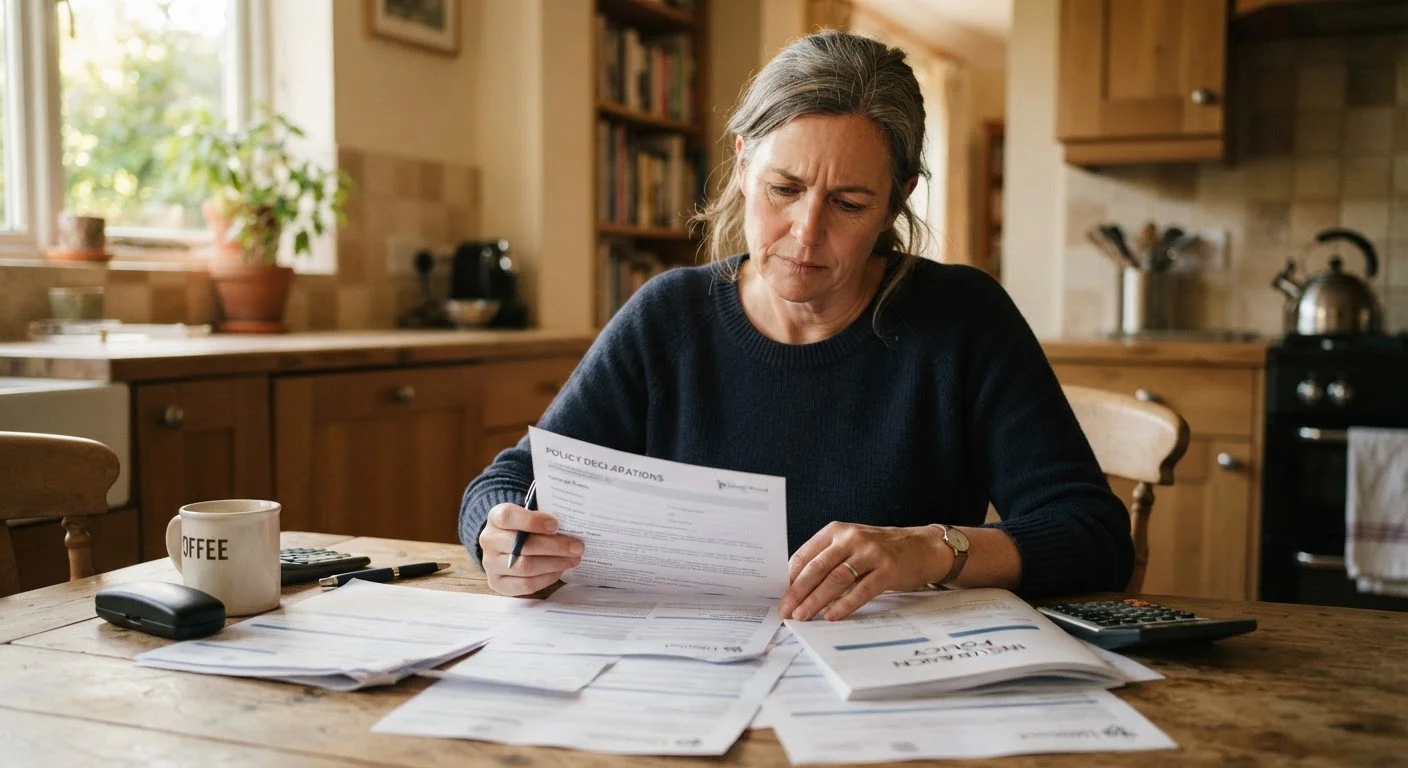
Spotting underinsurance before a claim forces the issue requires a deliberate review. Start by pulling out your current declarations pages — the summary sheet at the front of each policy that lists your coverage limits, deductibles, and any major exclusions.
~⅔
Homes underinsured relative to rebuild cost
Industry research and insurer data have consistently found that a large majority of insured US homes carry dwelling coverage below their actual replacement cost.
~45%
Renters without renters insurance
A recurring finding in consumer surveys is that fewer than half of US renters carry renters insurance, despite relatively low average annual premiums.
Ask yourself three questions for each policy: Does my coverage limit reflect what it would actually cost to replace or rebuild today? Has anything in my life changed since I last updated this policy? Are there risks I'm exposed to that no policy currently addresses?
For homeowners, a local contractor or an independent appraiser can give a rough sense of current rebuild costs in your area — a figure that often diverges sharply from market value. For life or disability coverage, a common rule of thumb is to consider income replacement needs over several years, though your actual figure will depend on your debts, dependents, and savings. These are starting points, not formulas.
Don't Wait for a Claim to Find the Gap
Coverage shortfalls only become painfully clear when a loss occurs and the payout doesn't cover the full cost. At that point, options are limited — you absorb the difference out of pocket. A proactive review, ideally with a licensed agent, costs nothing and can prevent a financially damaging surprise.
If reading your policy feels confusing, that's normal — coverage limits, exclusions, and excess amounts interact in ways that aren't always intuitive. Our guide on how to read and compare insurance policies walks through that process step by step. A licensed agent can also walk through your declarations pages with you and flag areas worth revisiting — without any obligation to change providers.
For a comprehensive look at the entire insurance landscape, from terminology to claims, the complete consumer guide to insurance covers it all in one place.
This article is for general informational purposes only and does not constitute personalised insurance, financial, or legal advice. Coverage terms, limits, and regulations vary by provider, policy, and state. Always read your policy documents carefully and consult a licensed insurance professional for guidance specific to your situation.
The content on this site is for informational purposes only and is not a substitute for professional advice. Always consult a qualified professional for guidance specific to your situation.