

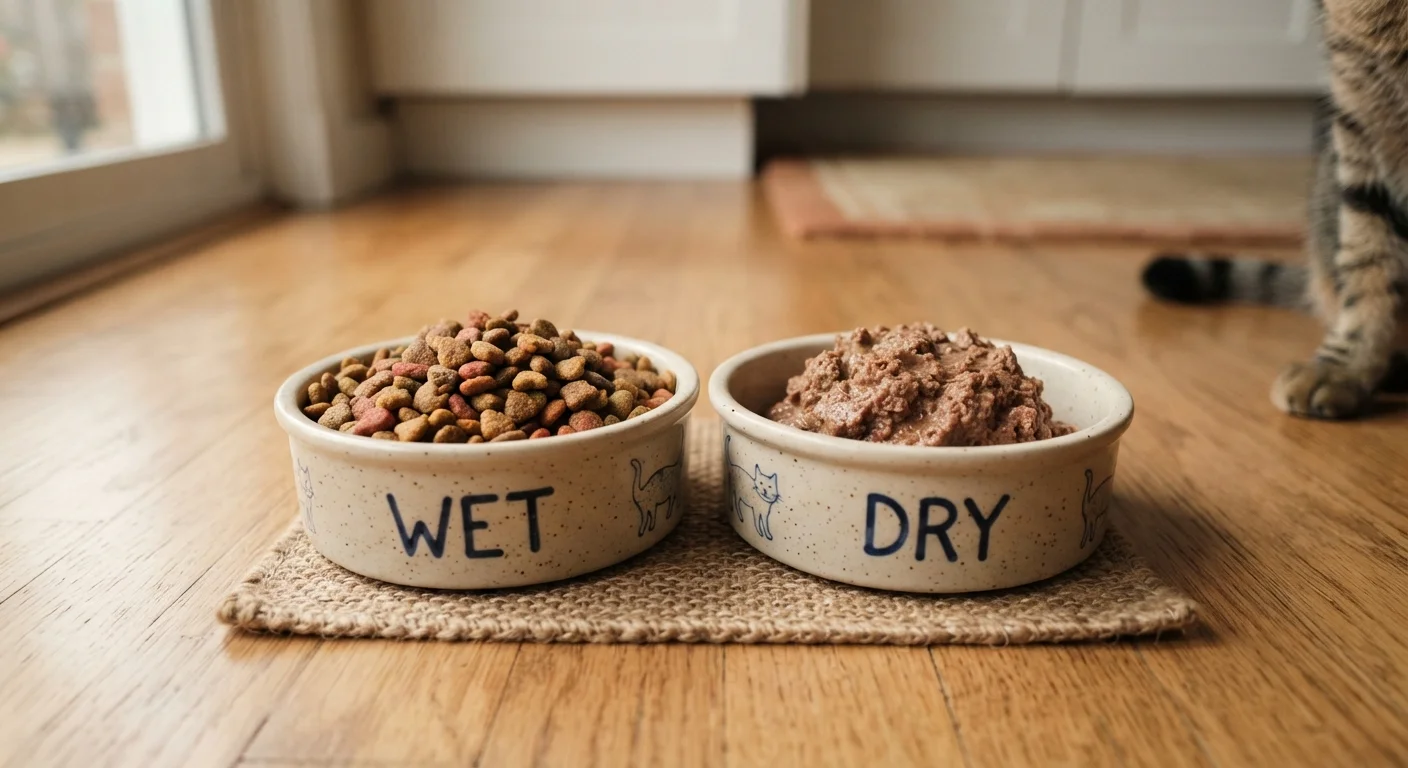
Option A
Dry Cat Food (Kibble)
The convenient, shelf-stable everyday staple.
Best for: Busy owners looking for affordable, easy-to-store feeding with flexible portion control.
Option B
Wet Cat Food (Canned or Pouched)
The moisture-rich, highly palatable feeding format.
Best for: Cats that need extra hydration, picky eaters, or those with urinary or kidney health concerns.
The Core Difference: Moisture Content
The most fundamental distinction between dry and wet cat food is water content. Dry kibble typically contains around 8–12% moisture, while canned or pouched wet food averages 70–80% moisture. This gap has real consequences for feline health.
Cats evolved as desert animals with a naturally low thirst drive. In the wild, they obtained most of their hydration from prey. A domestic cat eating exclusively dry food may chronically under-drink, which can contribute to urinary tract problems and, over time, place stress on the kidneys. Wet food helps close that hydration gap automatically — without relying on the cat to seek out a water bowl.
For a deeper look at why cats have such specific nutritional requirements, see our guide to feline nutrition, which explains how their biology shapes every feeding decision.
| Criterion | Dry Food (Kibble) | Wet Food (Canned/Pouched) |
|---|---|---|
| Moisture content | 8–12% | 70–80% |
| Hydration support | Low | High |
| Cost per serving | Generally lower | Generally higher |
| Shelf life (opened) | Weeks to months | 1–3 days (refrigerated) |
| Palatability | Moderate | High |
| Calorie density | High per ounce | Lower per ounce |
| Suitability for dental health | Modest benefit, limited evidence | No mechanical benefit |
| Ease of portion control | Easy | Easy (per pouch or can) |
| Best for urinary/kidney health | Less suitable alone | Preferred format |
| Storage convenience | High — room temperature | Lower — requires refrigeration |
Nutrition, Palatability, and Dental Health
Both food formats can be nutritionally complete when they carry an AAFCO (Association of American Feed Control Officials) statement on the label. The format itself doesn't determine quality — the ingredient list and nutrient profile do. That said, some practical differences are worth noting.
Protein and calories: Dry food is more calorie-dense by weight. A small cup of kibble can carry as many calories as a large portion of wet food. For cats prone to weight gain, wet food's lower calorie density per gram can make portion control easier without leaving the cat feeling unsatisfied.
Palatability: Wet food tends to win on taste. Its higher fat and protein content, combined with stronger aroma, makes it more appealing — especially to cats with reduced appetite, older cats with diminished senses, or picky eaters.
Dental health: Dry food is sometimes marketed as better for teeth because of its crunchy texture. The evidence for this claim is modest. Most cats don't chew kibble long enough to produce meaningful plaque reduction. Regular dental check-ups and veterinary-recommended dental hygiene practices remain the reliable approach to oral health, regardless of food format.
When comparing labels, understanding what's actually in the bag or can is just as important as choosing the format itself.
70–80%
Moisture in wet cat food
Compared to roughly 8–12% in dry kibble, reflecting a substantial difference in daily fluid intake from food alone.
~50%
Of cats' water intake can come from wet food
Veterinary nutritionists note that cats on wet food diets may naturally consume significantly more total fluid than those on kibble alone.
2–4x
Higher cost per serving for wet food
On average, wet cat food tends to cost two to four times more per daily serving than equivalent-quality dry food.
Cost, Storage, and Practicality
Day-to-day practicality plays a real role in what's sustainable long-term. Dry food generally costs less per serving, stores at room temperature for months, and can be dispensed through automatic feeders — making it popular with owners who have variable schedules.
Wet food costs more per serving, must be refrigerated once opened, and spoils within a few hours if left in a bowl. This limits free-feeding and requires more active meal management. However, for cats with health conditions requiring increased hydration — such as chronic kidney disease or lower urinary tract disease — the added cost may be clinically worthwhile. Always discuss your cat's specific health needs with a veterinarian before making significant dietary changes.
A common middle-ground approach is combination feeding: dry food available throughout the day with one or two scheduled wet food meals. This balances convenience with hydration benefits and can add variety that keeps cats more engaged with their food.
This article is for general informational purposes only and does not constitute veterinary advice. Consult a licensed veterinarian for guidance specific to your cat's health needs.
The content on this site is for informational purposes only and is not a substitute for professional advice. Always consult a qualified professional for guidance specific to your situation.