

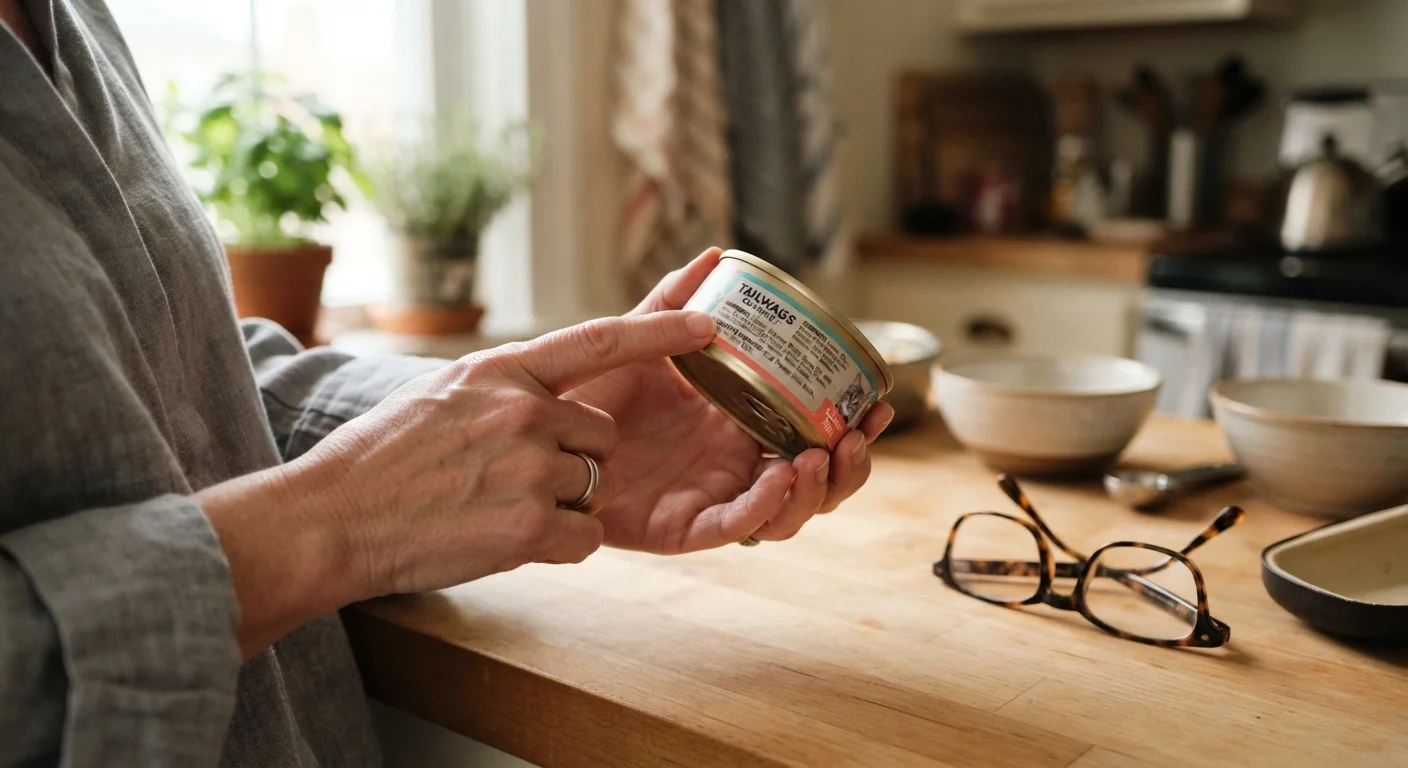
Why Cat Food Labels Can Be Confusing
Cat food packaging is designed to sell — but buried beneath the marketing copy is a set of standardized, regulated sections that actually tell you something meaningful. In the United States, cat food labeling is governed by the AAFCO model regulations, which most states adopt, and by the FDA. Knowing where to look — and what each section actually means — puts you in a far stronger position as a buyer.
This guide walks through each major section of a cat food label in the order you're likely to encounter it, from the front panel to the fine print on the back. For a related comparison, see our guide on wet vs. dry cat food to understand how format affects what you're reading.
What you will need
How to Read Each Section of the Label
Work through the label systematically using the steps below. Each section has a specific regulatory purpose, and understanding that purpose prevents you from being misled by front-panel claims.
Check the Product Name for Ingredient Clues
AAFCO naming rules mean the product name is itself a nutritional signal. If the primary protein appears in the product name alone (e.g., "Salmon Cat Food"), that ingredient must make up at least 95% of the formula by weight, excluding added water. If the name includes a qualifier like "dinner," "entrée," or "platter," the named ingredient only needs to be 25%. "With salmon" drops the requirement to just 3%.
Find and Interpret the AAFCO Nutritional Adequacy Statement
This small block of text — typically on the back or side panel — is the single most important regulatory element on the label. It will say one of the following:
- "Complete and balanced" for a named life stage (e.g., adult maintenance, growth, or all life stages), based on either AAFCO nutrient profiles or a feeding trial.
- "Intended for intermittent or supplemental feeding only" — meaning the food is not nutritionally complete and should not be a cat's sole diet.
"All life stages" formulas must meet the most demanding nutrient minimums (those set for growth and reproduction), making them suitable for kittens and pregnant cats as well as adults.
Read the Ingredient List Critically
Ingredients are listed in descending order by weight before processing. Water content in raw meat is heavy, so a whole meat listed first may be less abundant post-cooking than a meal ingredient (e.g., "chicken meal") listed second. Chicken meal is a concentrated, dehydrated protein source and is not inherently inferior. Look for:
- Named protein sources ("chicken," "salmon") rather than vague terms ("meat by-products" without species identification)
- Specific fat sources ("chicken fat" rather than "animal fat")
- The position of carbohydrate sources — if multiple grains or starches appear in the first five ingredients, carbohydrates make up a significant portion of the food
Understand the Guaranteed Analysis Panel
This panel lists minimum crude protein and crude fat, and maximum crude fiber and moisture. These are not precise values — they are regulatory floor and ceiling figures. The word "crude" refers to the lab measurement method, not food quality. To compare wet and dry foods fairly, you must convert both to a dry matter basis by removing the moisture percentage from the equation. A wet food showing 10% protein at 78% moisture actually contains roughly 45% protein on a dry matter basis — much higher than the label's raw number suggests.
Confirm the Life-Stage Match for Your Cat
Match the AAFCO life-stage claim to your cat's actual situation. Kittens and pregnant or nursing cats need higher levels of protein, fat, calcium, and phosphorus — an adult maintenance formula is not appropriate for them. Senior cats do not have a separate AAFCO life-stage category, so "senior" on a label is largely a marketing designation. If your cat is older, discuss specific nutritional priorities (such as kidney-friendly phosphorus levels or joint support) with your veterinarian rather than relying on "senior" branding alone.
Comparing Labels Across Brands
When comparing two foods, always check moisture content first. Wet and dry foods look dramatically different on the guaranteed analysis panel because of water content differences. Converting both to a dry matter basis gives you a genuine like-for-like comparison. Our guide on dry food vs. wet food for cats walks through the practical trade-offs beyond nutrition.
If your cat has a health condition, always review any food changes with your vet. Appetite changes can also signal underlying issues — our article on when a cat stops eating explains warning signs worth knowing.
Common Label Claims and What They Actually Mean
Front-panel language is largely unregulated beyond a few specific terms. Understanding the difference between legally defined phrases and marketing language is essential.
- "Natural": Has an AAFCO definition — ingredients must be derived from plant, animal, or mined sources without synthetic processing. It does not mean organic or nutritionally superior.
- "Grain-free": Means grains like wheat and corn are absent, but carbohydrate sources such as peas or potatoes may replace them. Grain-free is not inherently healthier for cats; cats have a limited ability to digest carbohydrates regardless of source.
- "Human grade": Only meaningful if the manufacturer can document that every ingredient and the facility meet federal human food standards. This claim is often used loosely.
- "With real chicken" vs. "chicken formula": AAFCO rules govern naming. A food labeled "Chicken Cat Food" must contain at least 95% chicken (excluding water). "With chicken" only requires 3%. The word choice matters significantly.
Cats Have Unique Nutritional Requirements
Cats are obligate carnivores and cannot synthesize certain nutrients — including taurine and arachidonic acid — from plant sources. A deficiency in taurine, for example, can cause serious heart and vision problems. Always choose a food with a clear AAFCO completeness statement, and consult your veterinarian if you are considering a homemade or raw diet.
Cats are obligate carnivores — they require certain nutrients found only in animal tissue, including taurine and arachidonic acid. A label that emphasizes plant-based ingredients or lacks an adequate AAFCO statement warrants a conversation with your veterinarian before feeding.
The content on this site is for informational purposes only and is not a substitute for professional advice. Always consult a qualified professional for guidance specific to your situation.