

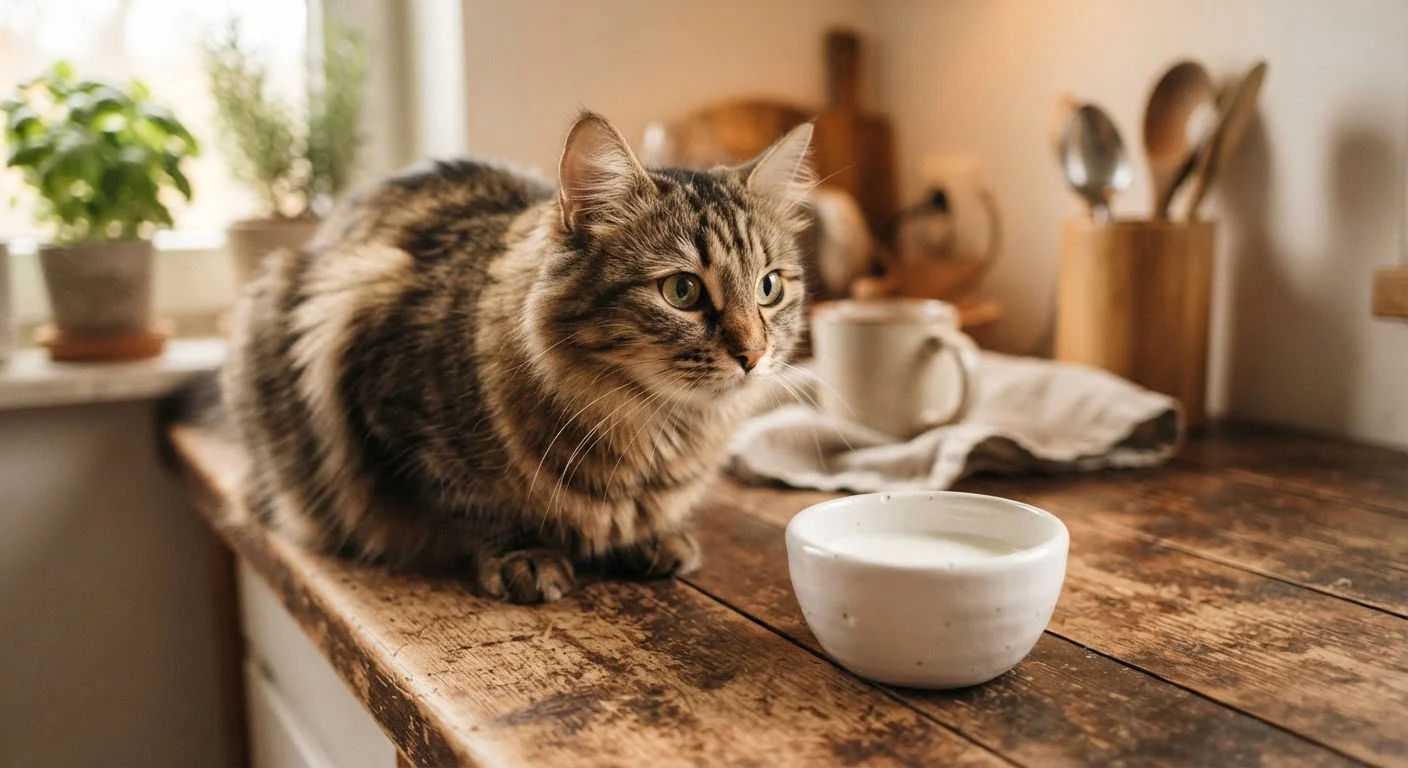
Where the Milk Myth Comes From
The image of a contented cat lapping milk from a saucer is deeply embedded in popular culture — from children's books to vintage advertising. Historically, farm cats often had access to fresh milk as a byproduct of dairy work, and because cats are opportunistic feeders, they took advantage of it. That cultural association stuck, long after we developed a clearer picture of feline digestive biology.
The reality is that domestic cats are obligate carnivores — meaning their bodies are built around processing animal protein and fat, not plant-based carbohydrates or dairy sugars. Milk, while appealing in taste, doesn't align well with how most adult cats digest food.
Myth
Cats love milk, so it must be good for them.
Fact
Cats may be attracted to milk's fat content, but attraction does not equal nutritional suitability or digestive tolerance.
Many cats will readily lap up milk when offered — but willingness to eat or drink something is not evidence that it agrees with them. Milk is high in fat, which cats find palatable, but the lactose (a sugar naturally present in milk) is the problem. Most adult cats lack sufficient levels of the enzyme lactase, which is needed to break down lactose. Without it, undigested lactose passes into the large intestine, where bacteria ferment it, causing gas, diarrhea, and stomach cramping.
Myth
Kittens drink their mother's milk, so all cats can handle dairy.
Fact
Kittens are born able to digest their mother's milk, but lactase production decreases significantly after weaning.
This is one of the most common sources of confusion. Newborn kittens do produce lactase — it's essential for survival. However, after weaning (typically around 8–10 weeks), the body naturally reduces lactase output because milk is no longer part of the diet. By adulthood, most cats produce very little lactase. Cow's milk also differs nutritionally from queen's (mother cat's) milk, so the two are not interchangeable even for kittens in need of supplemental feeding. Veterinary-approved kitten milk replacers are the appropriate option if a kitten cannot nurse.
Myth
If a cat isn't visibly sick after drinking milk, it's fine for them.
Fact
Symptoms of lactose intolerance can be subtle, delayed, or mistaken for other causes.
Digestive upset from lactose doesn't always produce dramatic vomiting. Loose stools, excess gas, or mild abdominal discomfort may occur hours after consumption and may not be immediately connected to the milk. Individual cats also vary in their degree of lactose intolerance — some tolerate tiny amounts with no obvious reaction, while others respond to even a tablespoon. Absence of visible symptoms isn't a reliable green light, especially with regular exposure.
Myth
Lactose-free or cat milk products solve the problem completely.
Fact
Lactose-reduced dairy is gentler on the digestive system, but it still shouldn't replace water or a balanced diet.
Products labeled "cat milk" or "lactose-free milk" are reformulated to remove most lactose, making them far less likely to cause digestive upset. For cats who enjoy the taste and tolerate dairy, a small occasional serving of these products is unlikely to be harmful. However, they add calories without significant nutritional benefit — cats do not need dairy to meet any nutritional requirement. Fresh water remains the gold standard for feline hydration. If you're looking to enrich your cat's diet, reviewing what goes into their regular meals is a better starting point. Our guide to reading cat food labels can help you decode what's actually in the bowl.
Myth
Senior cats can have milk as a protein supplement.
Fact
Older cats have specific nutritional needs that dairy milk is poorly suited to meet.
Senior cats do often benefit from higher protein intake and careful dietary management, but cow's milk is not an appropriate vehicle for this. The lactose issue doesn't disappear with age — and older cats may actually have more sensitive digestive systems. Additionally, the protein in cow's milk isn't optimally formulated for feline needs. Veterinarians recommend age-appropriate commercial diets or vet-approved supplements for older cats rather than dairy. For more on caring for ageing cats, see our article on what changes with feline seniority.
What Cats Actually Need to Drink
Cats evolved as desert animals, which means they have a relatively low thirst drive and are adapted to obtain much of their moisture from prey. This is one reason wet food can play a useful role in overall hydration — something explored in our comparison of dry food vs wet food for cats.
Fresh, clean water is the only drink cats genuinely need. Some cats prefer running water from a pet fountain, which can encourage them to drink more consistently. If your cat drinks very little water and eats primarily dry food, it's worth discussing hydration strategies with your veterinarian rather than turning to milk as a workaround.
Milk Is Not a Safe Treat Default
Even if your cat drinks milk without obvious distress, digestive discomfort can still be occurring internally. Repeated exposure to lactose a cat cannot digest may cause chronic loose stools or vomiting. If your cat has shown any gastrointestinal sensitivity in the past, avoid dairy entirely and consult your veterinarian about appropriate treat options.
The occasional cat may tolerate small amounts of plain, full-fat dairy without obvious issues — but tolerance is individual, not universal. When in doubt, skip the saucer and offer water instead.
~65–70%
Adult mammals with reduced lactase after weaning
Lactose malabsorption after weaning is the biological norm across most mammal species, including the majority of domestic cats.
8–10 weeks
Typical weaning age for kittens
Veterinary guidelines generally place the natural weaning window for domestic kittens between 8 and 10 weeks, after which lactase production typically declines.
The content on this site is for informational purposes only and is not a substitute for professional advice. Always consult a qualified professional for guidance specific to your situation.