

Why Crate Training Works — and Why It's Not Cruel
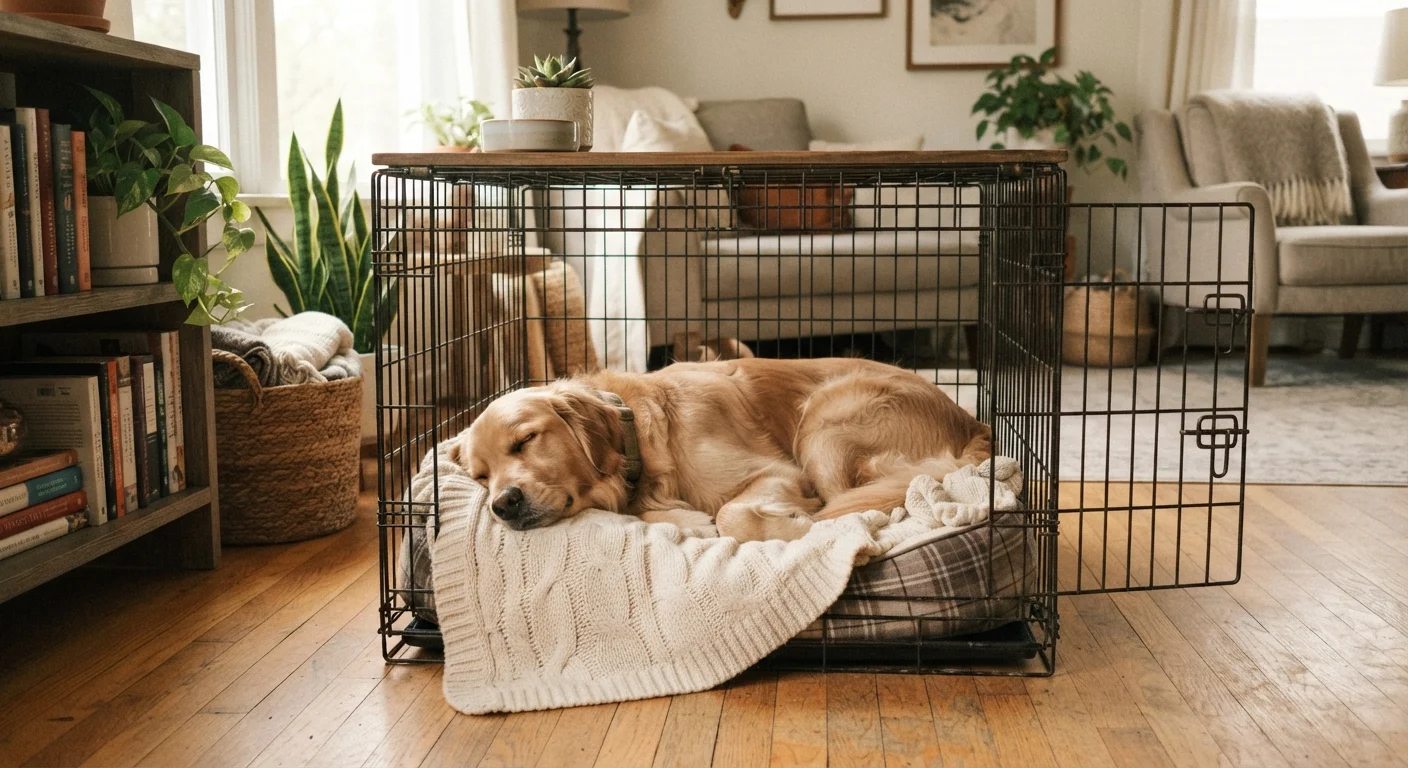
Dogs are naturally inclined toward den-like spaces. A well-introduced crate taps into this instinct, offering a predictable refuge where your dog can rest undisturbed. Far from being a cage, a properly used crate becomes a space your dog seeks out voluntarily — much like a cat claiming a favorite perch.
Crate training also supports housebreaking, reduces destructive behavior when dogs are unsupervised, and provides a calming anchor during chaotic moments like house guests or thunderstorms. If you're bringing a dog home for the first time, our guide to what new dog owners need to know covers how crate training fits into the broader picture of early dog ownership.
The critical variable is how the crate is introduced. Rushed or forced introduction produces anxiety; patient, reward-based introduction produces a dog that's genuinely comfortable — often choosing to nap in the crate even when the door is open.
Watch for signs of genuine distress
Whining or mild fussing when first crated is common and usually passes. However, if your dog is panting heavily, drooling excessively, injuring themselves trying to escape, or showing prolonged distress, this may indicate separation anxiety rather than a training issue. Consult a veterinarian or certified dog trainer before continuing. See our article on separation anxiety in dogs for more context.
What You'll Need Before You Start
Getting the setup right before training begins makes a meaningful difference. The crate type — wire, plastic, or soft-sided — matters less than getting the size right and placing it in a location where your dog won't feel isolated.
What you will need
Dog crate
Provides the enclosed, den-like space your dog will learn to associate with rest and safety.
Soft bedding or crate mat
Makes the crate interior comfortable and inviting, encouraging your dog to enter voluntarily.
High-value training treats
Used to reward calm, voluntary entry into the crate and reinforce positive associations.
Food-stuffed chew toy (e.g., rubber Kong-style toy)
Gives your dog a calming, self-directed activity that extends time spent comfortably in the crate.
Clicker
Provides a precise marker signal to pinpoint and reward desirable crate behaviors.
Step-by-Step Crate Training
Follow these steps in sequence, spending as many days as needed at each stage before progressing. With puppies, each stage may take two to three days. Adult dogs sometimes move faster, particularly those that have had positive crate experiences before.
Choose and set up the right crate
Select a crate large enough for your dog to stand up, turn around, and lie down comfortably — but not so large that they can use one end as a bathroom. For puppies that are still growing, consider a crate with a divider panel that lets you adjust the interior size as they develop.
Place the crate in a low-traffic but not isolated area — a corner of the living room or bedroom works well. Add soft bedding and, optionally, an item with your scent to make it feel familiar.
Introduce the crate without any pressure
Leave the crate door open and let your dog investigate at their own pace. Toss a few treats near the entrance, then just inside. Do not push or lure your dog all the way in — let curiosity do the work. Repeat this over several short sessions throughout the day.
For dogs that are especially hesitant, simply sitting near the crate and feeding treats by hand close to the entrance is enough to start building a positive association.
Feed meals near and inside the crate
Begin placing your dog's regular meals progressively closer to the crate, then just inside the entrance, then fully inside with the door open. Once your dog is eating comfortably inside, you can briefly close the door while they eat — opening it as soon as they finish.
Gradually extend the time the door stays closed by a minute or two with each meal, always letting your dog out calmly before any signs of stress appear.
Practice short crating sessions during the day
Once your dog enters comfortably and eats inside with the door closed, begin crating them for short periods while you remain home. Use a verbal cue like "crate" or "bed" consistently. Reward entry with a treat and a food-stuffed toy to keep them occupied. Start with five to ten minutes, then gradually work up to 30 minutes or more over several days.
Extend crating time and practice departures
When your dog can rest quietly for 30 minutes with you nearby, begin leaving the room or house for short periods. Keep departures and arrivals low-key — no dramatic goodbyes or excited greetings, as these make the contrast between alone-time and your presence feel more intense.
Build duration slowly: 30 minutes, then an hour, then longer. Adult dogs can typically handle longer stretches than puppies, who need a bathroom break roughly every hour per month of age.
Establish a consistent overnight crating routine
For overnight crating — common with puppies — place the crate in or near your bedroom so your dog can hear and smell you. Puppies will likely need one or two nighttime bathroom trips in the early weeks. Take them out quietly, allow them to eliminate, then return them to the crate without play or fuss.
Most puppies can sleep through the night in their crate by around 16 weeks, though individual variation is normal.
Regression is normal — stay consistent
Some dogs, especially those adopted as adults, may go through phases of renewed crate reluctance. This is common and doesn't mean training has failed. Return briefly to an earlier step, rebuild the positive association, and progress again at your dog's pace. Consistency over days matters more than perfection in any single session.
Adapting the Process for Adult and Senior Dogs
Adult dogs can absolutely be crate trained — in some ways it's easier, since they have better impulse control than puppies. The same principles apply: gradual introduction, positive association, and never using the crate as punishment. The main adjustment is patience with history. A dog that has never been crated, or one that had a negative early experience, may need more time at the introductory stages.
For senior dogs with arthritis or joint pain, extra-thick bedding and a crate with a low front opening can make entry and exit far more comfortable. Our resource on keeping an ageing dog comfortable covers broader adjustments worth making as dogs grow older.
Crates Are Not a Substitute for Exercise
A crate is a rest space, not a containment solution for an under-exercised dog. Dogs left crated for excessive hours — beyond what's appropriate for their age and needs — can develop behavioral and physical problems. Use the crate as one part of a balanced routine that includes regular walks, mental stimulation, and social time.
Once crate training is established, pairing it with other structured habits — like loose-leash walking — builds an overall calmer, more settled dog.
The content on this site is for informational purposes only and is not a substitute for professional advice. Always consult a qualified professional for guidance specific to your situation.