

Why Life Stage Matters More Than You Might Think
Bearded dragons are not one-size-fits-all eaters. A feeding routine that keeps a hatchling thriving can make an adult overweight and malnourished at the same time. That's because their nutritional priorities shift dramatically as they move from rapid skeletal growth to simple maintenance.
Understanding which stage your dragon is in — and adjusting the balance of protein to plant matter accordingly — is one of the most impactful things you can do for their long-term health. This guide walks you through what to feed, how often, and what to keep out of the enclosure entirely.
What you will need
What to Feed at Each Life Stage
Hatchlings and Juveniles (0–6 Months)
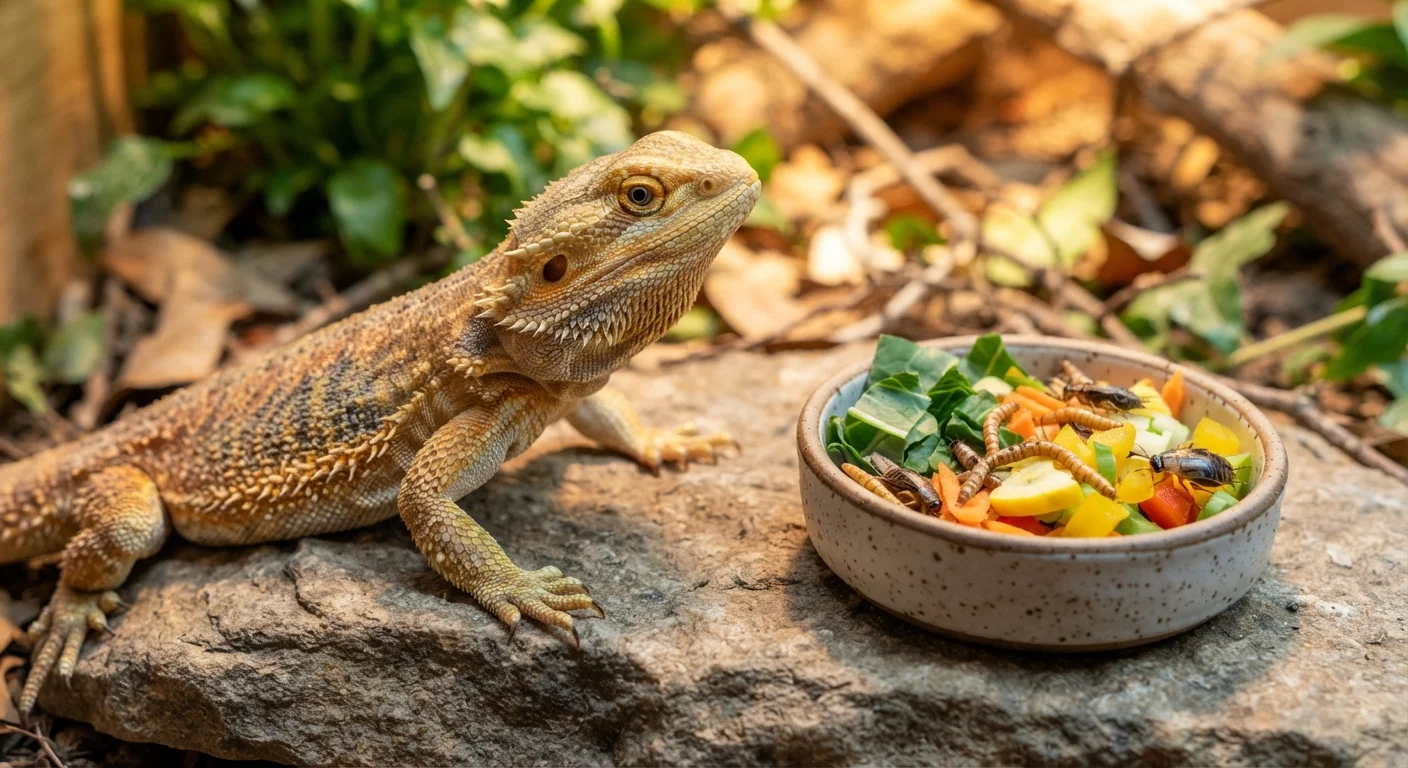
Young dragons grow incredibly fast and need a high-protein diet to support bone and muscle development. Aim for roughly 70% feeder insects and 30% leafy greens. Appropriate feeder insects include dubia roaches, crickets, and black soldier fly larvae. Offer insects 2–3 times per day in quantities the dragon can eat within about 10 minutes. Remove uneaten insects promptly to prevent stress.
Fresh greens should be available daily, even if juveniles show little interest early on. Good staple greens include collard greens, mustard greens, and turnip greens. Avoid spinach and iceberg lettuce as regular staples — they either block calcium absorption or offer minimal nutrition.
Sub-Adults (6–12 Months)
The transition period calls for a gradual shift: move toward a roughly 50/50 split between insects and plant matter. Reduce insect feedings to once daily, and start introducing a wider variety of vegetables such as butternut squash, bell peppers, and snap peas. This is a good time to reinforce the habit of eating greens so the dragon is well-prepared for the adult diet.
Adults (12+ Months)
A fully grown bearded dragon no longer needs large amounts of protein and can become obese or develop fatty liver disease if overfed insects. Flip the ratio to approximately 70% vegetables and leafy greens, 30% insects. Feed insects two to three times per week rather than daily. Continue offering a salad of varied greens and vegetables every day. Fruit can be offered occasionally as a small treat — berries, papaya, and mango are generally well-tolerated — but should not make up a significant portion of the diet due to their sugar content.
Variety Is Key for Long-Term Health
Rotating through several types of feeder insects and leafy greens ensures your dragon gets a broader spectrum of nutrients. Relying on a single insect type or one variety of green can lead to nutritional gaps over time. Think of the salad bowl as an opportunity to mix things up every few days.
Supplementation and Foods to Avoid
Calcium and Vitamin D3
Metabolic bone disease (MBD) — caused by insufficient calcium or vitamin D3 — is one of the most common and serious health issues in captive bearded dragons. Dust feeder insects with a calcium supplement (without D3) at most feedings, and use a supplement containing D3 two to three times per week. If your dragon has access to UVB lighting as recommended, their body can synthesize some D3 on its own, but dietary supplementation is still widely recommended by reptile veterinarians as a safeguard. Consult your vet for specific guidance on the supplementation schedule that suits your setup.
Foods That Should Never Be Offered
- Avocado — toxic to reptiles
- Rhubarb — contains oxalic acid at harmful levels
- Fireflies or any glowing insects — highly toxic, potentially lethal
- Wild-caught insects — may carry pesticides or parasites
- Onions and chives — can cause digestive and blood issues
Never Feed Wild-Caught Insects
Insects collected from gardens, yards, or outdoors may have been exposed to pesticides, herbicides, or parasites that can seriously harm your dragon. Always source feeder insects from a reputable supplier. This applies to all life stages — there is no age at which wild-caught insects become safe.
Fresh water should always be available in a shallow dish. Many dragons don't drink readily from standing water; a light misting a few times per week or gentle bathing can help with hydration. If you're also working on building trust with your dragon, see our guide to handling reptiles without stress for techniques that make routine care — including feeding — less stressful for both of you.
This article is for general informational purposes only and is not a substitute for advice from a qualified reptile veterinarian. If you have concerns about your bearded dragon's health or diet, consult a vet with exotic animal experience.
The content on this site is for informational purposes only and is not a substitute for professional advice. Always consult a qualified professional for guidance specific to your situation.