

Why Handling Technique Actually Matters
Many new reptile owners assume that because their pet doesn't vocalize or react dramatically, stress isn't a major concern. That assumption is worth reconsidering. As explored in our guide to common reptile myths, reptiles do respond to fear and discomfort — they simply express it differently than dogs or cats.
Chronic handling stress can suppress a reptile's immune function, reduce appetite, and contribute to illness over time. Getting the fundamentals right from the start protects your animal's health and makes your interactions more rewarding.
Species Differences Matter
Handling tolerance varies significantly between reptile species. Bearded dragons and corn snakes are generally known for becoming quite docile with regular, gentle handling. Others, like day geckos or many chameleon species, are typically better suited to observation than frequent physical contact. Research your specific species before establishing any handling routine, and consult a reptile-experienced vet if you're unsure what's appropriate.
The Settling-In Period: Hands Off at First
When you bring a reptile home, their entire environment is new and unfamiliar. Before handling begins, the animal needs time to acclimate — to learn that their enclosure is safe, that food arrives reliably, and that large movements nearby aren't a threat.
Most reptile keepers and veterinary sources suggest waiting one to two weeks before the first handling session, though this varies by species and individual temperament. During this period, move slowly near the enclosure, avoid tapping the glass, and keep the area reasonably quiet. Make sure the habitat itself is properly set up — temperature gradients, humidity, and lighting all affect how settled your reptile feels. Our environmental basics guide for reptile keepers covers those essentials in detail.
Best Practices for Safe, Low-Stress Handling
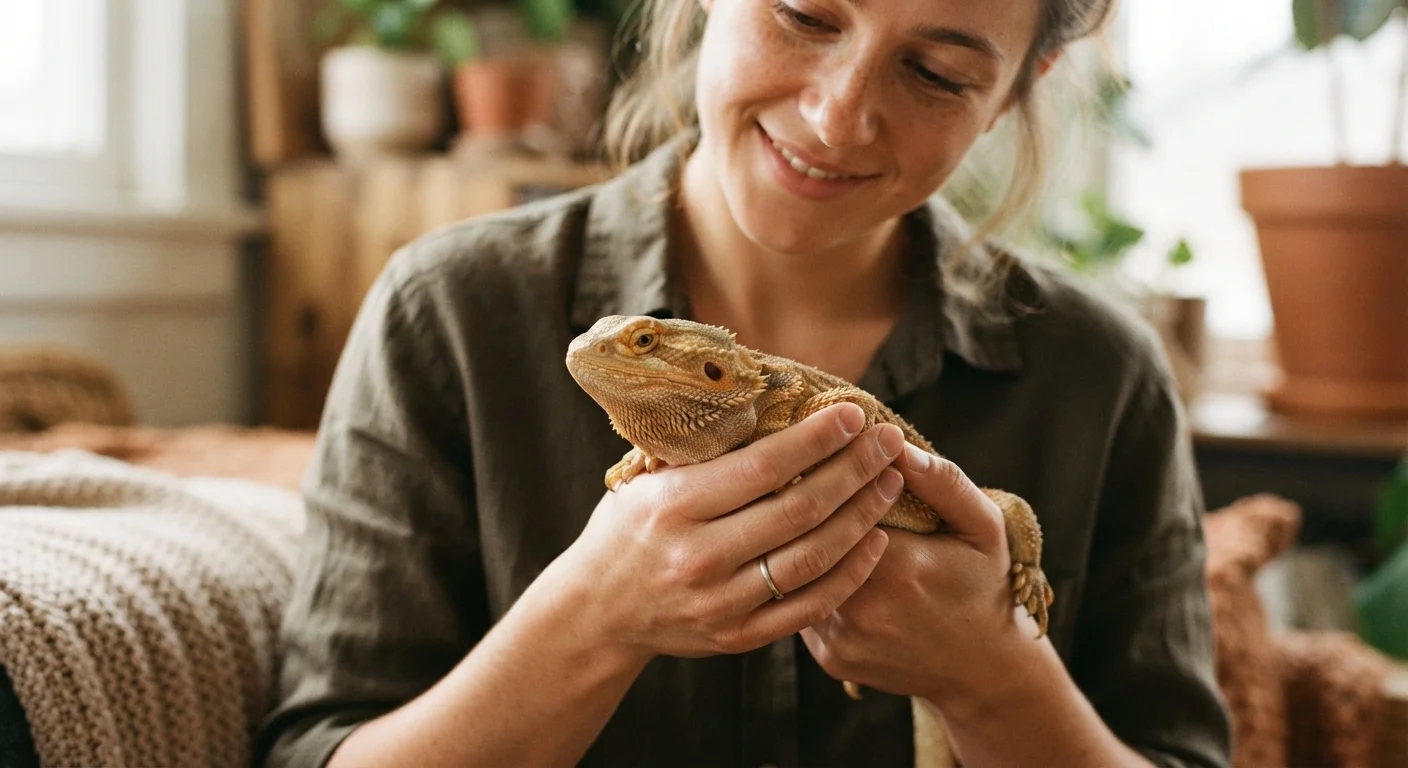
Once your reptile has settled, you can begin short, calm handling sessions. The following practices apply broadly across common pet reptiles such as bearded dragons, leopard geckos, corn snakes, and blue-tongued skinks — though always research the specific needs of your species.
Always approach from the side, not from above
Reptiles are prey animals in the wild, and a hand descending from above mimics an aerial predator. This triggers an instinctive fear response even in otherwise calm animals. Approaching from the side is far less threatening and helps your animal associate your hand with safety.
Support the full body weight at all times
A reptile that feels unsupported will thrash, grip tightly, or attempt to flee — all of which increase stress and injury risk. Supporting the body fully signals that the animal is stable and not in danger of falling.
Keep initial sessions short — five minutes or fewer
Shorter sessions that end on a calm note are far more effective for trust-building than long ones that push the animal past its comfort threshold. Ending while the reptile is still relaxed reinforces that handling is a neutral or positive event.
Never handle during shedding or within 48 hours of feeding
During a shed, reptiles are sensitive and often irritable — their vision may be impaired and their skin is under tension. Handling after a meal can interfere with digestion and cause regurgitation, which is stressful and potentially harmful.
Wash your hands before and after every handling session
Food scents on your hands can prompt a feeding response in some reptiles, leading to an accidental bite. Washing after handling protects you from potential bacteria such as Salmonella, which reptiles can carry without showing symptoms.
Reading Your Reptile's Body Language
Knowing when to stop is just as important as knowing how to begin. Reptiles communicate discomfort through posture, color, and movement. Watch for these signals during every session:
- Puffing up or flattening the body — a defensive response indicating your animal feels threatened
- Gaping mouth or hissing — a clear warning to back off
- Rapid, jerky movements or attempting to escape — the animal is not comfortable
- Color darkening (in species like bearded dragons) — can signal stress or discomfort
- Tail rattling or whipping — common in skinks and some geckos when agitated
If you notice any of these signs, gently return your reptile to their enclosure and give them time to decompress. Pushing through visible stress will set back the trust-building process. If behavioral changes persist or are accompanied by physical symptoms, consult a reptile-experienced veterinarian. Our article on signs that your small pet might be unwell can help you recognize when a vet visit is warranted.
“Reptiles are not blank slates. They have individual personalities and stress thresholds, and a keeper who learns to read their animal will always get better outcomes than one who relies on a fixed schedule alone.”
— A reptile veterinary specialist, Exotic animal veterinarian with a focus in herpetology
Building a Long-Term Routine
Trust with a reptile isn't built in a single session — it develops gradually over weeks and months of predictable, positive interactions. Handling at similar times each day (outside of feeding windows and shedding periods) creates a routine your animal can adapt to. Keep sessions to five to fifteen minutes initially, extending only when your reptile consistently shows calm body language throughout.
Reptile care is a long-term commitment that rewards patience. If you're still evaluating whether reptile ownership is the right fit, our honest look at small pet ownership offers useful perspective before you commit.
This article is for general educational purposes only. Always consult a qualified reptile veterinarian for guidance specific to your animal's species, age, and health status.
The content on this site is for informational purposes only and is not a substitute for professional advice. Always consult a qualified professional for guidance specific to your situation.