

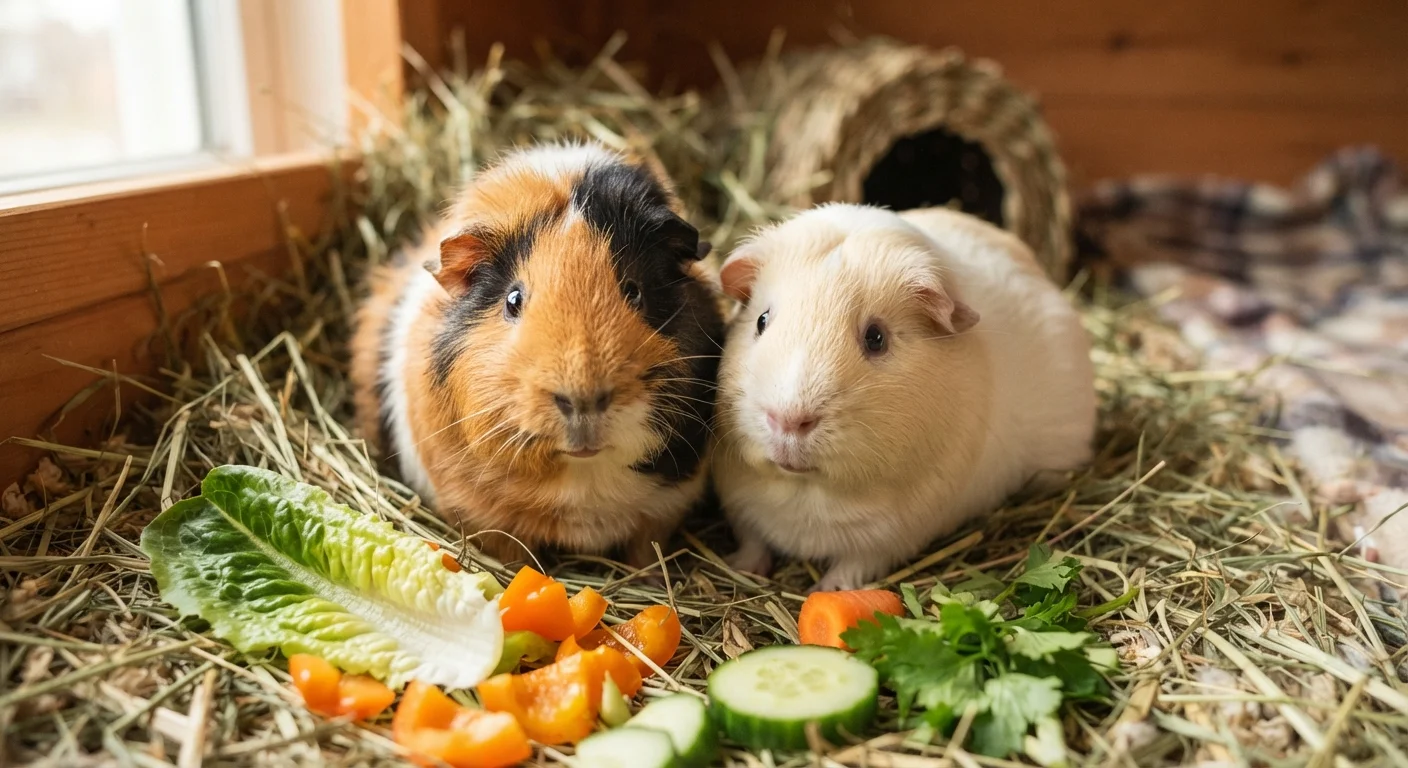
Are Guinea Pigs the Right Pet for You?
Guinea pigs — also called cavies — are gentle, communicative, and surprisingly social creatures. They vocalize with squeaks, purrs, and a distinctive sound called wheeking (a high-pitched squeal), which many owners find endearing. But their needs are more involved than their small size suggests.
Before committing, consider your lifestyle honestly. Guinea pigs require daily feeding, cage cleaning several times a week, fresh hay at all times, and regular social interaction. They live an average of 5–7 years, so this is a meaningful commitment. They are also generally not ideal as hands-off display pets — they need engagement to stay healthy and content.
If you're weighing guinea pigs against other small pets, our new pet readiness checklist can help you evaluate your schedule, space, and budget before making a final decision.
5–7 years
Average guinea pig lifespan
Veterinary and cavy care sources consistently cite 5–7 years as the typical lifespan with proper care.
7.5 sq ft
Minimum cage space per guinea pig
Recommended by many exotic veterinarians and cavy welfare organizations for a single adult guinea pig.
~10–30 mg
Daily vitamin C needed per guinea pig
General veterinary guidance suggests guinea pigs require vitamin C daily, as they cannot produce it naturally.
Setting Up the Ideal Habitat
Cage size is one of the most commonly underestimated aspects of guinea pig care. The ACBA and many exotic veterinarians recommend a minimum of 7.5 square feet of floor space for one guinea pig, and 10.5 square feet or more for two. Most cages marketed for guinea pigs in retail settings fall well short of this.
Many owners build or purchase C&C cages (cubes and coroplast), which are modular, affordable, and easy to customize. Avoid cages with wire-grid flooring, which can injure small feet. Solid, flat floors covered with soft, absorbent bedding — such as paper-based or fleece liners — are preferable.
- Temperature: Keep the enclosure between 65–75°F. Guinea pigs are sensitive to heat and drafts.
- Location: Place the habitat in a social area of the home where your guinea pig can see and hear daily activity, but away from direct sun and loud speakers.
- Hideaways: Provide at least one enclosed hiding spot per pig so each can retreat when feeling overwhelmed.
Go Bigger Than You Think You Need
If you're building or buying an enclosure, aim for the largest space your living situation allows. Guinea pigs are active and enjoy running, exploring, and foraging. A larger cage also means cleaner air, less frequent full cleanings, and a happier, less stressed pet. Many experienced owners consider 10+ square feet the practical standard, not the exception.
What Guinea Pigs Eat
Diet is where guinea pig care gets specific. Unlike many mammals, guinea pigs cannot synthesize their own vitamin C — making dietary supplementation essential to prevent scurvy, a serious and painful deficiency disease.
A balanced daily diet should include:
- Unlimited timothy hay — this should be the cornerstone of their diet, supporting digestion and keeping teeth worn down naturally.
- Fresh leafy greens — romaine lettuce, kale, and bell peppers (especially red bell pepper, which is high in vitamin C) are excellent choices. Offer about one cup per pig per day.
- Pellets — plain, timothy-based pellets formulated for guinea pigs, offered in limited quantities (about ⅛ cup per pig per day). Avoid mixes with seeds, dried fruit, or colorful pieces.
Foods to avoid include iceberg lettuce, onions, garlic, grapes, and anything high in sugar or oxalic acid. Fresh water, changed daily, should always be available.
Vitamin C Deficiency Is a Serious Risk
Scurvy in guinea pigs progresses quickly and causes joint pain, rough coat, lethargy, and in severe cases, internal bleeding. Fresh bell peppers and leafy greens are the most reliable dietary sources. Do not rely on vitamin C drops added to water bottles — the vitamin degrades rapidly when exposed to light and air, making it an unreliable delivery method. Consult your vet if you suspect a deficiency.
Handling and Socialization
Guinea pigs are prey animals, which means their instinct is to freeze or flee when startled. Building trust takes patience — especially with newly acquired animals who may be skittish for the first few weeks.
Start by sitting quietly near the enclosure and letting your guinea pig approach you. Offer small pieces of vegetable from an open, flat palm. When your pig is comfortable taking food from your hand, begin gently scooping them up by placing one hand under their chest and supporting their hindquarters with the other hand.
Always sit low to the ground when holding a guinea pig — they may startle and leap, and a fall from height can be seriously injurious. Keep handling sessions short at first (5–10 minutes) and gradually increase as your pig grows comfortable. Never scruff a guinea pig as you might a cat or rabbit.
When introducing a new guinea pig to your current one, always use a neutral space — an area neither pig has been in — so neither animal feels territorial. Supervise every interaction for at least a week before unsupervised cohabitation.
Territorial aggression during introductions is a common cause of injury. A neutral meeting space significantly reduces defensive behavior.
Weigh your guinea pig weekly on a kitchen scale and track the numbers. A loss of even 2–3 ounces over a week can signal illness before any visible symptoms appear.
Guinea pigs are skilled at hiding discomfort. Weight is one of the earliest measurable indicators that something is wrong.
Because guinea pigs are herd animals, most thrive with a same-sex companion or a neutered male-female pair. A single guinea pig will require substantially more human interaction to compensate. For context on how social needs vary across small pets, see our overview of bringing a new pet bird home, which covers similar bonding challenges.
Health, Hygiene, and Vet Care
Guinea pigs are susceptible to a handful of common health issues that owners should recognize early. These include respiratory infections, dental problems (their teeth grow continuously), skin mites, bladder stones, and vitamin C deficiency. Signs that something is wrong include labored breathing, weight loss, hunched posture, discharge from eyes or nose, or a sudden change in behavior or appetite.
Cage hygiene plays a direct role in preventing illness. Spot-clean bedding daily to remove soiled areas, and do a full cage change at least once a week. Water bottles and food dishes should be rinsed daily.
Dental Health Requires Monitoring
Guinea pigs' teeth grow continuously throughout their lives. Unlimited access to hay naturally wears them down, but malocclusion (misaligned teeth) can still develop and prevent proper eating. If you notice your guinea pig dropping food, losing weight, or drooling, have a vet examine their teeth promptly. Dental problems are one of the more common health issues seen in pet cavies.
Finding the right veterinarian is critical. Not all general practice vets treat guinea pigs confidently — look for a vet who specializes in exotic animals or small mammals. Schedule a wellness visit within the first few weeks of bringing your pig home, and plan for annual check-ups thereafter. This is general educational information and is not a substitute for professional veterinary care tailored to your individual animal.
This article is for informational and educational purposes only. Always consult a qualified exotic or small-animal veterinarian for guidance specific to your guinea pig's health and care needs.
The content on this site is for informational purposes only and is not a substitute for professional advice. Always consult a qualified professional for guidance specific to your situation.