

Start here
Choosing the Right Bird Species
Next
Setting Up a Safe, Comfortable Cage
Then
What to Feed Your Bird
When you're ready
Socialisation and Mental Stimulation
Ongoing
Veterinary Care and Health Monitoring
Choosing the Right Bird Species
The most important decision you'll make happens before you bring any bird home: choosing a species that genuinely matches your lifestyle. Birds vary enormously in noise level, sociability, lifespan, and the time they need from you.
Budgerigars (budgies) are among the most beginner-friendly birds — small, relatively quiet, and manageable for households with limited space. Cockatiels are affectionate and trainable, though they vocalize more and require consistent daily interaction. Lovebirds are energetic and entertaining but can become nippy without regular handling. Larger parrots — conures, African Greys, cockatoos — are highly intelligent and deeply social, but they demand hours of engagement daily and can live for decades. Their needs are substantial; our guide on what parrots actually need to stay mentally healthy covers this in detail.
If you're weighing birds against other small pets, see our overview of small pet ownership realities for an honest comparison before you commit.
Avian vet
A veterinarian with specific training and experience treating birds. General practice vets may have limited bird expertise, so seeking out an avian specialist is important for accurate care.
Pellets
Compressed, nutritionally formulated food designed specifically for pet birds. They provide a more complete nutritional profile than seeds alone.
PTFE
Polytetrafluoroethylene — a coating used on many non-stick pans. When overheated, it releases fumes that are highly toxic to birds even in small amounts.
Foraging
The natural behavior of searching for and working to uncover food. Foraging toys replicate this activity and provide important mental stimulation for captive birds.
Feather plucking
A behavioral problem where a bird repeatedly pulls out its own feathers, often caused by stress, boredom, or underlying illness. It can become a chronic habit if not addressed.
Setting Up a Safe, Comfortable Cage
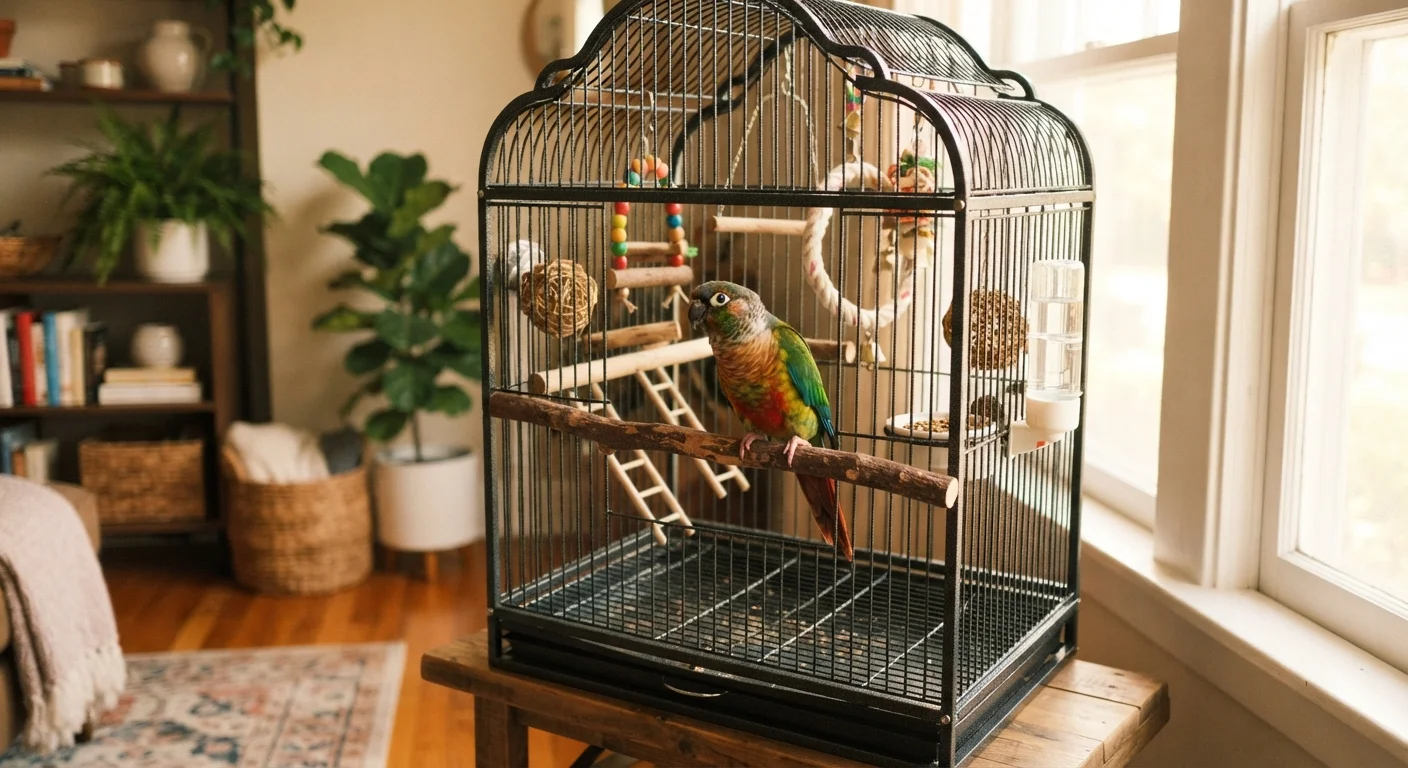
Your bird's cage is its home base, and getting it right matters more than most beginners expect.
- Size: The cage must allow full wing extension in every direction. Bigger is always better. Bar spacing is critical — gaps too wide allow escape or head entrapment; check species guidelines.
- Materials: Avoid cages with zinc or lead components, which are toxic to birds. Stainless steel and powder-coated steel are generally considered safe options.
- Placement: Position the cage at eye level, against a wall for security, away from drafts, direct air vents, and kitchen fumes. Never place it in a kitchen where non-stick cookware is used — PTFE fumes from overheated non-stick surfaces are lethal to birds.
- Perches: Provide varied perch diameters and textures (wood, rope, natural branch) to promote foot health. Uniform plastic perches can cause pressure sores over time.
- Enrichment: Foraging toys, shreddable items, and rotating accessories prevent boredom. A bare cage is a stressful cage.
Before You Bring Your Bird Home
Set up the cage completely — perches installed, food and water in place, toys ready — before your bird arrives. The transition from breeder or shelter to a new home is stressful, and a prepared environment means fewer disruptions during the critical settling-in period.
What to Feed Your Bird
Diet is one of the most common areas where new bird owners go wrong. An all-seed diet — once the default recommendation — is now understood to be nutritionally incomplete for most species. Seeds are high in fat and low in vitamins and minerals essential for long-term health.
A more balanced approach typically includes:
- Species-formulated pellets as a dietary base (many avian vets recommend these make up 50–70% of the diet for parrots and cockatiels)
- Fresh vegetables such as leafy greens, carrots, and bell peppers — offered daily where practical
- Limited fruit due to sugar content
- Seeds and nuts as occasional treats, not staples
Several foods are outright dangerous to birds, including avocado, chocolate, onion, garlic, and caffeine. Fresh water must be available at all times and changed daily.
Transitioning to a Healthier Diet Takes Time
Birds raised on an all-seed diet often resist switching to pellets or fresh vegetables. A gradual transition — introducing new foods alongside familiar ones over several weeks — tends to be more successful than an abrupt change. Your avian vet can advise on a transition plan suited to your specific bird.
Socialisation and Mental Stimulation
Birds are flock animals. In the wild, they rarely spend time alone, and captive birds that are under-stimulated or isolated often develop behavioral problems — feather plucking, excessive screaming, and aggression are common signs of unmet social needs.
Practical ways to meet these needs include:
- Scheduling daily out-of-cage time in a safe, bird-proofed area
- Talking to, reading near, or simply being present with your bird consistently
- Rotating toys regularly so the environment stays interesting
- Teaching simple behaviors through positive reinforcement — short training sessions also provide mental exercise
New birds need a quiet settling-in period of several days before heavy handling begins. Approach gradually, let the bird set the pace, and avoid forcing contact. Earning trust takes time and patience.
Birds are a different kind of commitment to dogs or cats. If you're curious how the adjustment process compares, our guide on bringing a cat home for the first time walks through a similarly structured settling-in approach for another popular pet.
Association of Avian Veterinarians (AAV)
The AAV provides a veterinarian locator and publishes care guidelines for pet bird owners. A useful starting point for finding a qualified avian vet in your area.
What Parrots Actually Need to Stay Mentally Healthy
An in-depth look at the enrichment, social time, and routine that intelligent parrot species require to thrive — essential reading if you're considering a larger bird.
Veterinary Care and Health Monitoring
Birds are prey animals that instinctively hide signs of illness — by the time a bird looks obviously unwell, it is often seriously sick. This makes routine veterinary care and attentive daily observation essential.
Find an avian vet before you bring your bird home. Not all veterinarians are trained in avian medicine; ask specifically whether the practice sees and is experienced with birds. Many experienced bird owners recommend a new-owner wellness check within the first few weeks.
Watch daily for early warning signs such as:
- Fluffed feathers and lethargy (a common indicator of illness in birds)
- Changes in droppings — color, consistency, or volume
- Decreased appetite or weight loss
- Nasal discharge or labored breathing
- Unusual quietness in a normally vocal bird
Our related guide on signs that your small pet might be unwell goes deeper on the subtle behavioral shifts worth watching across a range of small pets.
This article provides general educational information about pet bird care and is not a substitute for advice from a qualified avian veterinarian. Always consult a licensed vet for guidance specific to your bird's health and species.
Frequently Asked Questions
Lifespan varies significantly by species. Budgerigars typically live 5–10 years, cockatiels 15–25 years, and larger parrots like African Greys can live 40–60 years. Understanding your chosen species' lifespan is essential before committing.
Some species, like budgerigars and finches, genuinely thrive with a companion. Others, like cockatiels, can bond closely with their human owners and do well as singles with sufficient daily interaction. Research your specific species before adding a second bird.
Most avian vets recommend an annual wellness exam even for apparently healthy birds. Birds naturally mask illness, so regular checkups help catch problems early. Seek care sooner if you notice behavioral changes, weight loss, or abnormal droppings.
Yes. Non-stick cookware coated with polytetrafluoroethylene (PTFE) releases fumes that are deadly to birds when overheated. Scented candles, aerosol sprays, tobacco smoke, and many houseplants are also hazardous. Always research before introducing anything new to your bird's environment.
Many species — particularly parrots and budgerigars — can learn to mimic speech and perform simple behaviors. Training requires patience, consistency, and positive reinforcement. Not every individual bird will talk, even within a species known for it.
A general rule is that the cage should be large enough for the bird to fully extend and flap its wings without touching the sides. Wider is typically more valuable than taller, since most birds move horizontally. Always check species-specific recommendations.
The content on this site is for informational purposes only and is not a substitute for professional advice. Always consult a qualified professional for guidance specific to your situation.