

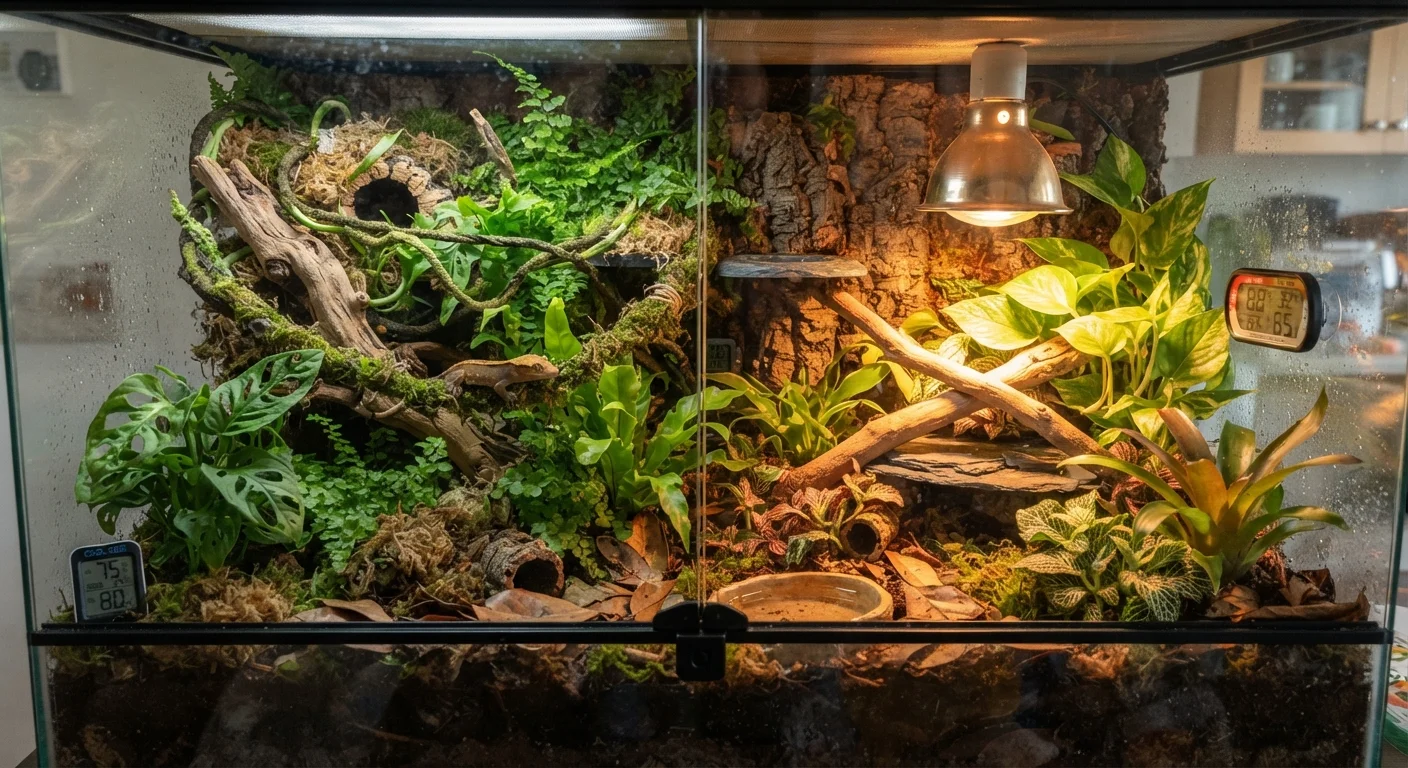
Why Environment Matters So Much for Reptiles
Unlike mammals, reptiles are ectothermic — they rely entirely on their external environment to regulate body temperature. They cannot generate their own body heat through metabolism. This means that every element of their enclosure directly shapes their digestion, immune function, activity level, and overall health.
Getting the environment wrong is one of the most common reasons reptiles become ill in captivity. Fortunately, once you understand the three core variables — heating, lighting, and humidity — building an appropriate habitat becomes much more straightforward.
It's worth noting that requirements vary significantly between species. A bearded dragon thriving in an arid Australian climate has very different needs than a red-eyed tree frog from a tropical rainforest. Always research the specific requirements of your reptile before setting up any enclosure. If you've encountered claims that reptiles are easy, low-effort pets, that's worth revisiting — the reality is more nuanced.
| Temperature regulation method | External environment (ectothermic) |
| Typical basking temperature range | 85–110°F depending on species (Varies widely; verify for your specific reptile) |
| UVB bulb replacement schedule | Every 6–12 months (Even if bulb still emits visible light) |
| Humidity range: tropical species | 60–80% relative humidity (Species-specific; always verify) |
| Humidity range: arid/desert species | 20–40% relative humidity (Species-specific; always verify) |
| Recommended thermometer type | Digital infrared temperature gun (More accurate than dial or strip thermometers) |
Heating: Creating a Thermal Gradient
The most important heating principle is the thermal gradient: a warm basking zone at one end of the enclosure and a cooler zone at the other. This allows your reptile to move between areas to self-regulate its body temperature — a behavior called thermoregulation.
Types of Heating Equipment
- Basking lamps: Incandescent or halogen bulbs placed at one end of the enclosure. They heat a specific surface area where your reptile can bask.
- Ceramic heat emitters (CHEs): Produce heat without light, useful for maintaining nighttime temperatures without disrupting a day/night cycle.
- Radiant heat panels: Mounted inside the lid of the enclosure; suitable for arboreal species that spend time higher up.
- Under-tank heaters (UTHs): Used for some ground-dwelling species, but should always be paired with a thermostat to prevent dangerous surface temperatures.
Regardless of the heat source, a thermostat is not optional — it's a safety device that prevents overheating. Use a quality digital thermometer (ideally an infrared temperature gun) to verify actual surface and ambient temperatures rather than relying on dial thermometers, which can be inaccurate.
Ectotherm
An animal that relies on external heat sources rather than internal metabolism to regulate its body temperature. All reptiles are ectotherms, which is why their enclosure environment is so critical.
Thermal Gradient
A range of temperatures within an enclosure — typically warmer on one end and cooler on the other — that allows a reptile to move between zones to self-regulate its body temperature.
UVB (Ultraviolet B)
A type of ultraviolet radiation that enables many reptiles to synthesize vitamin D3 in their skin. Adequate UVB is essential for calcium metabolism and preventing metabolic bone disease.
Dysecdysis
The term for incomplete or problematic shedding in reptiles. It is commonly caused by insufficient humidity or underlying health issues, and can lead to constriction injuries if retained shed is not addressed.
Photoperiod
The daily duration of light exposure that an animal experiences. For reptiles in captivity, maintaining an appropriate light/dark cycle supports natural behavior, digestion, and seasonal rhythms.
Thermostat
A device that regulates the output of a heat source to maintain a set temperature. Essential for reptile enclosures to prevent dangerous overheating or temperature drops.
Lighting: UVB, Photoperiods, and Visible Light
Many reptiles — particularly diurnal (daytime-active) species — require UVB lighting to synthesize vitamin D3, which is essential for calcium absorption. Without adequate UVB exposure, reptiles can develop metabolic bone disease (MBD), a serious and preventable condition.
Key Lighting Concepts
- UVB index (UVI): Different species require different ultraviolet intensity levels. A desert-dwelling uromastyx needs much higher UVI than a crested gecko. Consult species-specific care guides to match the right output.
- Bulb placement: UVB output degrades over time even when a bulb still emits visible light. Replace UVB bulbs according to the manufacturer's schedule, typically every 6–12 months.
- Photoperiod: Reptiles depend on consistent light/dark cycles. Most species benefit from 10–14 hours of light in summer and shorter cycles in winter to support natural behavior and breeding cycles.
Some nocturnal species — such as many geckos — do not require UVB in the same way, but they still need a consistent day/night cycle and benefit from low-level ambient lighting. Always verify your species' specific photobiology needs.
80%+
Of reptile health issues tied to husbandry errors
Veterinary reptile specialists consistently cite improper temperature, lighting, or humidity as the leading cause of preventable illness in captive reptiles.
6–12 months
Usable lifespan of UVB bulbs
UVB output declines significantly before a bulb visibly burns out, making scheduled replacement a key part of responsible reptile care.
3+
Temperature zones recommended in enclosure design
Reptile care guidelines typically recommend at least a basking zone, a mid-range ambient zone, and a cool retreat to support natural thermoregulation.
Humidity: Matching Your Reptile's Native Climate
Humidity affects shedding quality, respiratory health, and hydration. Too low, and your reptile may experience incomplete sheds (dysecdysis) and dehydration. Too high for a desert species can promote bacterial and fungal infections.
Managing Enclosure Humidity
- Hygrometer: Place a digital hygrometer inside the enclosure to measure relative humidity accurately. Inexpensive analog versions are often unreliable.
- Substrate choice: Bioactive substrates (coconut fiber, cypress mulch) retain moisture well for tropical species. Sand and dry topsoil suit arid-dwelling species.
- Misting: Manual or automated misting systems can raise humidity. Mist one side of the enclosure to preserve a drier area.
- Humid hides: A small hide box filled with damp sphagnum moss gives your reptile a microclimate for shedding, even in an otherwise dry enclosure.
Appropriate humidity paired with proper handling builds a healthier, calmer animal overall. If you're working on the relationship side of reptile ownership, our guide to low-stress handling covers how to build trust gradually.
This article is for general informational purposes only. Always consult a reptile-specialist veterinarian for guidance on your specific animal's health and husbandry needs.
The content on this site is for informational purposes only and is not a substitute for professional advice. Always consult a qualified professional for guidance specific to your situation.