

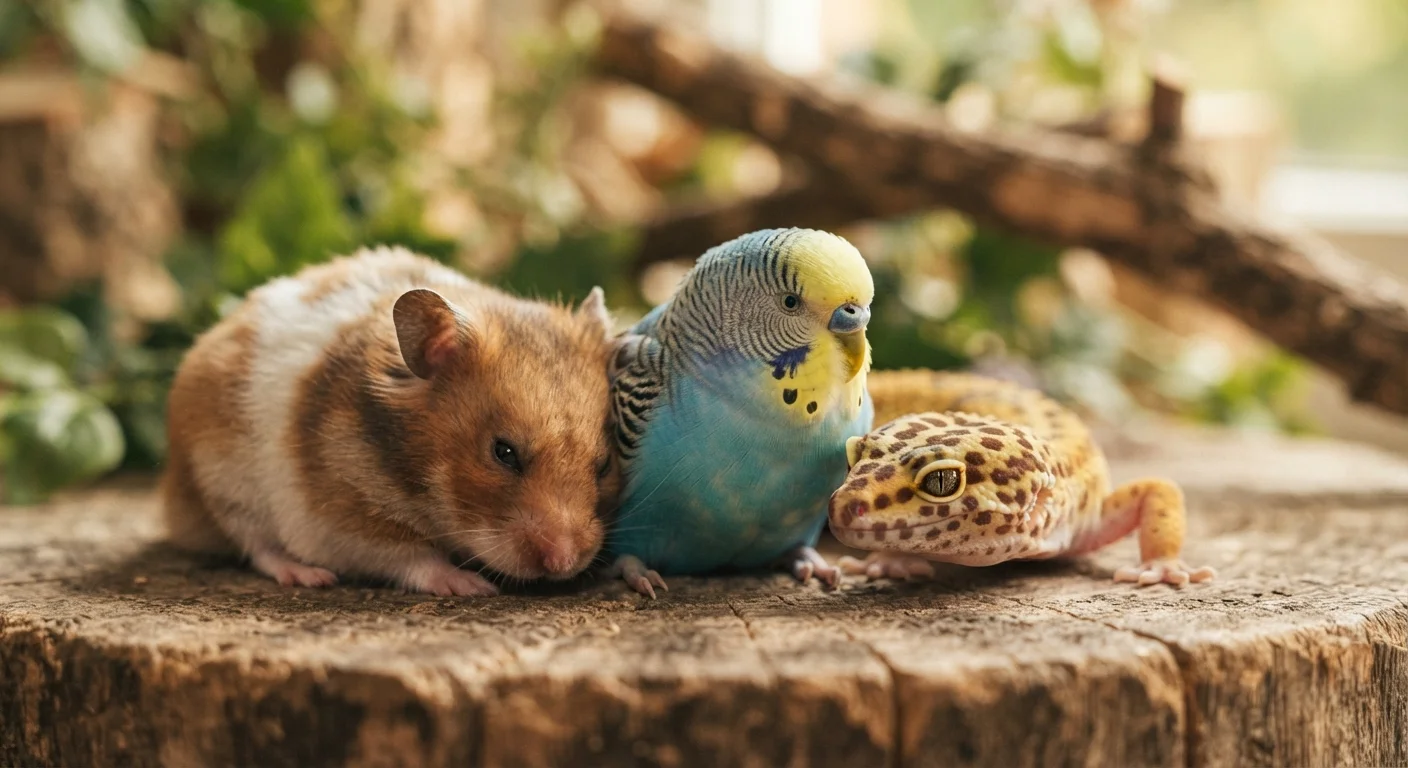
Why Small Pets Are Hard to Read
Birds, rodents, and reptiles share an important survival trait: they instinctively conceal weakness. In the wild, showing signs of illness makes an animal a target for predators, so many species have evolved to mask discomfort until they can no longer hide it. For pet owners, this means that by the time a hamster, gecko, or parakeet looks obviously unwell, the condition may already be advanced.
This guide covers the most reliable early warning signs across small pet species. None of these signs constitute a diagnosis, and this article is for general educational purposes only — always consult a veterinarian experienced with your specific type of pet for any health concerns. If you're new to small pet ownership, understanding what you're committing to includes being ready to seek expert care when needed.
Build a Daily Observation Habit
Spend two to three minutes each day watching your small pet during its active period without disturbing it. Note eating, movement, droppings, and posture. This baseline awareness makes it far easier to spot when something shifts — and gives your vet useful information if you need to call.
7 Signs That Could Mean Your Small Pet Is Unwell
Sudden changes in appetite or water intake
A pet that abruptly stops eating — or eats significantly more or less than usual — warrants close attention. This applies across species: a gecko refusing prey for more than a week outside of normal shedding cycles, a hamster ignoring food it previously enjoyed, or a bird leaving seeds untouched. Similarly, drinking far more or far less water than normal can signal metabolic or organ issues in rodents and reptiles. Track your pet's typical intake so you have a baseline to compare against.
A sudden loss of appetite lasting more than a day or two should never be brushed off.
Lethargy or unusual stillness
Most small pets have predictable activity windows — hamsters are active at night, birds engage socially during the day, and healthy reptiles bask and move on a regular schedule. If your pet is consistently inactive during its normal active period, sits hunched or fluffed up (in birds), or seems reluctant to move around its enclosure, treat it as a red flag. Reptiles, in particular, can become very still when ill, which owners sometimes mistake for normal basking behavior.
Unusual stillness during a pet's normal active window is one of the most overlooked early signals.
Changes in droppings or urine
Feces and urine are among the most informative health indicators for small pets. Healthy bird droppings have three distinct components: solid dark feces, white urates, and clear liquid. Watery, discolored, or foul-smelling droppings in any small pet often point to infection, parasites, or dietary issues. In reptiles, droppings that are absent for more than two weeks, or that contain undigested food, should be discussed with a vet. Rodents with consistently loose or tar-like stools should also be seen promptly.
Droppings are a daily diagnostic tool — learn what's normal for your pet's species.
Labored or noisy breathing
Healthy small pets breathe quietly and evenly. Wheezing, clicking sounds, open-mouth breathing (especially in reptiles, which normally breathe with mouths closed), tail-bobbing in birds, or any visible effort to breathe are serious warning signs that require urgent veterinary attention. Respiratory infections in birds and rodents can deteriorate quickly. If your bird is breathing with its tail pumping up and down or sitting with its feathers puffed and eyes half-closed, do not wait to seek care.
Open-mouth breathing in a reptile is almost never normal and warrants same-day veterinary contact.
Discharge from eyes, nose, or mouth
Any discharge — watery, crusty, or mucus-like — around a small pet's eyes, nostrils, or mouth is abnormal and should be taken seriously. In rodents, a red-tinted discharge around the nose or eyes may look alarming but is actually a secretion called porphyrin; however, its presence in excess still indicates stress or illness. In birds, clear nasal discharge can signal respiratory infection. In reptiles, mucus around the mouth may point to stomatitis (mouth rot), a bacterial condition that progresses without treatment.
Any eye or nasal discharge in a small pet is a prompt to contact a vet, not a wait-and-see moment.
Abnormal posture or movement
How a pet holds and moves its body reveals a great deal. A bird that persistently favors one foot, leans to one side, or cannot grip its perch may have neurological or orthopedic problems. Rodents that circle repeatedly, tilt their heads, or stumble could be experiencing an inner ear infection or other neurological issue. Reptiles that cannot right themselves when placed on their backs, or that show tremors, may have calcium deficiency or infection. Proper handling technique can help you safely observe your reptile's movement and posture without adding stress.
A head tilt or balance problem in any small pet is a sign that something neurological may be happening.
Skin, feather, or coat changes
The outer surface of a pet's body reflects its internal health. Birds that pluck their own feathers excessively, develop bald patches, or show dull, ragged plumage may be dealing with nutritional deficiencies, infections, or behavioral distress. Rodents with patchy, thinning fur or scabby skin may have mites, fungal infection, or hormonal issues. Reptiles that struggle to shed completely — retaining eye caps or skin around the toes — often need humidity adjustments, but persistent incomplete sheds can also signal underlying illness and should be reviewed by a vet.
Dull or patchy feathers, fur, or scales are often the skin's way of reflecting internal health trouble.
Species Differences Matter
What counts as 'normal' varies considerably between birds, rodents, and reptiles — and even between species within those groups. A ball python's appetite naturally drops during breeding season, while a budgerigar's normal droppings look very different from a rabbit's. When in doubt, consult a vet who specializes in exotic or small animals rather than relying on general pet care resources.
What to Do When You Notice These Signs
If you spot one or more of the warning signs above, your first step is to note what changed, when, and how significantly. A vet will ask about your pet's recent diet, environment, handling frequency, and enclosure conditions, so having this information ready helps. Do not attempt home remedies or adjust diet drastically without professional guidance, as well-intentioned changes can sometimes worsen a pet's condition.
Finding a vet who sees exotic or small animals before you need one is one of the smartest preparations any small pet owner can make — just as our pre-adoption readiness checklist recommends. Bird owners in particular should establish care early; our guide on bringing a pet bird home walks through what that relationship should look like from day one.
This article is for general informational and educational purposes only and is not a substitute for professional veterinary advice. If your pet is showing signs of illness, contact a qualified veterinarian promptly.
The content on this site is for informational purposes only and is not a substitute for professional advice. Always consult a qualified professional for guidance specific to your situation.