

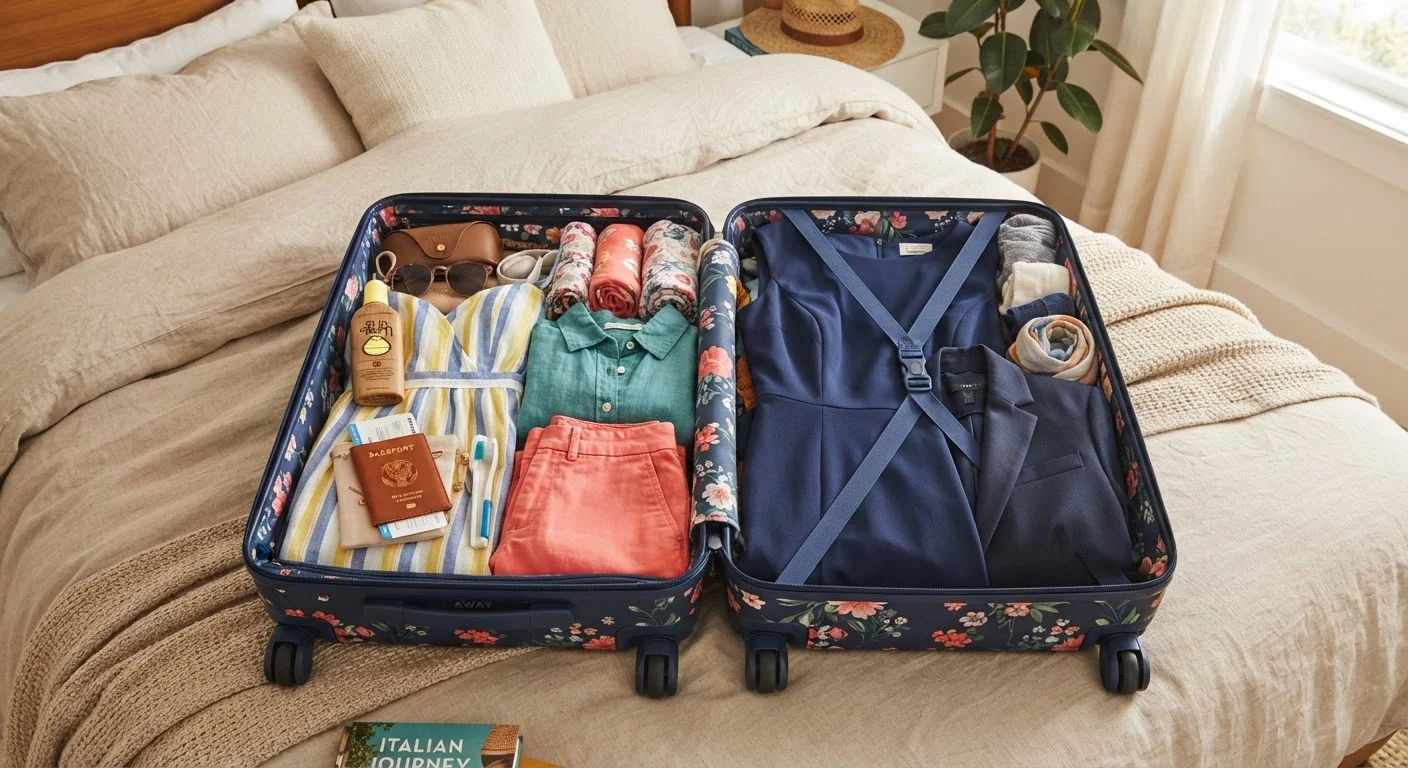
Why Cruise Packing Is Its Own Art Form
Packing for a cruise isn't quite like packing for any other trip. You're preparing for a floating resort, several distinct ports, at least one formal dinner, and everything in between — often in a cabin roughly the size of a modest hotel room. Storage is tight, laundry options vary, and what you don't bring can matter as much as what you do.
If you're new to sailing, our Cruise Travel 101 guide is a great place to start before you even open a suitcase. And if you're still budgeting for the trip itself, check out The True Cost of a Cruise to understand what extras you might need to plan for beyond the fare.
Below, we've pulled together the packing wisdom that experienced cruisers tend to share — the items that earn their place in the bag, and the ones that quietly end up shoved under the bunk the entire voyage.
A Compact Day Bag for Port Adventures
Every seasoned cruiser has a designated day bag — a lightweight backpack or tote they grab when stepping off the ship at each port. This bag lives separate from your main luggage and should be packed with port-day essentials: a refillable water bottle, sunscreen, a copy of your travel documents, local currency or a card, and a light layer for air-conditioned buses or restaurants.
If you tend to explore independently, researching ports before you sail helps you know exactly what that day bag needs for each stop.
A dedicated day bag is the single most-used item experienced cruisers pack.
Formal and Smart-Casual Attire (Without Overdoing It)
Most cruise lines designate one to three formal or elegant nights per voyage. Check your specific line's dress code before sailing — some are strict, others are relaxed. The practical approach is one or two versatile dressy outfits that can be remixed with accessories rather than packing a separate gown or tuxedo for every occasion.
For the rest of the voyage, smart-casual clothes that transition from daytime activities to evening dining without a full outfit change are genuinely useful. Leave the overly casual or beachwear items for the pool deck only, as most dining rooms have standards even on informal nights.
Two versatile dressy outfits, remixed with accessories, handle almost any formal night.
Seasickness Remedies — Even If You Think You Won't Need Them
Many first-time cruisers assume motion sickness won't affect them, and some are right. But sea conditions change, and being caught unprepared mid-ocean is miserable. Experienced travelers routinely pack over-the-counter motion sickness tablets, acupressure wristbands, or both — and rarely regret having them on hand.
For a fuller picture of what causes motion sickness at sea and how passengers commonly manage it, our seasickness guide covers the topic in detail. As always, consult a healthcare professional about any medication before you travel.
Packing seasickness remedies is cheap insurance even for travelers with strong sea legs.
A Power Strip (The Right Kind) and Plug Adapters
Cruise cabin outlets are notoriously scarce — typically one or two, rarely near the bed. A non-surge-protected power strip with multiple USB ports solves this immediately and is generally permitted by most cruise lines. Surge-protected strips and extension cords, however, are commonly prohibited due to fire risk and may be confiscated at embarkation.
If you're sailing internationally, check what plug types are used in your ports of call and on the ship itself. Bringing a universal adapter means you're covered whether you're charging in the cabin or at a café ashore.
A non-surge-protected USB power strip is one of the most praised cabin additions among frequent cruisers.
A Small First-Aid and Medication Kit
Ship medical centers exist but come with fees that can surprise unprepared passengers. A small personal kit with adhesive bandages, antacids, pain relievers, anti-diarrheal tablets, and any prescription medications (in original packaging, with enough supply to exceed your trip length) takes up minimal space and covers a wide range of minor issues.
Keep all medications in your carry-on or personal bag during embarkation — checked luggage can sometimes be delayed in reaching your cabin for hours after boarding. If your voyage involves international ports, verify entry requirements for any medications with official government and health sources before you travel.
Keeping medications in your carry-on prevents an uncomfortable first afternoon waiting for your luggage.
What to Leave Behind
Experienced cruisers are just as deliberate about what stays home. Irons are prohibited on virtually all ships (the ship's laundry or a steamer handles wrinkles). Full-size toiletries eat through luggage allowance when travel-size versions or the ship's basic supplies suffice. Excessive shoes are a perennial regret — two or three pairs covering casual, active, and formal needs handle nearly every situation.
Bulky beach towels are another classic overpacking mistake; ships provide them at the pool and at port, though policies vary by line. And unless you've researched the specific itinerary, heavy guidebooks can be replaced by downloaded offline maps and notes on your phone.
Every item left behind creates breathing room in a cabin where storage is genuinely at a premium.
Final Thoughts Before You Zip Up
The golden rule experienced cruisers return to again and again: if you're unsure whether something will get used, leave it. Cabin space is precious, and most ships have shops or ports where you can pick up forgotten basics. Focus on versatility, comfort, and the specific quirks of cruise life — formal nights, tender ports, and sea-day leisure all have their own demands.
Use a Packing List Tailored to Your Itinerary
A Caribbean sailing has very different needs from an Alaskan or Mediterranean cruise. Before finalizing your bag, map out each type of day you'll have — sea days, port days, formal nights, outdoor excursions — and pack to serve each one. This itinerary-first approach consistently results in lighter bags and fewer forgotten essentials.
For help planning every detail of your voyage beyond what to pack — from researching ports to understanding ship terminology — explore our Trip Planning hub for broader guidance. And if you're curious about what happens when you step off the ship, Shore Excursions: Ship Tours vs. Going Independent walks through how to make the most of every port day.
The content on this site is for informational purposes only and is not a substitute for professional advice. Always consult a qualified professional for guidance specific to your situation.