

Our Verdict
Southeast Asia is an extraordinary first international destination for travelers who go in with realistic expectations and some logistical preparation. The rewards — stunning landscapes, living history, vibrant food culture, and genuine warmth from locals — are hard to match anywhere. The tradeoffs, from long flights to health prep and cultural learning curves, are real but entirely manageable with the right mindset.
Best suited to curious, flexible travelers comfortable with some uncertainty who want rich cultural immersion at a relatively accessible price point.
Why Southeast Asia Appeals to First-Time International Travelers
Few regions offer the sheer variety packed into Southeast Asia. Within a single trip, a traveler might explore ornate Buddhist temples in Thailand, centuries-old UNESCO-listed towns in Vietnam, and wild rainforest in Borneo — all without the sticker shock that comes with Western Europe or Australia. For US travelers crossing into international travel for the first time, that combination of affordability, visual drama, and cultural depth is genuinely compelling.
Tourism infrastructure in countries like Thailand, Vietnam, and Indonesia is well-developed. Hostels, mid-range guesthouses, and guided tours are abundant and easy to book. English signage and English-speaking staff are common in tourist corridors, lowering the barrier to entry considerably. Many visitors find that navigating Bangkok or Hoi An feels surprisingly manageable after a day or two of orientation. See our guide to finding your footing in unfamiliar cities for practical orientation strategies.
Exceptional cultural and natural diversity in one region
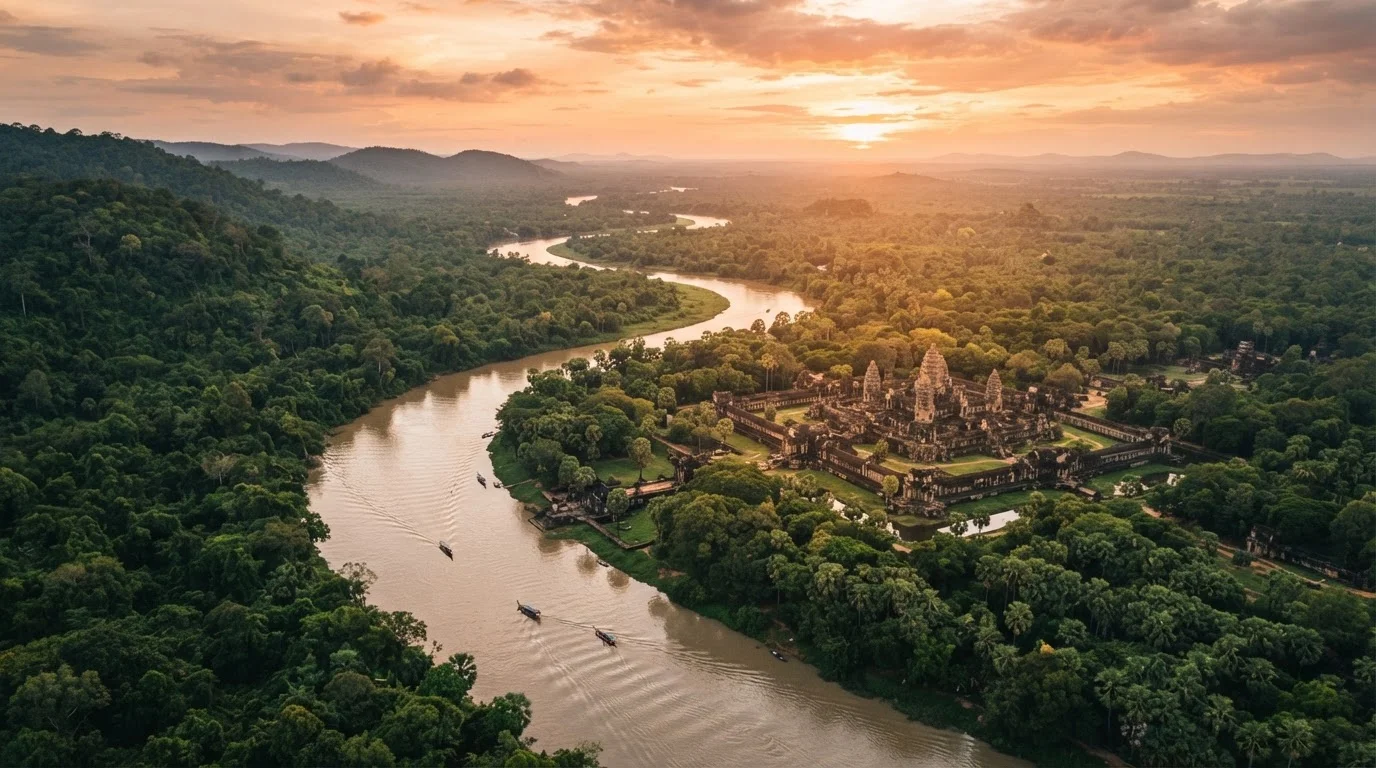
A single trip can move from ancient Khmer temples to tropical islands to mountain hill tribes — a range of experiences that would require multiple continents elsewhere.
Relatively affordable daily travel costs for US visitors
Accommodation, food, and local transport in much of Southeast Asia can cost significantly less than comparable comfort in Western Europe or Australia, stretching a travel budget further.
Well-developed tourism infrastructure in key countries
Thailand, Vietnam, Bali, and parts of Malaysia have robust tourist networks — guesthouses, booking platforms, tour operators — making logistics manageable even for inexperienced international travelers.
English widely spoken in tourist areas
In popular destinations and tourist corridors, English signage and English-speaking hospitality staff are common, reducing the language barrier considerably for first-timers.
Food culture that is genuinely world-class
Street food scenes in cities like Bangkok, Hanoi, and Penang are internationally celebrated, offering extraordinary variety and quality at accessible price points.
The Real Challenges You Should Know About First
Honest preparation starts with the flight. From most US cities, reaching Southeast Asia means 16–22 hours in the air, often with at least one connection. Jet lag across 11–14 time zones hits harder than a transatlantic trip, and the first two days can feel disorienting. Factor in recovery time before you schedule anything demanding.
Health preparation is non-negotiable. Depending on your destination and activities, travel health clinics often recommend vaccines for typhoid, hepatitis A, and sometimes Japanese encephalitis or rabies — consult a travel medicine professional well before departure, ideally 4–6 weeks out. Food safety and water quality vary; the cautious rule of thumb in many areas is bottled or purified water only. Heat and humidity can also be physically taxing, especially for travelers not accustomed to tropical climates.
First-time international travelers often underestimate transit times and logistical gaps that become very apparent in Southeast Asia — overland border crossings, domestic flights on small carriers, and inter-island ferries all require patience and flexibility.
Very long flights with significant time zone adjustment
Most US travelers face 17–22 hours of total travel time and a 10–14 hour time zone shift, making the first few days physically taxing and potentially cutting into early itinerary plans.
Health preparation requires advance planning
Recommended vaccines, malaria prophylaxis for some areas, and food and water precautions require consultation with a travel medicine professional several weeks before departure — not something to leave to the last minute.
Heat and humidity are relentless in many seasons
Tropical temperatures regularly exceed 90°F with high humidity, which can be genuinely exhausting for visitors from temperate climates, particularly during peak summer months.
Complex regional seasonality and monsoon patterns
Different parts of the region experience wet and dry seasons at different times, meaning a poorly timed trip can encounter heavy rain or flooding that limits access to key destinations.
Cultural norms require attentive learning
Dress codes at religious sites, customs around tipping and bargaining, and social etiquette differ meaningfully from US norms — missteps are easy and can cause unintended offense.
Cultural and Practical Nuances Worth Understanding
Southeast Asian cultures carry distinct customs around dress, behavior at religious sites, and social interaction that differ meaningfully from US norms. Temples — and there are many worth visiting — typically require covered shoulders and knees. Removing shoes before entering homes and some businesses is expected. Bargaining is common in markets but not universal, and knowing when it's appropriate takes a little reading of context.
Currency logistics deserve attention. ATM availability is generally good in cities but spotty in rural areas. Carrying some local currency in smaller denominations is useful nearly everywhere. Many countries in the region have their own currencies, so a multi-country trip means juggling multiple exchange rates.
Visa Rules Vary Widely Across the Region
US passport holders can enter Thailand and several other Southeast Asian countries visa-free for short stays, but rules differ by country and can change. Vietnam, for example, has adjusted its e-visa policies in recent years. Always check the current entry requirements through the US Department of State website and the destination country's official immigration authority before you book flights.
Seasonality matters more than many first-timers expect. The region's monsoon patterns are complex — when it's dry in Thailand, it may be peak wet season in the Philippines. Peak-season crowds at iconic sites can also undercut the experience you came for, so researching shoulder seasons pays off.
Making the Most of Your First Trip: Planning Approaches
One of the most useful decisions a first-timer can make is choosing depth over breadth. Trying to cover five countries in two weeks is exhausting and expensive, and it reduces each destination to a blur of highlight reel moments. Spending more time in fewer places — staying in a neighborhood rather than just a hotel district, taking a local cooking class, wandering a morning market — tends to produce more memorable experiences.
How rigidly you plan also shapes the entire trip. Balancing a fixed schedule with room for spontaneity is especially important in Southeast Asia, where weather, local holidays, and unexpected closures can shift plans quickly. Pre-booking flights and at least the first night's accommodation in each location is wise; leaving mid-trip days loosely scheduled gives you breathing room.
11
Countries in Southeast Asia
The region includes 11 distinct nations, each with its own visa rules, currency, language, and travel considerations — variety that rewards research.
~14 hrs
Average US time zone difference
Travelers from the US East Coast typically cross 12–14 time zones to reach mainland Southeast Asia, making jet lag one of the most commonly underestimated challenges.
Travel advisories, visa requirements, and entry rules change periodically. Always verify current requirements with the official US Department of State travel pages and the embassy of your destination country before booking.
The content on this site is for informational purposes only and is not a substitute for professional advice. Always consult a qualified professional for guidance specific to your situation.