

The Peak-Season Paradox
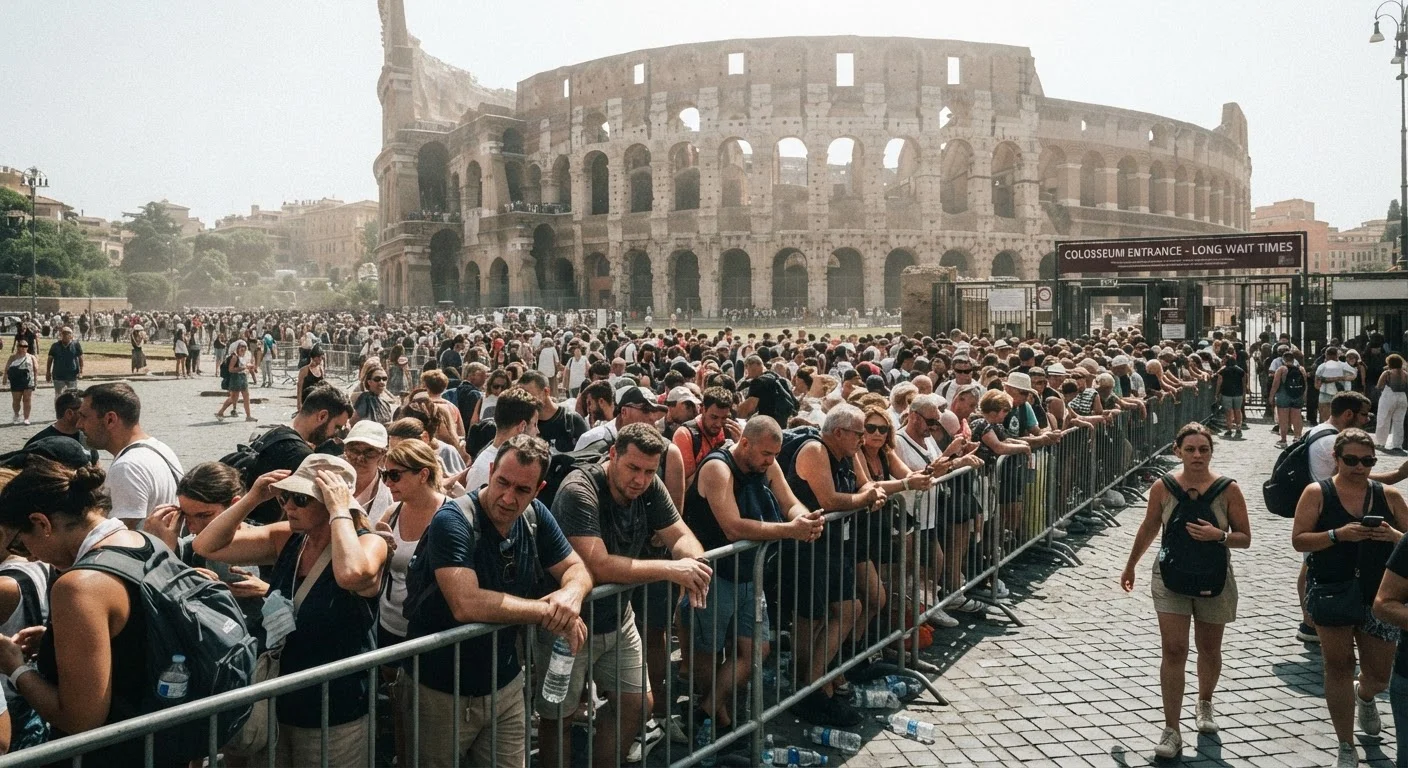
There's a quiet irony at the heart of peak-season travel: the months when the most people visit a destination are often the months when that destination is hardest to actually experience. Sunrise viewpoints packed shoulder-to-shoulder. Reservations vanishing weeks out. The famous square that looked serene in every photo — now a slow-moving shuffle of selfie sticks and tour-group flags.
Understanding why peak season undermines the experience isn't about discouraging travel — it's about traveling smarter. Whether you're planning around seasons for the first time or rethinking a habit you've never questioned, knowing the common mistakes helps you reclaim what makes a destination genuinely special.
Defaulting to school-holiday or public-holiday windows without considering alternatives.
Why it happens: For most people, travel windows are shaped by work calendars, school schedules, or the simple assumption that 'everyone travels then, so it must be the right time.' The habit goes unexamined.
Choosing a destination based on its peak-season reputation rather than your own travel style.
Why it happens: Social media and travel coverage skew heavily toward high-season imagery — sun-drenched beaches, festival atmospheres, vibrant markets — without showing the queues, noise, and logistical strain that come with them.
Underestimating how crowds change the quality of a specific experience.
Why it happens: Travelers often plan at the destination level ('I'm going to Rome') without thinking at the experience level ('I want a quiet moment inside the Pantheon'). Those two goals may require very different timing strategies.
Ignoring the cumulative stress cost of peak-season logistics.
Why it happens: When planning, travelers focus on what they'll see, not on what it will take to get there, get in, and move around once they arrive. The cognitive load of peak-season travel — sold-out transport, overbooked restaurants, slower everything — only becomes apparent on the ground.
Assuming peak season is the only time a destination is 'worth' visiting.
Why it happens: Off-season travel carries an unfair reputation for closures, bad weather, and missed opportunities. Some of this is warranted in certain places, but the assumption is applied far too broadly.
What Gets Lost in the Crowd
Beyond personal frustration, peak-season pressure creates consequences that outlast any individual trip. Fragile coastal ecosystems, centuries-old sites, and wildlife corridors absorb a disproportionate share of damage when visitor numbers spike. Some destinations have responded with timed entry, visitor caps, or outright closures — all of which add logistical friction for travelers who assumed peak season meant more access, not less.
80%
Of visitors arrive in peak months
Research on overtourism patterns consistently shows that the vast majority of annual visitors to popular destinations are concentrated into a narrow two-to-three month window.
3x
Longer average wait times at peak
Visitor management studies at heritage sites have recorded wait times during peak periods that are roughly three times longer than the same attraction during shoulder season.
Slower, off-peak visits tend to produce the kind of encounters that travelers actually remember. US national parks reward those who linger, and the same principle holds across most destination types — from medieval European towns to reef ecosystems in Southeast Asia. Quieter timing isn't a consolation prize; for many destinations, it's the better experience by almost every measure.
Entry Caps and Closures Are Increasing
More destinations — including some US national parks, UNESCO World Heritage Sites, and island ecosystems — are introducing reservation requirements, daily visitor caps, or seasonal access restrictions. Assuming that peak-season bookings guarantee access can leave travelers stranded. Always verify entry requirements directly with official park or site authorities before finalizing plans.
If your planning process keeps sending you back to the same high-demand windows without a clear reason, it may be worth revisiting your research approach — our guide on why trip research keeps leading you in circles can help untangle that loop.
The content on this site is for informational purposes only and is not a substitute for professional advice. Always consult a qualified professional for guidance specific to your situation.