

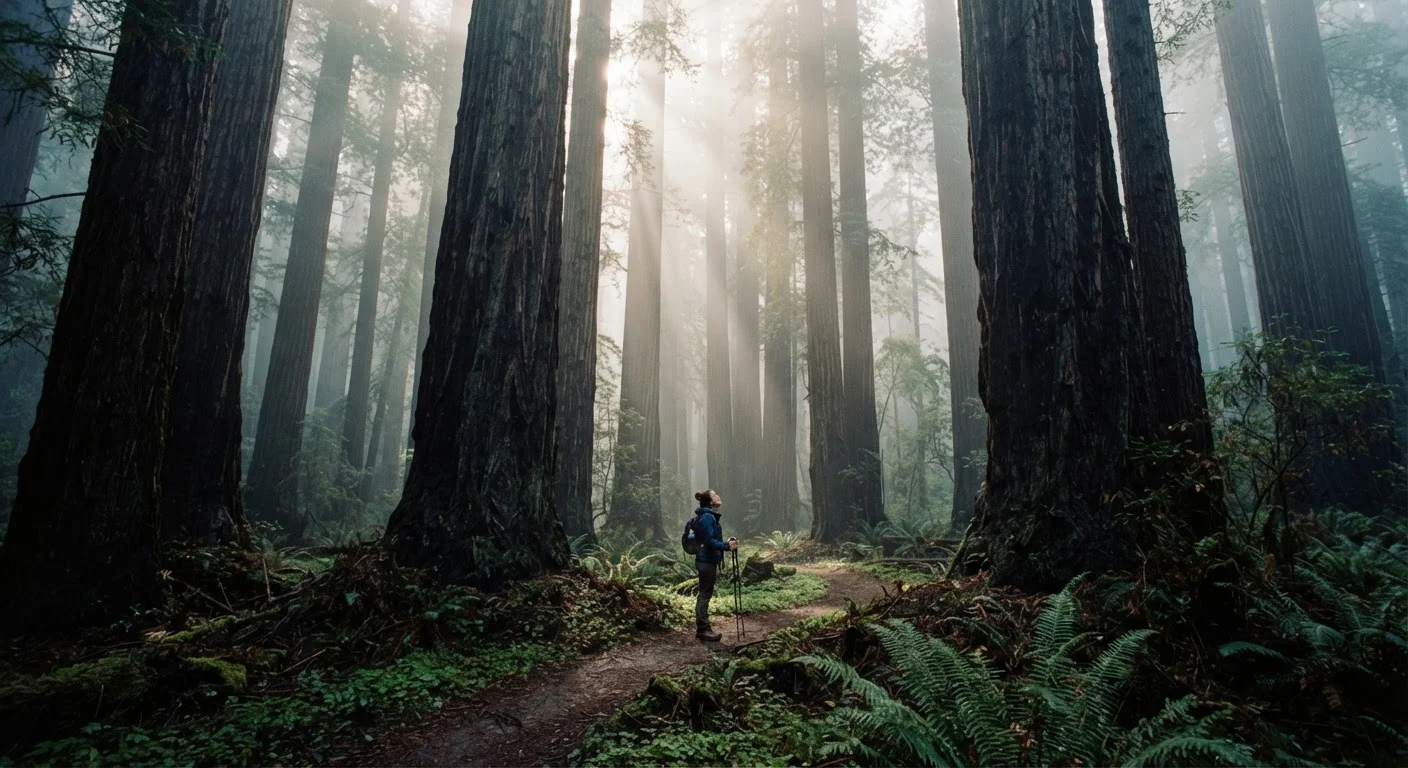
Why Lingering Changes Everything
Most national park visitors follow the same loop: arrive, photograph the iconic viewpoint, grab a snack, and drive to the next stop. There's nothing wrong with that — but it leaves a lot behind. The parks that make up America's public lands system are, in many cases, layered places with deep ecological, geological, and cultural histories that only reveal themselves when you slow down.
Think about the difference between glancing at a painting from across the room and standing close enough to see the brushstrokes. Unhurried park visits work the same way. You start noticing things: the way light shifts across canyon walls at different hours, the subtle variation in bird calls at dawn versus dusk, the interpretive signs near less-traveled trailheads that explain thousands of years of human presence. These details don't show up on the highlight reel — they show up in the quiet.
If you're weighing how much structure to build into your trip, our guide on flexible versus fixed travel itineraries explores how to strike a balance that leaves room for discovery without abandoning all planning. For national parks especially, a little flexibility goes a long way.
Olympic National Park, Washington
Few parks contain as much ecological variety as Olympic. Within a single visit you can move through temperate rainforest, alpine meadow, and wild Pacific coastline — three dramatically different environments that reward patient exploration. The Hoh Rain Forest, with its moss-draped maples and Sitka spruce, is best experienced slowly: sit still for ten minutes and you'll start noticing Roosevelt elk moving through the undergrowth, or hear the distinctive calls of varied thrushes in the canopy overhead.
The park's coastline stretches for over 70 miles and is largely inaccessible by car, which keeps it genuinely uncrowded. Backpacking the coastal strip over two or three days is one of the more extraordinary walks available anywhere in the lower 48. Tidal zones here are exceptionally rich — anemones, sea stars, and other intertidal life are visible to anyone willing to time a beach walk around low tide.
Olympic's three ecosystems each reward a full day of attention — not a quick drive-through.
Big Bend National Park, Texas
Big Bend sits in one of the most remote corners of the contiguous United States, which is precisely what makes it so compelling. The park sees far fewer visitors than comparably sized parks, and its distances — it covers more than 800,000 acres — mean that the backcountry feels genuinely wild. The Chisos Mountains rise unexpectedly from the Chihuahuan Desert, creating microclimates that support plants and birds found nowhere else in the US.
Slower visits here reward stargazers: Big Bend is one of the most certified dark-sky parks in the country, and a clear night away from any artificial light source is legitimately breathtaking. The Rio Grande also deserves more than a glance from a scenic overlook — river trips through Santa Elena Canyon, with its sheer 1,500-foot walls, offer a perspective on the landscape that can't be replicated from the road.
Big Bend's isolation is a feature, not a flaw — the remoteness is the whole point.
Great Smoky Mountains National Park, Tennessee and North Carolina
The Smokies are the most visited national park in the country, which makes this entry counterintuitive — but hear us out. Most visitors cluster along a handful of main corridors and viewpoints. Step even slightly off those main routes and you encounter a genuinely different park: old-growth coves, historic homesteads and grist mills from the early 20th century, and over 19,000 documented species, many still being catalogued by scientists.
The park's cultural history is underappreciated. Cades Cove, explored on foot or by early-morning bike rather than through a car window, tells a layered story of Cherokee heritage, European settlement, and eventual displacement that changes how you see the landscape. Salamander diversity alone — over 30 species — makes the Smokies extraordinary to naturalists. You just have to look down as well as up.
Step off the main corridor in the Smokies and the crowds — and the clichés — disappear fast.
Canyonlands National Park, Utah
Canyonlands sits in the same corner of Utah as Arches but draws a fraction of the visitors — partly because it's less immediately photogenic from roadside viewpoints, and partly because the most remarkable sections require real effort to reach. The Needles district, accessible by a separate entrance road, rewards multi-day hikers with canyon labyrinths, ancient Ancestral Puebloan pictographs, and almost total solitude even in spring and fall.
The confluence of the Green and Colorado rivers — one of the park's defining geological features — is visible only after a serious hike or a river trip. It's the kind of landmark that earns its impact through effort. The Island in the Sky mesa offers sweeping views, but even here, walking away from the main overlook areas for twenty minutes will typically put you in complete quiet. Canyonlands asks more of visitors than many parks and gives back proportionally.
Canyonlands rewards effort in a way that few parks can match — the harder you look, the more it gives.
Isle Royale National Park, Michigan
Isle Royale is the least-visited national park in the lower 48 states, accessible only by ferry or floatplane, and it shows. The island — actually an archipelago of over 400 islands in Lake Superior — has no roads and no day visitors in any meaningful sense. Everyone who comes stays at least one night, which creates an entirely different social dynamic than parks where crowds cycle through on hourly intervals.
The park is a living ecological laboratory. Its wolf and moose populations have been studied continuously since the 1950s in one of the longest-running predator-prey studies in the world. Backpacking the Greenstone Ridge Trail over several days gives a genuine sense of what wilderness travel feels like without the infrastructure of more accessible parks. If you're curious about the broader Great Lakes region as a travel destination, the Great Lakes offer far more variety than most travelers expect.
Isle Royale's isolation filter does the work for you — only genuinely curious visitors make the trip.
Congaree National Park, South Carolina
Congaree is one of the most overlooked parks in the eastern United States, and that's a genuine puzzle. It protects the largest intact expanse of old-growth bottomland hardwood forest in the country, with trees that regularly set height records for their species. Champion loblolly pines and bald cypresses tower over a floodplain that floods seasonally, depositing nutrients that sustain one of the most productive temperate ecosystems anywhere in North America.
The park is extraordinary for paddling: a canoe or kayak trip along Cedar Creek moves through flooded forest in a way that feels almost prehistoric. At certain times of year, synchronous fireflies — a rare phenomenon where thousands of fireflies flash in coordinated patterns — draw visitors who have specifically sought out this spectacle. It's the kind of experience that requires planning and patience, and that is entirely unlike anything else in the park system.
Congaree's old-growth forest and synchronous fireflies are among the most underrated park experiences in America.
Making the Most of Your Park Time
Across all of these parks, a few habits consistently deepen the experience. Arriving before the main trailhead crowds — often before 8 a.m. — gives you a quieter window that feels almost private. Spending at least one night inside or immediately adjacent to a park changes your relationship to it entirely; you see the stars, hear the wildlife after dark, and wake up already there rather than fighting traffic in.
Book Backcountry Permits Early
Several parks on this list — especially Canyonlands and Isle Royale — require advance permits for overnight backcountry camping, and availability can be limited months ahead during peak windows. Check the National Park Service recreation portal well before your intended travel dates. Shoulder-season visits (spring and fall for most parks) often have more permit availability and significantly more manageable conditions.
It's also worth noting that peak-season visits — especially to high-profile parks — can actively undermine what makes these places special. If your schedule allows any flexibility, traveling outside peak season is one of the most effective ways to experience a park on its own terms rather than as a managed crowd-flow problem.
Finally, don't overlook ranger-led programs. They're free with park admission, designed for general audiences, and frequently contain the kind of contextual knowledge — about fire ecology, Indigenous land use, or geological time — that transforms a pretty hike into something genuinely educational. The parks below are exceptional starting points for that kind of visit.
Note: Trail conditions, permit requirements, and facility availability change seasonally. Always verify current information through the National Park Service website or by contacting the park directly before your visit.
The content on this site is for informational purposes only and is not a substitute for professional advice. Always consult a qualified professional for guidance specific to your situation.