

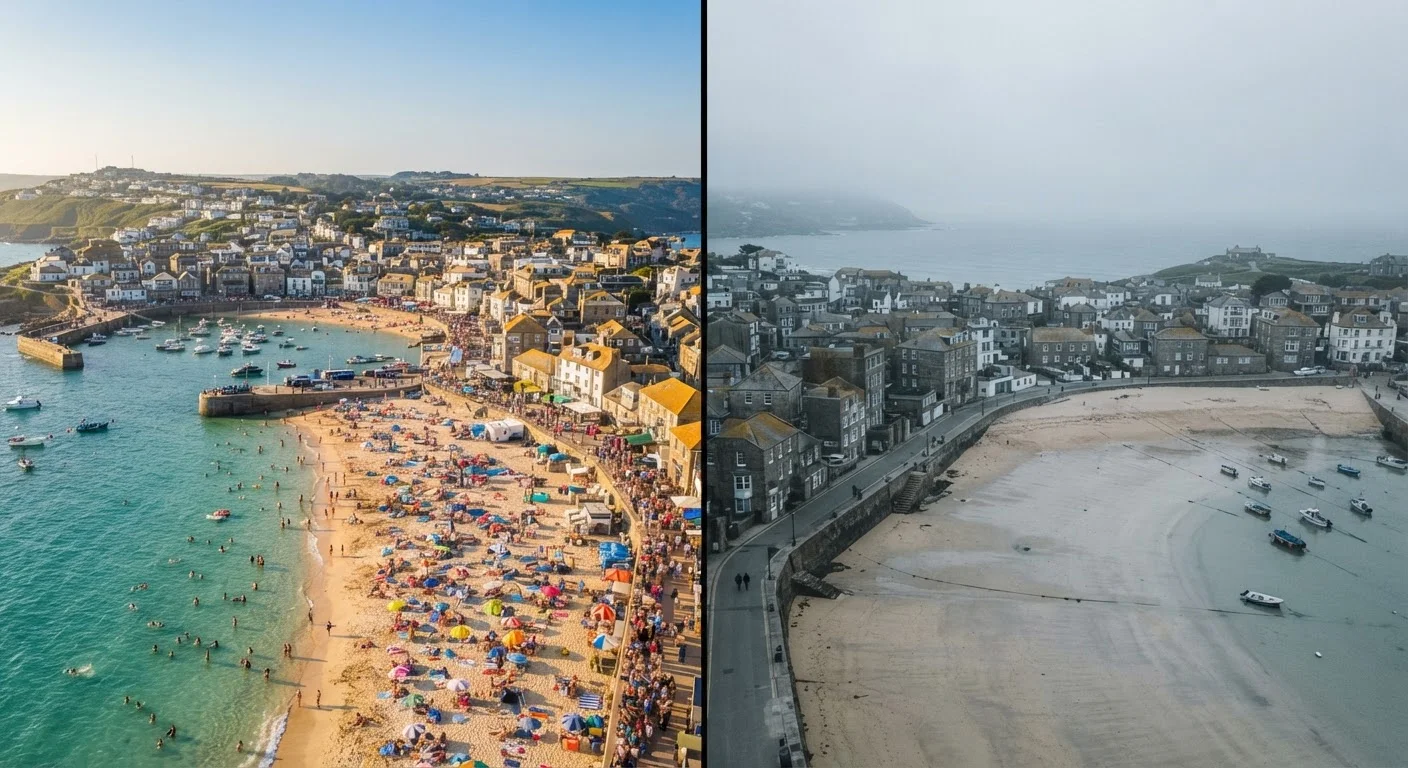
The Three Seasons Every Traveler Should Know
No matter where you're headed, your destination operates on a seasonal rhythm. Most places cycle through three broad travel periods: peak season, shoulder season, and off-season. Each comes with its own mix of weather, visitor volume, and practical conditions — and choosing which one fits your trip is one of the most consequential planning decisions you'll make.
Peak season is when a destination is at its most popular. That popularity is usually — though not always — linked to favorable weather. Think summer in coastal Europe, winter in the Caribbean, or autumn in New England when fall foliage draws visitors from across the country. Demand is high, which means popular accommodations and tours can book out weeks or months in advance. For a fuller picture of how this timing fits into your overall trip structure, see the anatomy of a well-planned trip.
Shoulder season — typically the weeks or months just before and after the peak — often represents a genuine sweet spot. Weather may be slightly less predictable, but crowds thin considerably and the atmosphere at many destinations feels more relaxed. Off-season is the quietest period, when visitor numbers drop sharply. Some attractions reduce hours or close entirely, but for travelers with flexibility, it can mean experiencing a place more on its own terms.
3–6 months
Advance booking lead time at peak-season destinations
Travel industry guidance consistently suggests booking popular accommodations and tours 3–6 months ahead for peak-season trips to high-demand destinations.
~30%
Typical visitor volume drop in shoulder vs. peak season
Tourism boards at many popular European destinations report visitor numbers roughly 25–35% lower in shoulder months compared to peak-season highs.
1 in 3
Travelers who say crowds significantly reduced enjoyment
Survey data from travel research organizations has found a substantial share of leisure travelers cite overcrowding as a major factor that diminished their trip satisfaction.
Weather Isn't the Only Driver — Crowds Are Shaped by More
It's tempting to treat weather as the sole variable when choosing when to travel. But crowd patterns are driven by a web of factors: school holiday calendars, public holidays, major local festivals, and even the timing of popular media (a film or TV show set in a location can spike visitor numbers dramatically). Understanding this means looking beyond temperature charts.
A destination can be technically lovely in early May, for instance, yet swamped with visitors because of a national holiday in its home country. Conversely, a location might see its weather peak in October while visitor numbers remain low simply because families are back in school. Peak season travel has real costs that go beyond price — overcrowded viewpoints, long queues, and pressure on fragile sites are all part of the equation.
Research Local Calendars, Not Just Climate Charts
Before settling on travel dates, look up public holidays, school breaks, and major festivals in your destination country — not just your own. A destination that appears uncrowded based on weather data alone can surprise you with a surge tied to a local holiday you didn't know about. Official tourism board websites are a reliable starting point for this kind of calendar research.
For destinations with a cruise port, seasonal patterns can be amplified further — ships disembarking thousands of passengers into a small town can transform a quiet morning into gridlock by noon. The cruises hub covers how cruise schedules intersect with destination seasons.
Matching Your Priorities to the Right Season
There's no universally correct time to travel — only the time that best aligns with what you want from a trip. Start by asking yourself a few honest questions: How much does weather matter to your core activities? Are you able to book well in advance, or do you need flexibility? Is atmosphere — quiet streets, locals going about daily life — important to you?
If weather is critical (say, you're hiking or snorkeling), peak season is often worth the trade-offs — just build your plans around it early. If you're more interested in culture, cuisine, and wandering without a crowd, shoulder or off-season travel may serve you far better. Budget is another honest factor: how your financial approach shapes planning shifts considerably depending on the season you choose.
Once you've identified the right seasonal window, your itinerary structure should adapt accordingly. Peak-season trips benefit from more fixed bookings and less spontaneity; off-season trips reward a looser framework. For practical help building that structure, travel itinerary planning from scratch walks through the process step by step. And if you're weighing how much flexibility to bake in, flexible vs. fixed itineraries lays out both approaches honestly.
Frequently Asked Questions
Shoulder season is the period between a destination's peak and off-season — typically spring or fall for many temperate locations. Crowds are lighter, and conditions are often still pleasant. It's widely regarded as a sweet spot for travelers who want comfort without the peak-season pressure.
Off-season travel can offer a more authentic, quieter experience at popular destinations. The trade-offs include unpredictable weather, reduced operating hours at attractions, and fewer tourism services. Whether it's worth it depends on your travel priorities and flexibility.
Not necessarily. Peak season is often defined by demand rather than weather alone. School holiday schedules, domestic travel patterns, and cultural events can push a destination into 'peak' status even during imperfect weather windows.
Check official tourism board websites, travel forums, and local resources for your specific destination. Climate data sites can show historical weather patterns by month. Cross-referencing both weather and crowd data gives the most accurate picture.
Cruise seasons have their own rhythm. Caribbean cruises peak in winter when North Americans seek warmth, while Mediterranean and Alaskan itineraries peak in summer. The <a href="/travel-exploration/cruises">cruises hub</a> has more on how seasonal timing shapes cruise planning.
Peak season requires more advance booking for flights, hotels, and popular tours. Off-season travel demands more flexibility and contingency planning. Shoulder season generally sits in a middle ground where planning is easier but still benefits from reasonable lead time.
The content on this site is for informational purposes only and is not a substitute for professional advice. Always consult a qualified professional for guidance specific to your situation.