

Why Watering Myths Are So Persistent
Watering feels intuitive. Plants are alive, they need water, so more attention seems like better care. That logic is understandable - and consistently wrong in the specifics. Many common watering habits are passed down through gardening culture rather than grounded in how plants actually absorb and use water.
The result is a lot of well-meaning gardeners inadvertently stressing the plants they're trying to help. If your garden isn't thriving despite regular watering, the problem may not be how much you water - but when, how, and why. Understanding what's actually happening in the soil and roots changes everything. See our guide to reading plant distress signals for help interpreting what your plants may already be telling you.
Myth
Watering plants in direct sunlight will burn their leaves.
Fact
Sunlight does not cause water droplets to burn leaves - but midday watering is still inefficient for other reasons.
The idea that water droplets act like tiny magnifying glasses to scorch foliage has been tested by researchers and found to be inaccurate under normal garden conditions. A study published in the journal New Phytologist found that smooth-leaved plants did not experience burning when water droplets were present in sunlight. However, watering during the hottest part of the day is still wasteful - evaporation rates are high and roots receive less of what you apply. Morning watering remains the practical recommendation because foliage dries quickly (reducing fungal risk) and water soaks in before peak heat.
Myth
Plants need to be watered every day to stay healthy.
Fact
Daily watering often does more harm than good. Deep, infrequent watering builds stronger, more resilient root systems.
Frequent shallow watering encourages roots to stay near the surface, where they are more vulnerable to heat and drought stress. When you water deeply and less often - allowing the top inch or two of soil to dry between sessions - roots follow moisture downward into cooler, more stable soil. This is why established trees and shrubs generally need far less frequent watering than most people apply. The correct frequency depends on your soil type, climate, plant species, and season - not a fixed calendar schedule.
Myth
Wilting always means a plant is thirsty and needs immediate watering.
Fact
Wilting can be caused by both underwatering and overwatering, as well as by heat and root damage.
Overwatered roots become oxygen-deprived and begin to rot, impairing the plant's ability to take up water even when the soil is saturated. The result looks identical to drought stress: drooping leaves and stems. Adding more water to an already waterlogged root zone accelerates the damage. Before watering a wilting plant, check the soil. If it's wet or barely dry, withhold water, improve drainage if possible, and allow the roots to recover. Wilt on a hot afternoon without overnight recovery is a different signal - that pattern is more likely heat stress than chronic underwatering.
Myth
More water is always safer than not enough - it's better to over-water than under-water.
Fact
Overwatering is one of the most common causes of plant death in home gardens, and its damage can be difficult to reverse.
Plant roots require both water and oxygen to function. When soil remains saturated for extended periods, oxygen is displaced and anaerobic conditions develop, creating an environment where root-rot pathogens such as Phytophthora thrive. Symptoms - yellowing lower leaves, mushy stems near the soil, a faint sour smell from the soil - are often mistaken for nutrient deficiency or other problems. Under-watering is generally more recoverable in the short term than long-term overwatering, which can destroy the root system entirely.
Myth
All plants in a garden can follow the same watering schedule.
Fact
Water requirements vary dramatically by plant species, root depth, soil type, sun exposure, and season.
A vegetable garden growing in sandy loam in full sun may need watering every two to three days during summer, while established lavender or ornamental grasses in the same climate might go two weeks or more without supplemental water. Grouping plants with similar needs - a practice sometimes called hydrozoning - makes watering more efficient and prevents the common outcome where drought-tolerant plants are drowned and thirsty plants are neglected. Adjusting for seasonal changes is equally important: a schedule that works in May is likely to under-deliver in August and over-water in October.
Building Better Watering Habits
The most effective watering practices share a common principle: respond to what the plant and soil actually need, rather than following a rigid routine. A few habit adjustments make a significant difference.
Wet Foliage Overnight Invites Fungal Disease
Watering late in the evening leaves foliage wet through the night, creating favorable conditions for fungal diseases including powdery mildew and gray mold (Botrytis). Morning watering is consistently recommended because the sun and rising temperatures dry leaves quickly. If morning watering isn't practical, focus water at the soil level and keep foliage as dry as possible.
Check soil moisture before you water. Push a finger two inches into the soil near the plant's root zone. If it feels moist, hold off. If it's dry at that depth, it's time to water thoroughly. This simple check replaces guesswork with real information.
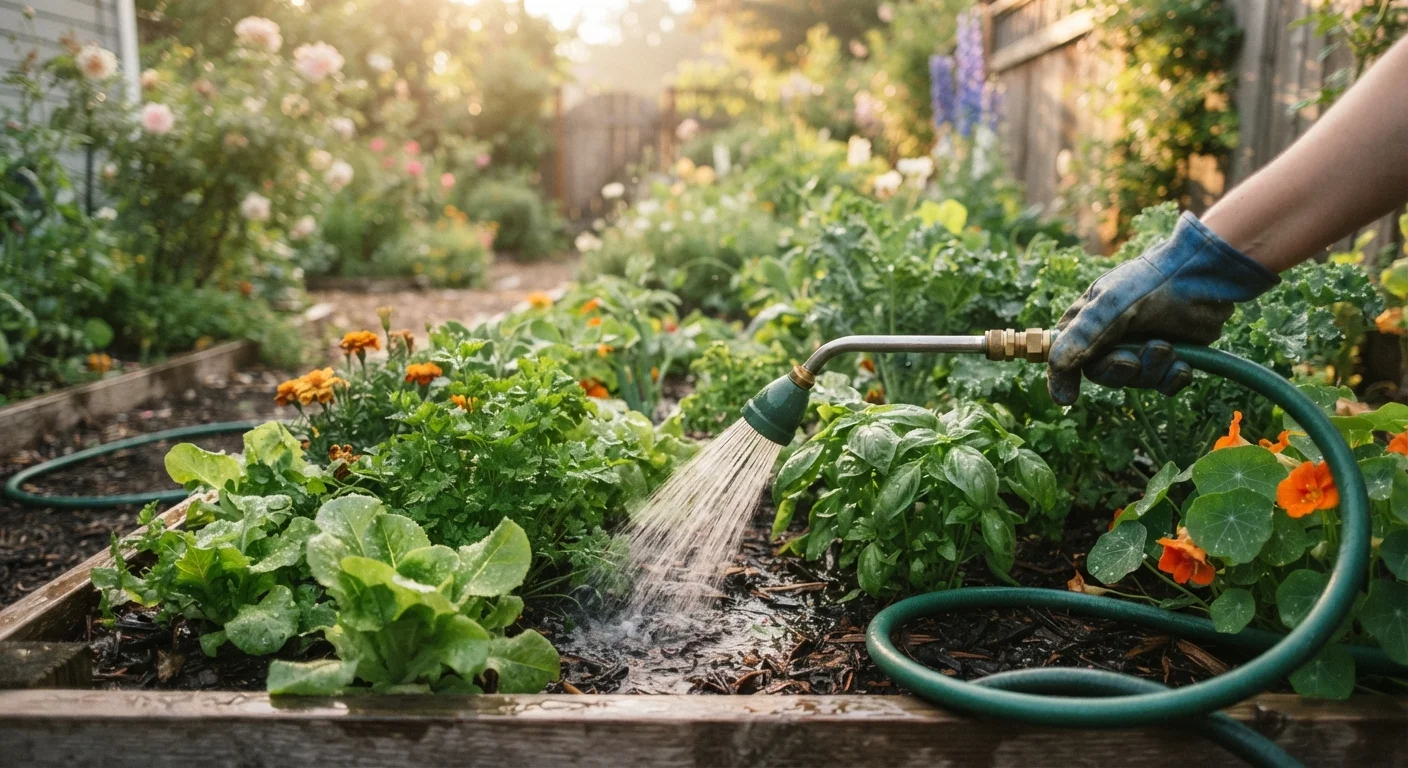
Water at the base, slowly. Using a soaker hose or drip irrigation delivers water directly to the root zone, reduces evaporation, and keeps foliage dry - which limits conditions that favor fungal disease. For hand-watering, direct the stream to the soil, not the leaves.
Group plants by water needs. Succulents and drought-tolerant natives have very different requirements than vegetables or annual flowers. Watering everything on the same schedule inevitably means some plants are over-watered and others are under-served. If seedlings are struggling before they even reach the garden, root-zone moisture is often a factor - the common reasons seedlings fail may be worth reviewing.
Adjusting your approach based on evidence rather than habit is the same kind of thinking that separates good outcomes from costly mistakes in many areas - including DIY home improvement, where myth-driven decisions similarly lead to worse results.
50%
Outdoor water wasted by inefficient irrigation
According to the U.S. Environmental Protection Agency (EPA), as much as 50% of outdoor water use is lost to evaporation, wind, or runoff due to overwatering and inefficient irrigation methods.
~9 billion gallons
Daily outdoor water use by U.S. households
The EPA estimates that American households use about 9 billion gallons of water per day outdoors, with lawn and garden irrigation making up a large share of that total.
The content on this site is for informational purposes only and is not a substitute for professional advice. Always consult a qualified professional for guidance specific to your situation.