

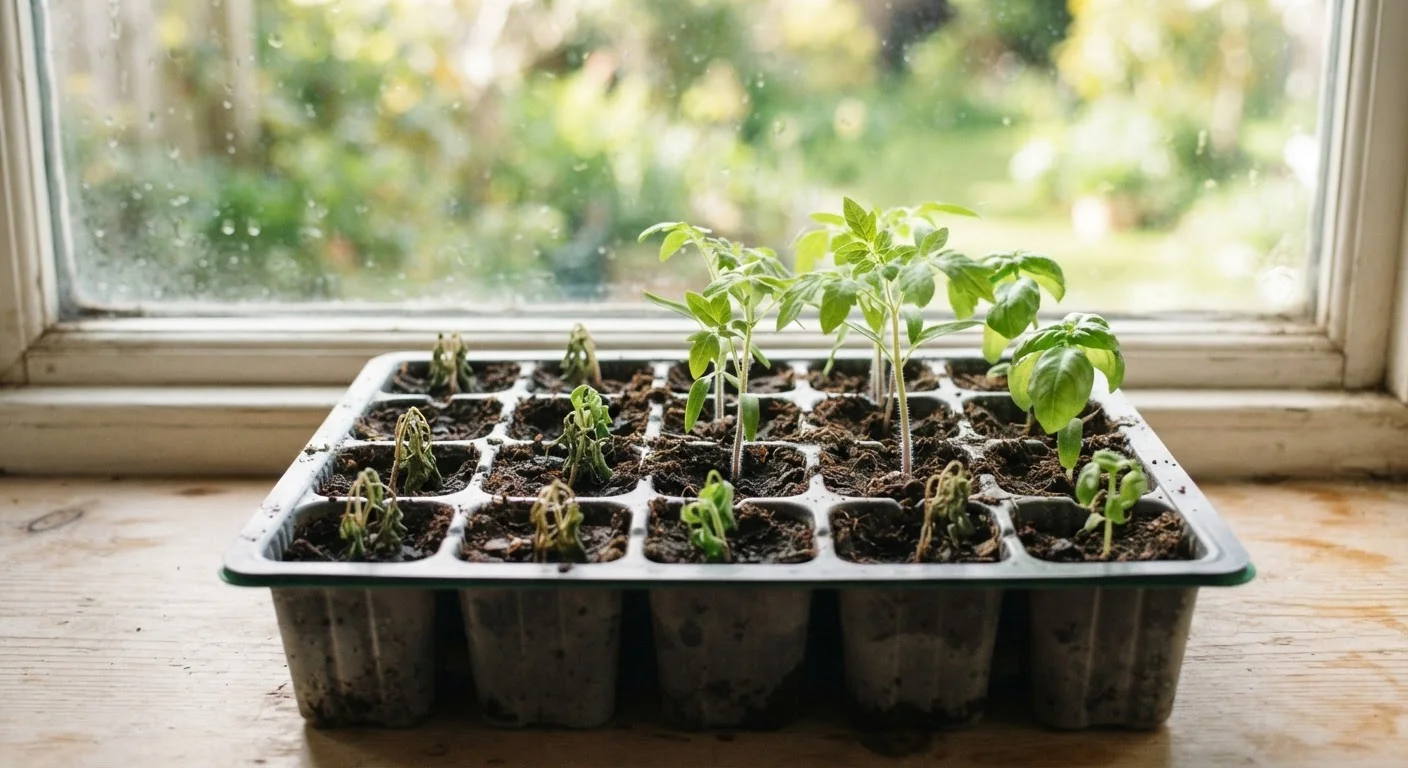
Why Indoor Seedling Failures Are So Common
Growing plants from seed is one of the most rewarding parts of gardening — and one of the most frustrating when things go wrong. A tray of green, promising seedlings can collapse within days, leaving even experienced gardeners puzzled. The causes are almost always preventable, and they tend to cluster around a handful of recurring mistakes.
If you're just getting started, our beginner's guide to starting a garden covers the foundational decisions that set you up for success before you ever open a seed packet. But once those seeds are germinating, the stakes shift to the details of indoor care.
Damping Off Is Fast and Irreversible
Damping off is a fungal condition that causes seedling stems to pinch thin at the soil line and collapse — often overnight. Once it appears, affected seedlings cannot be saved. Prevention is the only real defense: use sterile seed-starting mix, ensure good airflow around seedlings, and water at the base rather than overhead to keep foliage dry.
Understanding what's killing your seedlings — and when — is the first step toward getting more of them to the garden alive.
The Most Common Mistakes That Kill Seedlings
Most seedling losses trace back to a small set of errors that compound each other. Poor soil structure weakens roots. Overwatering introduces fungal problems. Inadequate light produces spindly growth that can't withstand transplant. Each mistake below explains not just what goes wrong, but why it's such an easy trap to fall into.
Starting seeds in regular potting soil or garden soil instead of a dedicated seed-starting mix.
Why it happens: Potting soil seems like a logical choice since it's already in the house. Most gardeners don't realize that standard mixes are too dense and nutrient-heavy for the delicate root systems of germinating seeds.
Overwatering seedlings, leading to root rot or damping off.
Why it happens: New gardeners often equate attentiveness with frequent watering. Seedlings in small cells dry out quickly, so the instinct is to water daily — but waterlogged soil deprives roots of oxygen.
Placing seedling trays in a window without supplemental grow lights, resulting in weak, leggy plants.
Why it happens: Most home windows — even south-facing ones — don't deliver enough light intensity for the 12–16 hours seedlings need during early spring when days are still short.
Skipping the hardening off process and transplanting seedlings directly outdoors.
Why it happens: After weeks of tending seedlings indoors, gardeners are eager to get them in the ground. The dramatic shift from a stable indoor environment to outdoor wind, temperature swings, and direct sun is genuinely shocking for young plants.
Transplanting at the wrong time of day or in stressful weather conditions.
Why it happens: Excitement about planting day leads many gardeners to work whenever it's convenient — often during the hottest, brightest part of the afternoon.
Disturbing or breaking roots when removing seedlings from their cells.
Why it happens: Impatience or overly dry root balls make seedlings difficult to remove cleanly. Squeezing the cell walls can crush root systems that took weeks to develop.
Once seedlings are in the ground, watering habits continue to matter. Our article on common garden watering myths explains several widespread practices that quietly stress even established plants.
Reading the Warning Signs Before It's Too Late
Seedlings often show distress signals before they die — yellowing cotyledons (the first seed leaves), purple-tinted stems, stretched and floppy growth, or a white crust on the soil surface. Learning to read these signs early gives you a chance to course-correct.
7–10 days
Minimum hardening off period before transplant
University cooperative extension programs broadly recommend a gradual 7–10 day acclimatization period to reduce transplant shock in vegetable and flower seedlings.
14–16 hrs
Daily light needed by most seedlings indoors
Horticultural guidance consistently cites 14–16 hours of bright light per day as optimal for strong, compact seedling development under artificial grow lights.
Yellowing typically points to nutrient deficiency or waterlogging. Purple coloring on stems can indicate phosphorus deficiency or cold temperatures slowing nutrient uptake. Stretched, pale growth almost always signals insufficient light. Our guide to interpreting plant distress signals goes deeper on matching symptoms to causes.
If you're raising seedlings for containers rather than in-ground beds, many of the same rules apply — though drainage becomes even more critical. See our container gardening overview for advice tailored to pots and small spaces.
Don't Fertilize Too Early
Seed-starting mixes contain little to no added fertilizer by design — seedlings draw nutrients from the seed itself in their first week or two. Adding fertilizer too early can burn fragile roots and cause more harm than good. Wait until seedlings have developed their first set of true leaves before introducing any diluted fertilizer.
The content on this site is for informational purposes only and is not a substitute for professional advice. Always consult a qualified professional for guidance specific to your situation.