

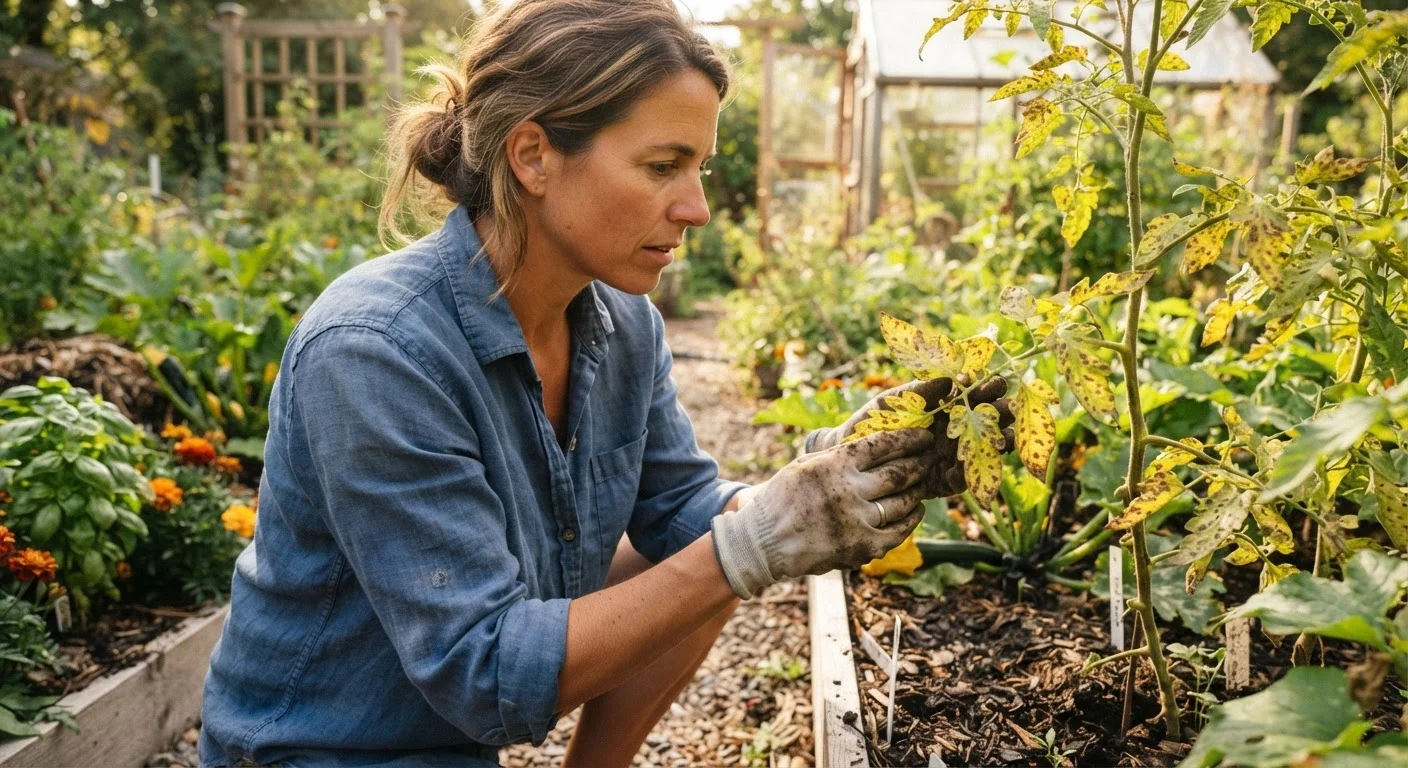
Why Plant Symptoms Are Worth Decoding Carefully
Many gardeners reach for the watering can or fertilizer bag the moment a plant looks unhappy - but applying the wrong remedy can deepen the damage. A plant suffering from root rot doesn't need more water. A plant starved of nitrogen won't recover by raising the pH. Accurate diagnosis is the first and most important step.
Think of your garden as a system communicating in patterns. Individual symptoms rarely tell the whole story, but when you read color, texture, location on the plant, and timing together, a clear picture usually emerges. The fundamentals of soil prep and watering underpin nearly every issue you'll encounter, so those are always worth revisiting first.
~90%
Plant problems linked to water or soil
Horticultural educators commonly note that the vast majority of houseplant and garden failures trace back to watering habits or soil conditions rather than disease or pests.
17+
Essential nutrients plants require
Plants need at least 17 recognized essential nutrients; deficiencies in any one can produce visible symptoms that are often mistaken for pest or disease damage.
Yellowing Leaves: Reading the Pattern
Leaf yellowing - called chlorosis - is one of the most common distress signals, and the location of yellowing on the plant is your most useful clue.
- Lower, older leaves yellow first: Classic sign of nitrogen deficiency. Nitrogen is mobile in the plant, so it's pulled from older leaves to support new growth. The fix is usually a balanced fertilizer or nitrogen-rich amendment like compost.
- New growth yellows with green veins: This pattern - called interveinal chlorosis - typically indicates an iron or manganese deficiency, often caused by soil pH being too high rather than an actual shortage of the mineral. A soil test will confirm.
- Uniform pale yellowing across the whole plant: Often a sign of overwatering or poor drainage. Roots sitting in waterlogged soil can't take up nutrients effectively, even when nutrients are present.
Before adding any fertilizer, check your soil's moisture level and recent watering history. Many yellowing problems are water-related, not nutrient-related. Our guide to common watering misconceptions covers how easy it is to overwater without realizing it.
Do a Soil Test Before Fertilizing
A basic soil test - available through many cooperative extension services for a small fee - tells you your soil's pH and nutrient levels. This prevents the common mistake of adding nutrients that are already sufficient or applying the wrong amendment. Correcting pH often resolves deficiency symptoms without adding any fertilizer at all.
Wilting, Brown Edges, and Stunted Growth
Wilting is the most visually alarming symptom, but its cause isn't always drought. Two opposite conditions - too little water and too much - both produce wilting because both impair root function. Check soil moisture a few inches below the surface before reaching for the hose. If the soil is already saturated, more water will worsen root damage.
Brown, crispy leaf edges commonly result from:
- Low humidity, especially for tropical houseplants brought outdoors in dry conditions
- Salt buildup from repeated fertilization or hard tap water accumulating in the root zone
- Inconsistent watering that allows repeated wetting and drying cycles
Stunted or slowed growth is worth investigating at the root level - literally. Compacted soil prevents roots from expanding to access water and nutrients. Container plants that have become root-bound show the same symptom. Gently remove the root ball and inspect: circling or densely matted roots signal it's time to repot or loosen the surrounding soil.
When Symptoms Appear on One Side Only
If wilting, yellowing, or dieback is confined to one side of the plant or one branch, consider vascular disease - such as Fusarium or Verticillium wilt - which blocks water transport through specific channels. These diseases are difficult to reverse; removing affected stems and improving drainage helps prevent spread. A local cooperative extension office can help with confirmation.
If you're dealing with seedlings that fail before they establish, the reasons seedlings die before reaching the garden often overlap with these same root and watering dynamics.
Spots, Holes, and Unusual Textures
Physical damage to leaf surfaces narrows your diagnosis toward either pests or disease. A few distinguishing patterns:
- Holes with clean edges: Likely caterpillars or beetles feeding. Check stems and soil surface too.
- Stippled or silvery surfaces: Classic sign of spider mites or thrips, which pierce individual cells. Look for tiny moving dots or fine webbing on the undersides of leaves.
- Defined dark or yellow spots that spread: Fungal or bacterial disease. Improper watering that keeps foliage wet for long periods is a common contributor.
- Sticky residue on leaves (honeydew): Produced by aphids, scale, or whiteflies feeding on plant sap. Look for colonies clustered on new growth or stems.
Resist the urge to apply broad-spectrum treatments immediately. Confirm what you're dealing with, then choose the most targeted intervention available. Overuse of pesticides - including organic options - can harm beneficial insects and disrupt the ecological balance of your garden. For gardeners interested in building longer-term resilience, native plants offer a practical ecological argument worth considering alongside pest management strategies.
Frequently Asked Questions
Yellowing leaves have several possible causes: nitrogen deficiency typically starts with older, lower leaves; iron chlorosis shows up in new growth with green veins on a yellow background; and overwatering creates uniform pale yellowing across the plant. Check your watering habits and soil first before adding fertilizer.
Wilting after watering usually signals root problems caused by overwatering or poor drainage. Waterlogged soil suffocates roots, preventing them from taking up water even when it's plentiful. Let the soil dry out between waterings and check that containers have adequate drainage holes.
Crispy brown edges typically result from low humidity, salt accumulation in the soil from tap water or fertilizer, or inconsistent watering cycles. Try flushing the soil with water occasionally to reduce salt buildup and water more regularly to avoid drying out between cycles.
Stunted growth often points to compacted soil restricting root expansion, a significant nutrient deficiency, or root-bound conditions in a container. Check whether the plant needs repotting, loosen compacted garden beds, and consider a soil test to identify nutrient gaps.
Pest damage tends to show physical distortions - holes, chewed edges, stippled or silvery surfaces, or sticky residue. Disease symptoms more often appear as spreading spots, blights, molds, or rotting tissue with defined patterns. Examine the undersides of leaves carefully, since many pests hide there.
Not necessarily - fertilizing a plant already stressed by overwatering, root damage, or disease can make things worse. Identify the root cause first. If nutrient deficiency is confirmed through a soil test or a clear visual pattern, apply an appropriate fertilizer at the recommended rate.
The content on this site is for informational purposes only and is not a substitute for professional advice. Always consult a qualified professional for guidance specific to your situation.