

Start here
Why Insulation Matters
Core concept
Understanding R-Value
Know your options
Common Insulation Types
Apply the knowledge
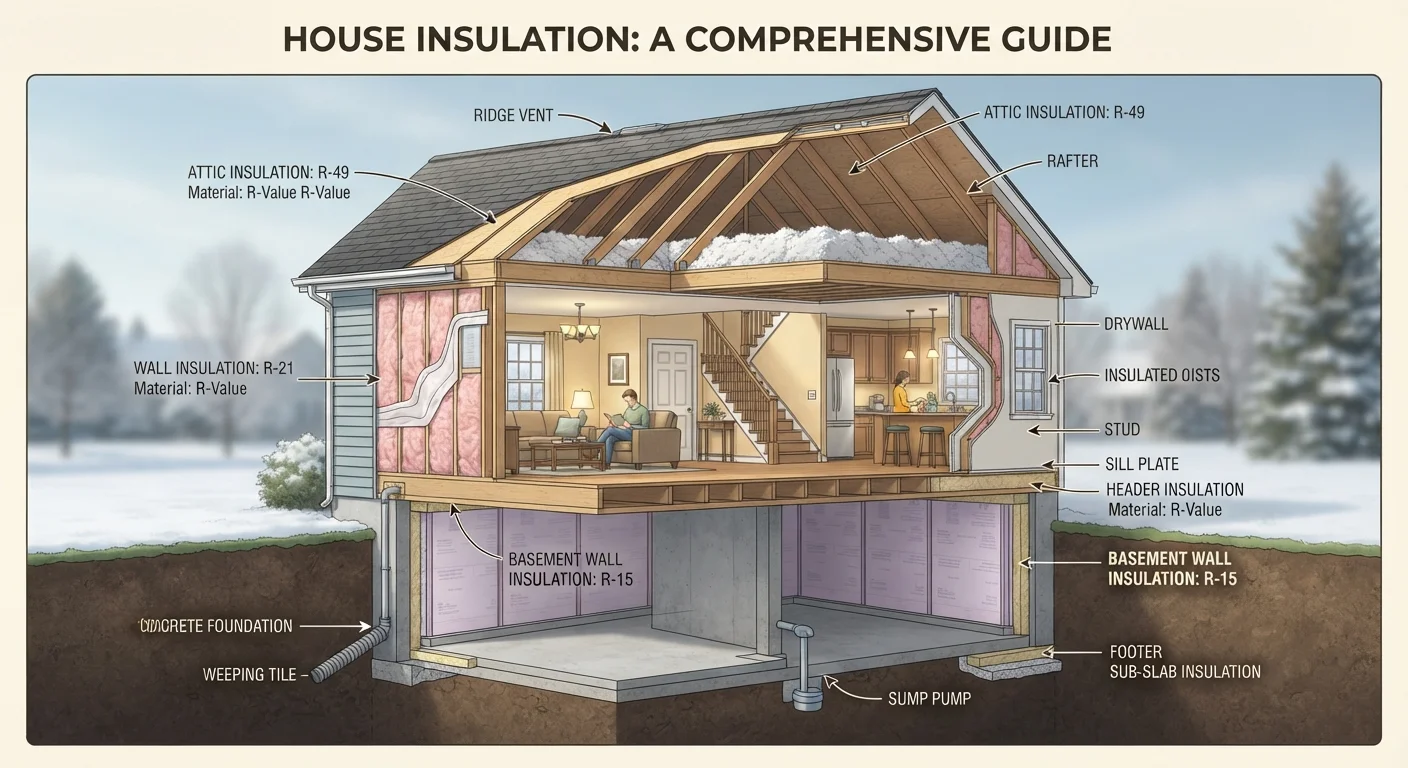
Where Insulation Goes in a Home
Diagnose problems
Signs Your Insulation Is Underperforming
Take action
When to DIY and When to Call a Pro
Why Insulation Matters
Insulation is the material inside your walls, attic, and floors that slows the movement of heat. In winter, it keeps warmth from escaping; in summer, it keeps heat from entering. Without adequate insulation, your heating and cooling system works harder, rooms feel uncomfortable, and energy costs climb.
Insulation also plays a secondary role in moisture management and can reduce noise transfer between rooms. Understanding the basics puts you in a much stronger position when buying a home, planning a renovation, or troubleshooting comfort problems. For a broader look at your home's systems, our guide to reading a home inspection report is a helpful companion resource.
Understanding R-Value
R-value is the standard measure of an insulation material's resistance to heat flow. A higher R-value means greater resistance — and better insulating performance. R-values are additive: layering two R-19 batts gives you roughly R-38.
R-value
A number that measures how well insulation resists heat flow. The higher the number, the more effective the insulation.
Thermal envelope
The boundary of insulated and air-sealed surfaces that separates the conditioned interior of a home from the outdoors.
Air sealing
The process of closing gaps and cracks in the building shell to prevent uncontrolled airflow, which complements insulation.
Vapor barrier
A material — often plastic sheeting — installed to slow the movement of moisture through walls, floors, or ceilings and reduce condensation inside insulation.
Rim joist
The horizontal framing member that sits on top of the foundation wall and closes off the floor frame. It is a common source of heat loss and air infiltration.
Closed-cell foam
A dense type of spray foam insulation with a high R-value per inch that also acts as a vapor barrier, making it suitable for moisture-prone areas.
The right R-value for your home depends on your climate zone and the location being insulated. Attics need higher R-values than interior walls because more heat escapes through the roof. The U.S. Department of Energy publishes climate zone maps with location-specific recommendations — these are a reliable starting point. Our home improvement glossary explains R-value and other common terms in plain language.
Common Insulation Types
Several distinct materials are used for home insulation, each with different applications, costs, and installation requirements.
- Fiberglass batts: Pre-cut panels of spun glass fibers that fit between wall studs and ceiling joists. Widely available and straightforward to install in open cavities.
- Blown-in cellulose: Recycled paper fibers blown into attic floors or wall cavities using a machine. Effective for filling irregular spaces and adding depth to existing insulation.
- Spray foam: A two-component liquid that expands and hardens, sealing both air gaps and providing insulation. Comes in open-cell (softer, lower R-value) and closed-cell (denser, higher R-value, vapor-resistant) varieties. Generally requires professional installation.
- Mineral wool (rock or slag wool): Dense batts made from volcanic rock or industrial slag. Naturally resistant to fire and moisture, and provides good acoustic performance.
- Rigid foam boards: Sheets of foam used on exterior walls, under slabs, and in basement applications where moisture resistance is important.
Match the Material to the Location
There is no single best insulation type — the right choice depends on where it goes, how accessible that space is, and your moisture conditions. Blown-in cellulose works well in attics and existing wall cavities; rigid foam is preferred below grade where moisture is a concern. Consult the material's data sheet and your local building code before purchasing.
Where Insulation Goes in a Home
Effective insulation covers all the boundary surfaces between conditioned (heated or cooled) space and unconditioned space or the outdoors.
- Attic
- The attic floor (or roof deck in sealed attics) is the highest-priority location in most homes. Heat rises, so inadequate attic insulation is one of the biggest sources of energy loss.
- Exterior walls
- Wall cavities between interior living space and the outside should be filled. In existing homes this often means blown-in installation through small holes to avoid opening walls.
- Basement and crawl space
- Insulating the rim joists (the framing around the top of the foundation) and the basement walls or crawl space floor reduces cold floors and moisture intrusion.
- Floors over unconditioned spaces
- Floors above garages or open crawl spaces should be insulated to prevent cold from rising into living areas.
Pairing insulation upgrades with air sealing — particularly around electrical outlets, plumbing penetrations, and attic hatches — dramatically improves results. Our article on weatherstripping doors and windows covers the companion step of sealing gaps at openings.
Signs Your Insulation Is Underperforming
You don't need special equipment to spot the most common signs of inadequate insulation. Watch for:
- Uneven temperatures: Rooms that are noticeably warmer or cooler than the rest of the house suggest localized insulation gaps.
- High heating and cooling bills: A sudden or gradual increase without a change in habits or energy prices can point to insulation degradation.
- Cold walls, floors, or ceilings: Interior surfaces that feel cold to the touch in winter indicate heat loss through those assemblies.
- Ice dams: Ridges of ice forming at roof edges in cold climates are a classic sign that attic heat is escaping and melting snow unevenly.
- Drafts near outlets or switches: On exterior walls, these can indicate missing or insufficient wall insulation.
Moisture Can Mask Insulation Problems
Wet or compressed insulation loses much of its R-value and can harbor mold. Before diagnosing a comfort problem as simply "not enough insulation," check that existing material is dry and intact. A home energy auditor can use a thermal camera to identify both air leaks and moisture issues without tearing open walls.
If you're conducting seasonal checks, insulation is worth adding to your regular inspection routine. Our seasonal home maintenance checklist outlines what to look for and when throughout the year.
When to DIY and When to Call a Pro
Many insulation tasks are accessible to homeowners with basic skills and the right safety gear. Others involve risks that justify professional help.
Generally DIY-appropriate:
- Adding blown-in insulation to an accessible attic floor
- Installing fiberglass batts in an open basement rim joist
- Placing rigid foam boards in a crawl space
Better left to professionals:
- Spray foam installation (requires specialized equipment and training)
- Insulating walls in finished rooms without opening them
- Any work near knob-and-tube wiring or HVAC equipment
- Attics with structural access challenges or hazardous materials
Safety Gear Is Non-Negotiable
Insulation fibers and dust are respiratory irritants. Always wear an N95 or better respirator, safety glasses, long sleeves, and gloves when handling fiberglass, mineral wool, or cellulose. Work in a well-ventilated space and keep children and pets out of the work area until cleanup is complete.
Before starting any insulation project, check with your local building department about permit requirements. Some jurisdictions require inspections for insulation work, especially in newly conditioned spaces. Permits exist to protect you — skipping them can complicate future sales or insurance claims.
Frequently Asked Questions
The recommended R-value depends on your climate zone and which part of the home you're insulating. The U.S. Department of Energy publishes zone-specific recommendations — attics in colder climates generally call for R-49 to R-60, while milder regions may only need R-30. Check the DOE's online zone map for guidance specific to your location.
Yes, in most cases you can layer new insulation over old, provided the existing material is dry, undamaged, and free of mold. This is a common approach in attics. If the old insulation is wet or compressed, it should be removed before adding new material.
Most insulation materials last 20 to 80 years when properly installed and kept dry. Fiberglass and cellulose can degrade if exposed to moisture or pests. Spray foam tends to be the most durable. Regular inspection is the best way to catch problems early.
Insulation does reduce sound transmission to some degree, particularly dense materials like mineral wool and blown-in cellulose. However, materials optimized for thermal performance are not the same as acoustic insulation. If soundproofing is the primary goal, dedicated acoustic products work better.
Adding blown-in or batt insulation in an accessible attic is one of the more beginner-friendly home improvement projects. You'll need proper safety gear — a respirator, eye protection, and gloves — and should ensure you don't block soffit vents. If the attic is cramped or contains knob-and-tube wiring, consult a professional first.
Adequate insulation typically reduces the energy needed to heat and cool a home, which can lower utility costs. The actual savings vary based on your home's existing condition, local climate, and energy prices. No specific outcome can be guaranteed, but improving insulation is widely recognized as one of the more cost-effective energy upgrades.
The content on this site is for informational purposes only and is not a substitute for professional advice. Always consult a qualified professional for guidance specific to your situation.