

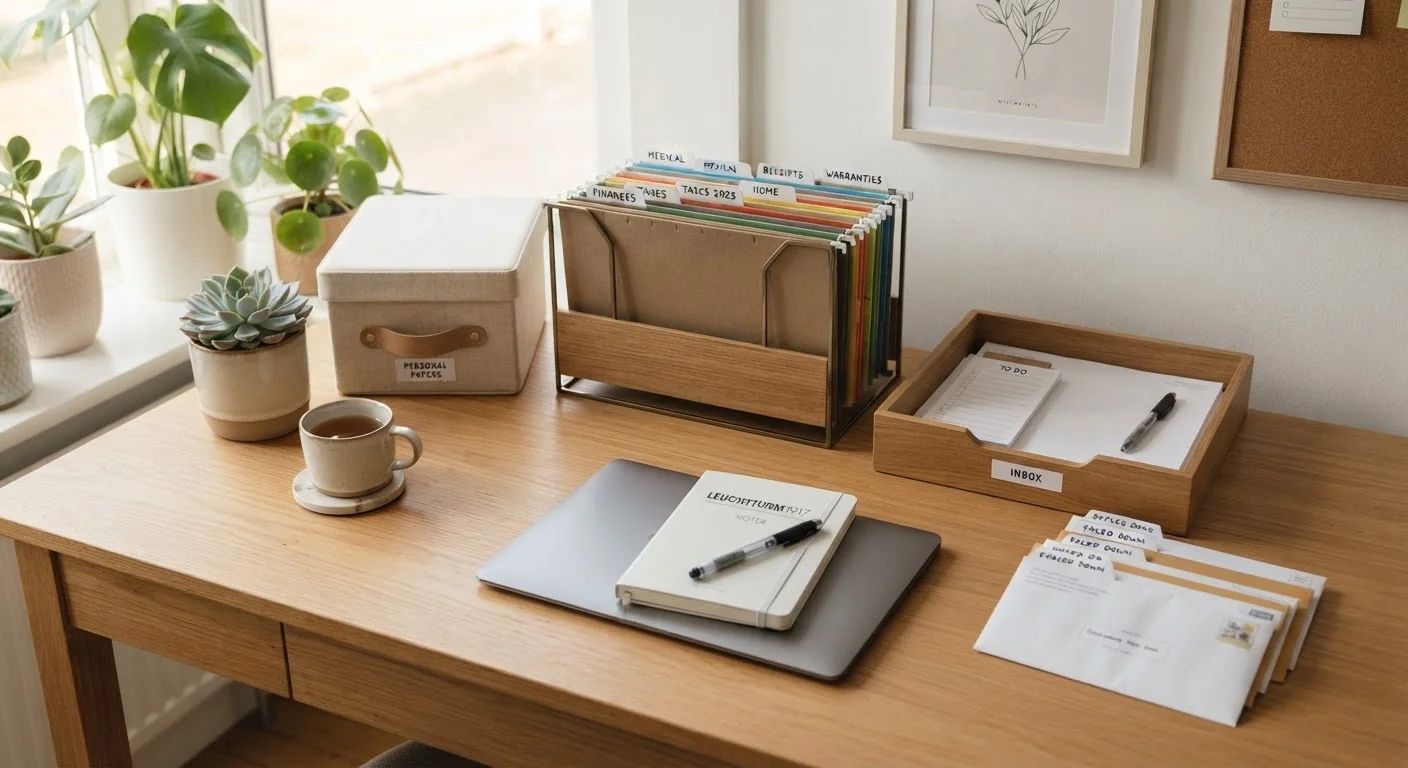
Why Paper Piles Up — and How to Stop It
Paper accumulates not because we're disorganized by nature, but because most households lack a clear decision point for incoming documents. Mail lands on the counter, bills sit near the keyboard, and receipts fall into a drawer — and suddenly a small stack becomes an overwhelming pile.
The fix isn't a fancy filing cabinet or a label maker. It's a consistent habit applied at the moment paper enters your home. This guide walks you through a practical, room-by-room approach to getting documents under control — and keeping them that way.
If you're tackling a broader home organization effort, the comprehensive home organization guide covers how paperwork fits into a whole-home system. And if you've ever wondered whether the organizing methods you've tried are actually working against you, it's worth reading about common organization myths before you invest time in a new setup.
What you will need
Tools and Supplies You'll Need
You don't need to spend much to build a functional home filing system. The goal is a lightweight setup you'll actually use.
Hanging file folders and a file box or drawer
Creates the core structure for categorizing and retrieving documents quickly.
Cross-cut shredder
Safely destroys documents containing personal or financial information before disposal.
Inbox tray (two-slot)
Holds incoming mail and action items in a designated landing spot to prevent counter piles.
Waterproof, fireproof document box or safe
Protects permanent records — such as passports, birth certificates, and property deeds — from loss or damage.
Label maker or plain adhesive labels
Clearly marks file folder categories so documents are easy to locate and return.
Scanner or smartphone scanning app
Creates digital backups of important documents and reduces physical paper volume over time.
Step-by-Step: Building Your Home Document System
Follow these steps in order. Each one builds on the last, so resist the urge to skip ahead to filing before you've sorted.
Gather every piece of paper in your home
Collect all loose paper from every room — counters, drawers, bags, and boxes — and bring it to your cleared sorting surface. Don't evaluate anything yet; just gather. This complete picture is essential before you can make smart decisions about what stays and what goes.
Sort into three initial piles: Action, File, and Shred
Action — anything requiring a response or payment within the next 30 days (unpaid bills, forms to complete, appointments to schedule).
File — documents you need to keep for reference or legal reasons but don't require immediate action (insurance statements, tax returns, medical records, warranties).
Shred — anything with personal information you no longer need: old bank statements past their retention period, expired cards, junk mail with your name and address.
Set up your permanent records box
From your File pile, separate out documents that should be kept indefinitely: birth certificates, Social Security cards, marriage and divorce certificates, military discharge papers, property deeds, vehicle titles, and wills. Store these in a waterproof and fireproof box or small safe. Keep this box accessible to household members who may need it but out of everyday traffic.
Create your active filing categories
For the remaining File documents, set up labeled hanging folders in your file box or drawer. Common categories for most households include:
- Taxes (current and prior years)
- Banking and investments
- Insurance (home, auto, health, life)
- Medical records and explanation of benefits
- Home (mortgage or lease, repairs, warranties, utility accounts)
- Auto (titles, registration, maintenance records)
- Employment and income
Keep category names broad — too many narrow folders create friction and lead to overstuffed miscellaneous piles.
Handle your Action pile immediately
Work through your Action pile right now. Pay any overdue bills, respond to any time-sensitive items, and add deadlines to your calendar. Then file supporting documents in the appropriate folder or, if the task is complete, shred what's no longer needed. Do not let the Action pile sit — it's the most common source of paper backlog.
Reduce future paper volume with digital alternatives
Contact your bank, utility providers, and insurance companies to switch from paper statements to electronic delivery. Most institutions offer this through their online account settings. This step alone can eliminate the majority of routine paper that enters most homes each month. For documents you do receive on paper, scan and file digitally if you prefer a paperless system, then shred the originals once the digital copy is confirmed.
The One-Touch Rule for Incoming Mail
When mail arrives, handle each piece exactly once: open it, decide immediately whether it's Action, File, or Shred, and place it accordingly. Putting it down to 'deal with later' is how piles start. A two-slot inbox tray near your entry point makes one-touch sorting easy to maintain.
Maintaining the System Long-Term
The most common reason home filing systems fail is neglect between setup and upkeep. Once your system is in place, the maintenance work is minimal — but it has to happen consistently.
Schedule a 15-minute monthly paper review. Go through your action tray, file anything waiting to be filed, and shred outdated documents. Pair this with a once-a-year deeper audit — ideally every January or at tax time — where you purge documents past their retention period and reassess your categories.
Know How Long to Keep Financial Documents
General guidance suggests keeping tax returns and supporting documents for at least seven years, in case of an IRS audit. Bank and credit card statements can typically be discarded after one year unless they support a tax deduction. Retention needs vary depending on your personal situation — consult a tax professional if you're unsure what applies to you.
Paper management pairs naturally with other seasonal routines. The seasonal declutter checklist is a useful companion for scheduling your annual paper purge alongside other home organization tasks. Families with children may also find it helpful to review organizing strategies for busy households with kids, where paper flow can be especially chaotic.
The content on this site is for informational purposes only and is not a substitute for professional advice. Always consult a qualified professional for guidance specific to your situation.