

Start With the Right Mindset
Home organization often feels overwhelming because people treat it as an event — a weekend blitz — rather than an ongoing practice. The result is a cycle of intense tidying followed by gradual chaos. Shifting that expectation is the first and most important step.
Organization isn't about achieving a showroom aesthetic. It's about creating a home where you can find what you need, put things away with minimal friction, and feel at ease in your space. The goal is a system that fits your household's actual habits — not a system borrowed from a magazine spread.
Before you buy a single bin or label maker, spend a few days simply noticing: Where do things pile up? What do you use every day versus once a year? What frustrates you most? Those observations will shape every decision that follows. For related terminology used throughout this guide, see the Room-by-Room Home Organization Glossary.
Core Organizing Principles That Actually Work
Regardless of room or storage type, a handful of principles consistently produce lasting results:
- Declutter first. Sorting through what you own before organizing ensures you're not just relocating clutter. If an item isn't used, loved, or needed, it shouldn't take up shelf space.
- Group like with like. Batteries belong with batteries; baking supplies belong together. This makes restocking intuitive and prevents duplicates from accumulating.
- Assign every item a fixed home. A designated spot for each object means you always know where to look — and where to return it.
- Prioritize accessibility by frequency. Daily-use items should be within easy reach; seasonal or rarely used items can live on high shelves or in deep storage.
- Use vertical space. Walls, doors, and upper shelves are frequently underused. Hooks, pegboards, and stackable bins can dramatically expand usable storage without adding floor footprint.
When decluttering, use a 'maybe' box rather than forcing a yes-or-no decision on every item. Seal the box, date it, and revisit in 30 days — if you haven't needed anything inside, donate it without opening.
Indecision is the most common reason decluttering stalls. Removing the pressure of an immediate decision keeps momentum going and often reveals, after a month, that the hesitation was unfounded.
Organize for the person you actually are, not the person you hope to be. If you've never used a label maker in three years of owning one, a hand-written label system is more sustainable for your household.
Systems designed around aspirational habits fail because they require behavior change as a prerequisite. Designing around current habits builds organization that sticks immediately.
If you're also working on home improvement projects, consider organization as part of any renovation plan — built-in storage added during a project is almost always more efficient than freestanding solutions added later.
Room-by-Room Strategies
Different rooms present different challenges. Here's how to approach the spaces where clutter most commonly takes hold:
Kitchen
The kitchen is high-traffic and high-stakes. Group items by task zone: prep tools near the cutting board, cooking utensils near the stove, baking supplies together in one cabinet. Drawer dividers, pull-out cabinet organizers, and clear pantry containers make a significant difference. Refrigerator organization follows the same logic — dedicate shelves to categories and label them if multiple people use the space.
Bedroom and Closet
Closets benefit from a full audit twice a year. Remove everything, then return only what fits and what you wear. Use uniform hangers to maximize space, and fold bulky items like sweaters to prevent stretching. Under-bed storage is ideal for off-season clothing or extra linens.
Bathroom
Bathrooms accumulate expired products quickly. Every few months, check dates on medications, sunscreens, and skincare. Use drawer trays and tiered shelving inside cabinets. Keep countertops as clear as possible — a clutter-free counter is far easier to wipe down and maintain.
Entryway
The entryway sets the tone for the entire home. A hook for each household member, a tray for shoes, and a single basket for incoming mail or items to be returned creates a system that's easy to reset daily.
Don't Organize Hazardous Materials Yourself
Garages and utility areas often contain paints, solvents, pesticides, and other hazardous materials. Do not stack, seal, or store these items in unmarked containers. Check your local municipality's guidelines for safe storage and disposal — many communities offer periodic hazardous waste collection events. Improper storage of these materials poses both health and fire risks.
Garage and Utility Spaces
Garages benefit from wall-mounted systems — pegboards for tools, shelving units for bins — that keep the floor clear. Label everything at eye level so contents are identifiable without pulling bins down. If your garage connects to your garden and outdoor spaces, dedicate a section specifically to gardening tools and supplies.
Choosing the Right Storage Systems
One of the most common organizing mistakes is buying storage products before knowing exactly what needs to be stored. The result: mismatched containers that don't fit the shelves, bins too large or too small for their contents, and money spent on items that ultimately add to the clutter.
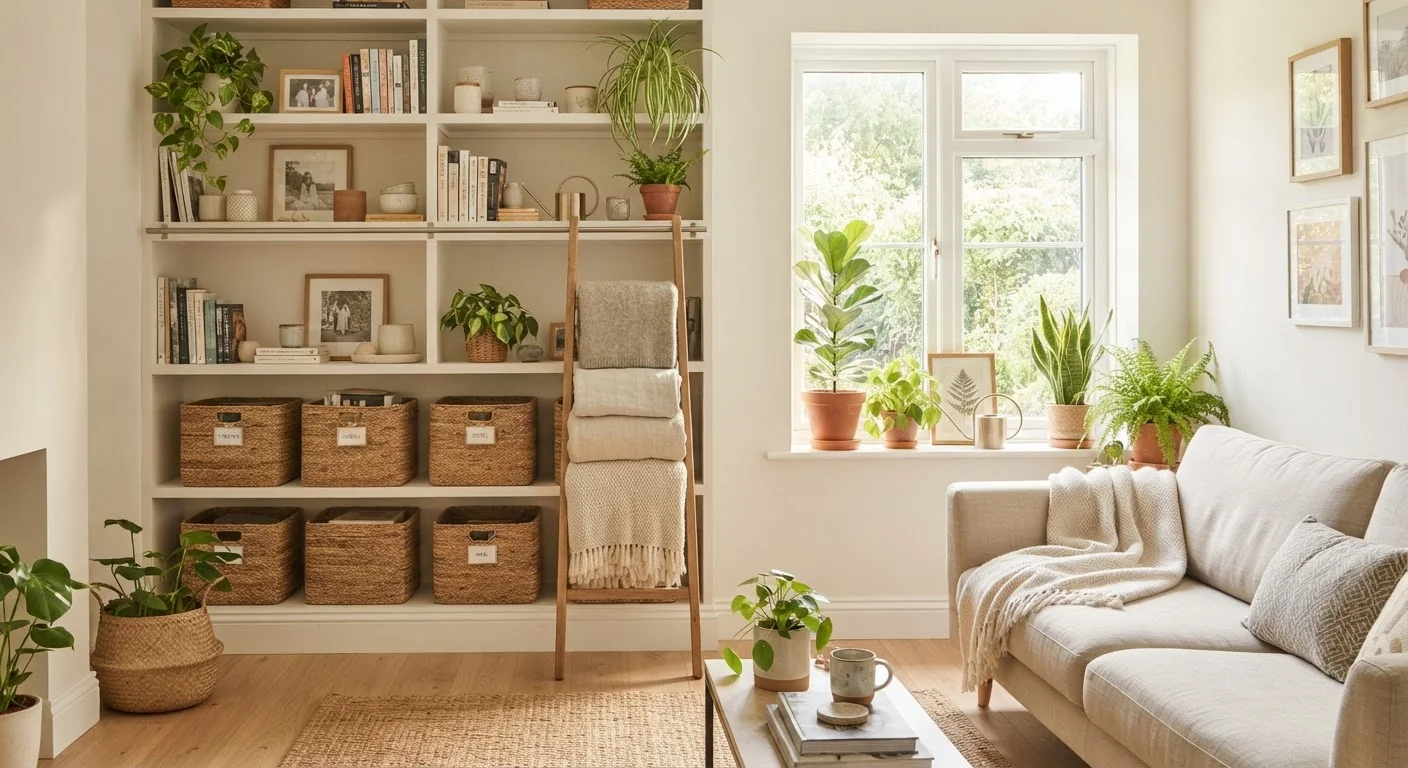
The right approach is to measure your spaces, categorize your items, and then select containers. Uniform bins on open shelving look tidier and stack more efficiently. Clear containers work well in pantries and utility closets where quick visual identification matters. Opaque bins with labels are better for items you access less frequently.
Buy Storage Last, Not First
Resist the urge to purchase organizing products before you've sorted and measured. Buying bins and baskets first is one of the most common — and costly — organizing mistakes. Audit your items, measure your shelves, and only then choose containers sized and shaped for what you actually own.
Digital organization follows similar logic. Just as physical clutter accumulates when items lack a home, your phone fills up when apps have no structure. See Keeping Your Apps Organised and Your Phone Usable for a parallel approach applied to digital life.
How to Maintain Order Long-Term
The most beautifully organized home will return to chaos without maintenance habits built into everyday routines. The goal isn't to spend hours each week tidying — it's to reduce the effort required through consistent small actions.
The one-in, one-out rule is one of the most effective habits: when a new item enters the home, an existing item of the same type leaves. This prevents gradual accumulation without requiring periodic purges.
A weekly ten-minute reset — where each household member returns items to their designated homes — is far more sustainable than a monthly overhaul. Involve everyone in the household, including children, so the system is shared and maintained collectively.
Seasonal reviews (roughly every three to four months) give you an opportunity to reassess what's working, donate items that are no longer needed, and adjust systems as your household's needs change. For example, composting kitchen scraps reduces organic waste that might otherwise create clutter in trash areas — see our guide to composting at home for a practical system to manage food waste.
Organization is most durable when it's realistic. A system that requires perfect behavior to function will fail. Build in flexibility, account for busy weeks, and remember that a slightly imperfect system maintained consistently will always outperform a perfect system abandoned after a month.
The content on this site is for informational purposes only and is not a substitute for professional advice. Always consult a qualified professional for guidance specific to your situation.