

What Goes Into a Credit Score
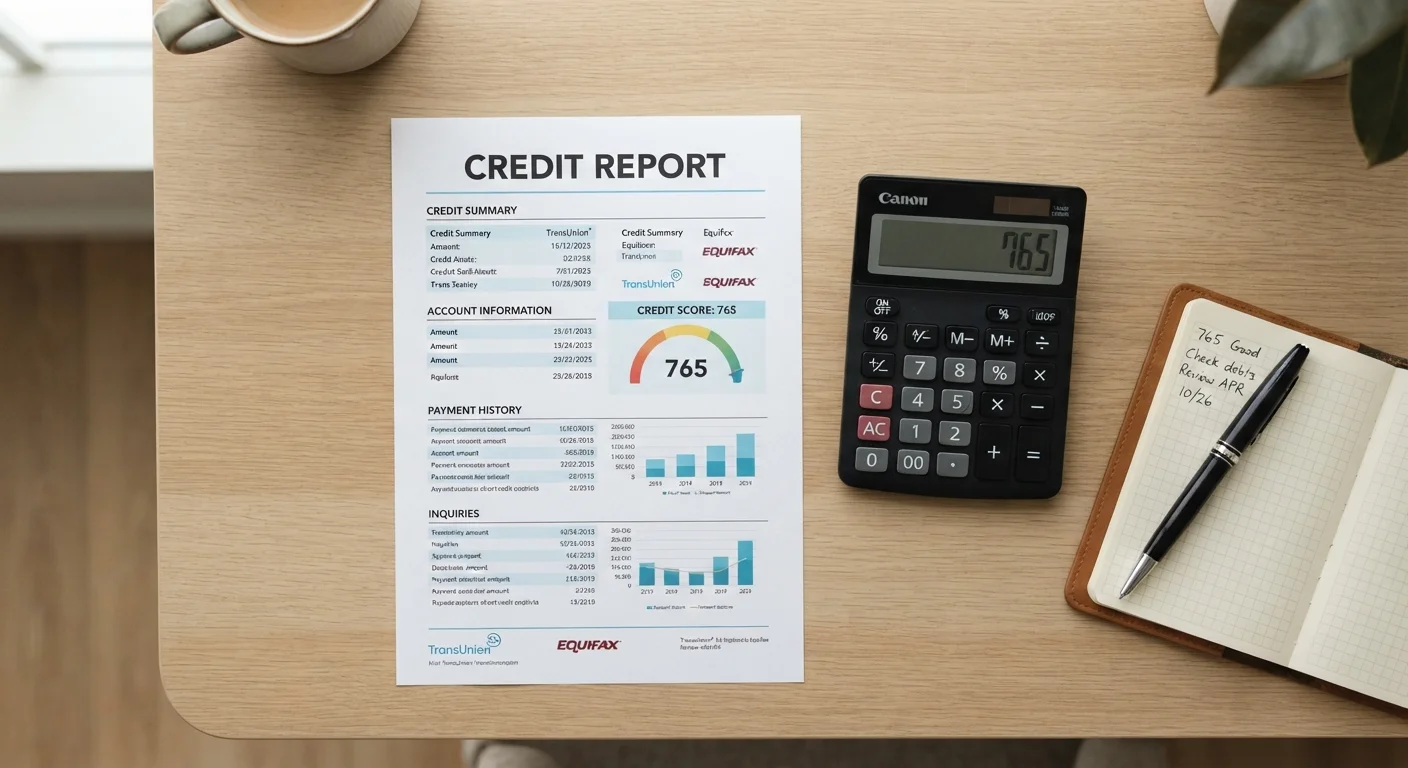
Credit scores don't emerge from a black box — they're calculated using five specific categories of information drawn from your credit report. The most widely used scoring models, including FICO, assign a percentage weight to each category. Understanding what those categories are, and how much each one counts, helps you see your score as a system you can actually understand — not just a number that happens to you.
This article is general financial education, not personalized advice. For guidance specific to your situation, consider speaking with a licensed financial professional.
| Payment History Weight | ~35% of FICO score (FICO scoring model) |
| Credit Utilisation Weight | ~30% of FICO score (FICO scoring model) |
| Length of Credit History Weight | ~15% of FICO score (FICO scoring model) |
| Credit Mix & New Credit | ~10% each (FICO scoring model) |
| Score Range (FICO) | 300 – 850 (myFICO.com) |
| Most Reactive Factor | Credit utilisation (Can shift within a single billing cycle) |
The Five Factors, Explained
1. Payment History (roughly 35%)
This is the single largest factor in most scoring models. It tracks whether you've paid your bills on time — credit cards, loans, and other accounts. A single missed payment, especially one that goes 30 days or more past due, can cause a noticeable drop. Positive payment history, built consistently over time, has a strong stabilizing effect on your score. For a deeper look at how habits quietly erode scores, see patterns that damage scores over time.
2. Credit Utilisation (roughly 30%)
Utilisation refers to how much of your available revolving credit — primarily credit cards — you're currently using. If your combined credit limit is $10,000 and your balances total $3,000, your utilisation rate is 30%. Scoring models generally respond well to lower ratios, though there's no universal magic number. This factor is also one of the most reactive: it can shift meaningfully within a single billing cycle. How utilisation is calculated and why it moves quickly is worth understanding on its own terms.
3. Length of Credit History (roughly 15%)
This category looks at how long your accounts have been open — including the age of your oldest account, your newest account, and the average age across all accounts. A longer history generally works in your favor because it gives lenders more data to assess reliability. Closing old accounts can reduce your average account age, which is one reason doing so may affect your score even if those accounts had zero balance.
4. Credit Mix (roughly 10%)
Lenders and scoring models take some note of whether you've managed different types of credit — revolving accounts like credit cards alongside installment loans like auto or student loans. Having experience with both types can reflect positively, though this factor carries less weight than the top two. It's generally not worth opening new account types just to improve your mix.
5. New Credit (roughly 10%)
Each time you apply for new credit, the lender typically performs a hard inquiry on your credit report. A single hard inquiry has a modest, temporary effect on most scores. But several applications in a short period can compound that effect and may signal financial stress to lenders. Note that rate-shopping for a single loan type — like a mortgage or auto loan — is often treated as a single inquiry by scoring models if done within a defined window. How scores interact with the car-buying process explains how lenders use your score when you apply for an auto loan.
Credit Utilisation
The percentage of your available revolving credit that you're currently using. It's calculated by dividing total balances by total credit limits across revolving accounts.
Hard Inquiry
A check on your credit report triggered when you apply for new credit. Hard inquiries are visible to other lenders and can have a small, temporary negative effect on your score.
Revolving Credit
A type of credit account — most commonly credit cards — where you can borrow up to a limit, repay it, and borrow again. Balances can carry month to month.
Installment Loan
A loan repaid in fixed, scheduled payments over a set period. Auto loans, mortgages, and student loans are common examples.
Credit Mix
The variety of credit account types appearing on your credit report. A mix of revolving and installment accounts is generally viewed more favorably than one type alone.
Why the Weights Matter
The factor breakdown clarifies why some actions produce quick score changes while others take years to show up. Paying down a high credit card balance can affect your utilisation ratio — and your score — within weeks of the next statement cycle. Building a long, clean payment history takes time by definition. What a credit score actually measures provides useful context on how the overall system works and why two people with similar histories can end up with different numbers.
Also worth knowing: different bureaus may hold slightly different information, which means the same underlying factors can produce different scores depending on who's doing the calculation. Why scores vary across bureaus explains how that happens in practice.
Scoring Models Vary by Lender
FICO is the most widely referenced model, but there are multiple versions of FICO as well as competing models like VantageScore. Factor weights can differ slightly between models. The percentages cited here reflect FICO's published general guidance and should be understood as approximate ranges rather than precise rules that apply universally.
This article provides general financial education only and does not constitute personalized financial or credit advice. Scoring models and factor weights vary by provider. Consult a licensed financial professional for guidance tailored to your specific circumstances.
The content on this site is for informational purposes only and is not a substitute for professional advice. Always consult a qualified professional for guidance specific to your situation.