

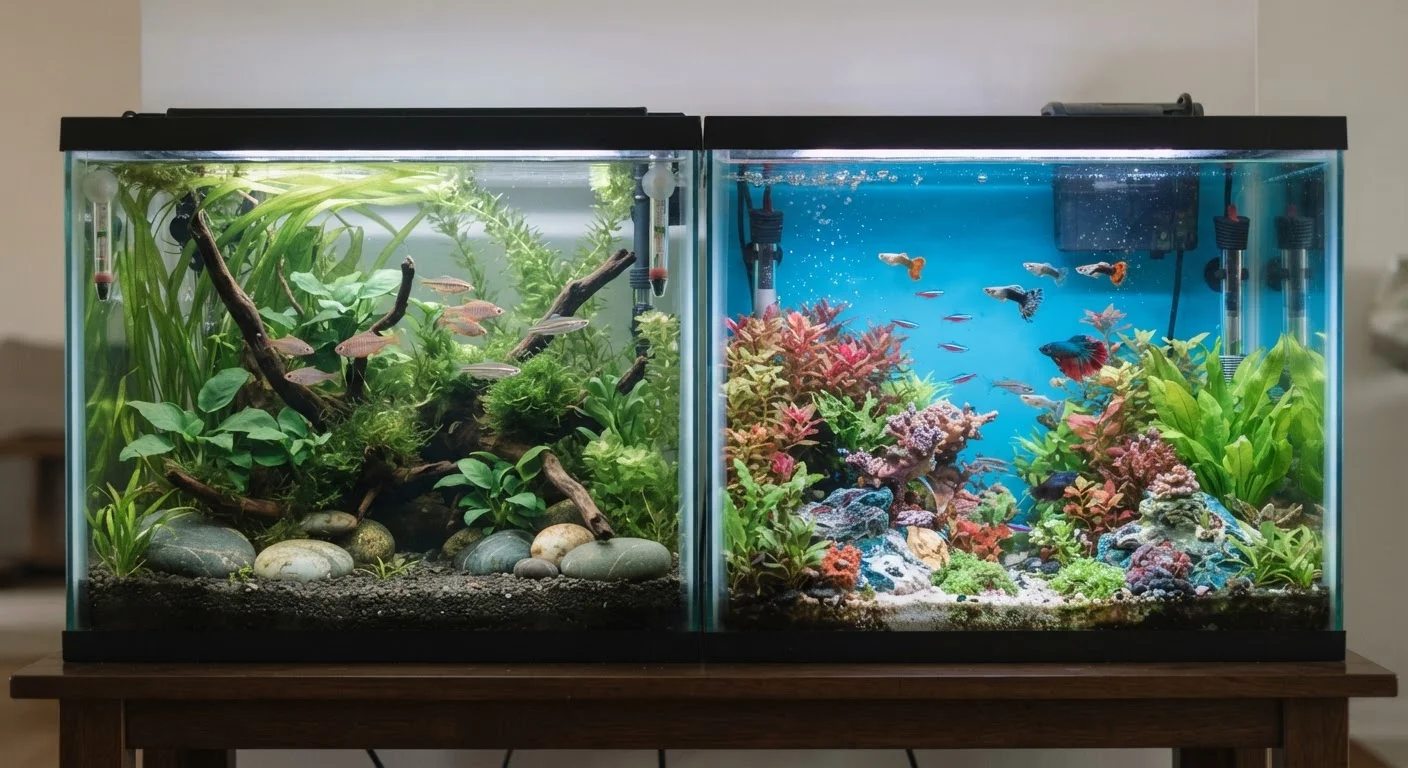
Option A
Coldwater Fish
The low-tech, beginner-friendly option.
Best for: Owners who want a simpler setup without heating equipment and enjoy species like goldfish or white cloud mountain minnows.
Option B
Tropical Fish
The colorful, diverse choice for engaged hobbyists.
Best for: Owners willing to invest in a heater and monitor water temperature for access to a wider variety of species and aquascape styles.
What Actually Separates Coldwater and Tropical Fish?
The core difference is temperature. Coldwater fish — such as goldfish, rosy barbs, and white cloud mountain minnows — thrive in unheated tanks, typically between 60–72°F. Tropical fish, which include species like neon tetras, guppies, bettas, and angelfish, require stable temperatures in the 74–80°F range and will decline if exposed to cooler conditions for long periods.
This single variable has a ripple effect on every other part of your setup: equipment costs, species selection, tank size, and even how forgiving the system is when something goes wrong. Before you choose a fish, consider your home's natural room temperature through all four seasons — it's often the deciding factor.
See our first tank setup guide to understand what equipment each type of aquarium actually requires before you spend a dollar.
| Criterion | Coldwater Fish | Tropical Fish |
|---|---|---|
| Ideal Water Temperature | 60–72°F | 74–80°F |
| Heater Required | No | Yes |
| Species Variety | Limited (goldfish, minnows) | Very wide range |
| Minimum Tank Size (typical) | 20 gallons (goldfish) | 10 gallons (nano community) |
| Setup Complexity | Lower | Moderate |
| Ongoing Energy Cost | Lower | Slightly higher (heater) |
| Typical Lifespan | 10–15 years (goldfish) | 2–10 years (species-dependent) |
Tank Requirements: Equipment, Space, and Cost
Coldwater tanks are often recommended for beginners because they skip one piece of equipment — the heater — and the thermostat that monitors it. That said, don't confuse simpler with easy. Goldfish, the most commonly kept coldwater fish, produce significant biological waste and need robust filtration and more water volume per fish than most beginners expect. A single fancy goldfish needs at least 20 gallons, with additional gallons for each additional fish.
Tropical tanks add a heater and thermometer to your equipment list, but they open up a far wider range of fish species, many of which are smaller and produce less waste. A 10-gallon tropical tank can comfortably support a small community of nano fish, making it a practical starting point. The ongoing electricity cost of running a heater is modest but worth factoring in.
Both setups require a filter, water conditioner, a test kit for monitoring key water parameters, and regular partial water changes. Understanding the nitrogen cycle is non-negotiable for either type — see the nitrogen cycle explained for aquarium owners to learn how to establish a safe tank before adding any fish.
20 gal
Minimum recommended tank size for one goldfish
Widely cited by aquatic veterinarians and fishkeeping organizations as the baseline for healthy goldfish keeping.
74–80°F
Stable temperature range for most tropical fish
Recommended by most aquarium husbandry guidelines; deviations beyond this range can cause immune suppression in tropical species.
10–15 yrs
Potential lifespan of a well-kept goldfish
With proper filtration, diet, and water quality, goldfish commonly exceed a decade in home aquariums.
Species Diversity and Compatibility
Coldwater fishkeeping is dominated by goldfish and a handful of other species. That's not a criticism — goldfish are personable, long-lived (often 10–15 years with proper care), and come in a wide range of varieties. White cloud mountain minnows are another excellent coldwater option: small, peaceful, and highly adaptable.
Tropical fishkeeping offers considerably more variety. Community tanks can combine tetras, livebearers, corydoras catfish, and dwarf cichlids, each occupying different levels of the tank. This variety allows for more creative aquascaping and a more dynamic display. However, compatibility research matters — not all tropical fish coexist peacefully, and some species have specific water chemistry requirements beyond just temperature.
Whichever path you choose, use our pet readiness checklist to confirm you have the right housing, time, and resources in place before bringing any fish home.
Room Temperature Matters More Than You Think
If your home regularly drops below 65°F in winter, a coldwater tank may actually struggle without supplemental heating — especially for species like rosy barbs that prefer the warmer end of the coldwater range. Conversely, homes that stay above 72°F year-round can often maintain tropical temperatures with minimal heater use. Always measure your room temperature across seasons before choosing your fish.
What to Watch For Once Your Tank Is Running
Temperature swings are the most common cause of fish stress and illness in home aquariums. In coldwater tanks, avoid placing the tank near heating vents or in direct sunlight — summer heat can push tank temperatures into harmful ranges for coldwater species. In tropical tanks, a reliable heater with a built-in thermostat will do most of the work, but a separate thermometer lets you verify it's functioning correctly.
Water quality problems affect both tank types equally. Overfeeding, overstocking, and infrequent water changes all lead to ammonia and nitrite buildup — the leading causes of fish loss. If your fish are dying unexpectedly, read about the most common reasons fish don't survive to diagnose potential issues systematically.
This article is for general educational purposes only. For specific concerns about fish health or disease, consult a veterinarian experienced with aquatic animals.
The content on this site is for informational purposes only and is not a substitute for professional advice. Always consult a qualified professional for guidance specific to your situation.