

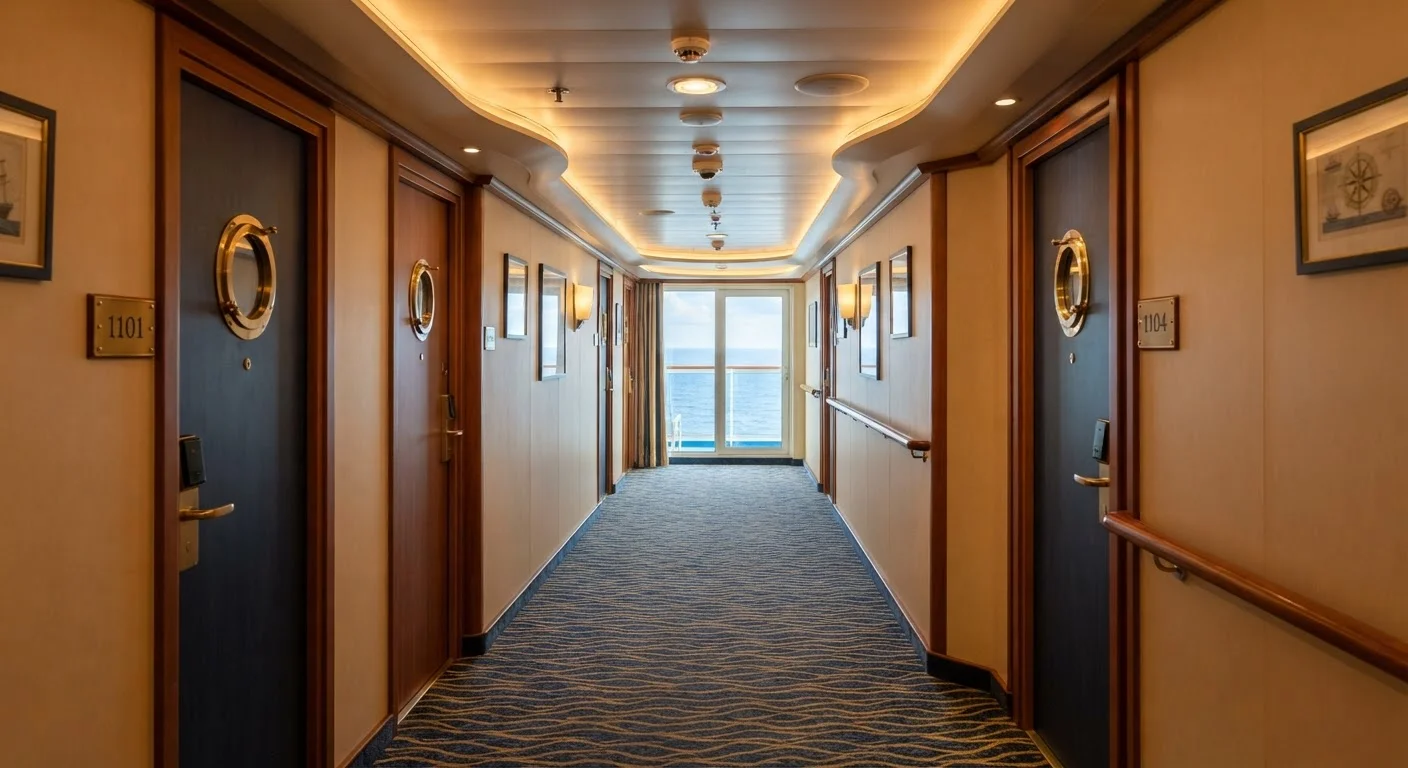
Why Cabin Category Matters More Than You'd Think
Your cruise cabin is more than a place to sleep — it sets the tone for your entire voyage. Whether you're at sea for three nights or three weeks, understanding what each cabin category actually delivers helps you match your budget to your comfort expectations without surprises.
Cruise lines typically organize cabins into four broad tiers: inside, oceanview, balcony, and suite. Each step up the ladder adds space, light, and amenities — but also cost. The right choice depends on how much time you plan to spend in your cabin, who you're traveling with, and how much the view matters to you. If you're brand new to cruising, our Cruise Travel 101 guide covers the full picture of what ship life looks like day to day.
| Cabin tiers on most cruise ships | 4 (Inside, Oceanview, Balcony, Suite) |
| Typical inside cabin size range | 130–180 sq ft (General industry average; varies by ship and cruise line) |
| Most popular upgrade category | Balcony / Veranda cabin |
| Suite sub-tiers (typical) | 3–5 (Junior, Mini, Penthouse, Owner's, Yacht Club) (Varies significantly by cruise line) |
| Best cabin location for minimal motion | Lower decks, midship |
| Solo traveler option | Solo studios (select ships) |
The Four Main Cabin Categories Explained
Here's what each category typically includes — keeping in mind that exact layouts and features vary by cruise line and ship.
Inside Cabins
No window, no porthole — just four walls and everything you need to rest. Inside cabins are the smallest and most affordable option on virtually every ship. They're surprisingly well-designed on modern vessels, with queen or twin beds, ample storage, and a private bathroom. Travelers who spend their days exploring ports and their evenings at shows or dinner often find inside cabins perfectly comfortable.
Oceanview Cabins
Step up to an oceanview and you gain a fixed window or porthole that lets in natural light and a glimpse of the sea. The room itself is usually similar in size to an inside cabin, but the psychological lift of natural daylight is real. These suit travelers who want some connection to the ocean without paying balcony prices.
Balcony Cabins
Also called veranda cabins, these open onto a private outdoor space — typically just large enough for two chairs and a small table. Balconies are especially valuable on scenic itineraries like Alaska, Norway, or the Caribbean, where you can watch coastlines from your own private perch. They're the most popular upgrade for repeat cruisers.
Suites
Suite categories can span several sub-tiers — from junior suites (essentially a larger balcony cabin with a sitting area) all the way up to penthouse and owner's suites with separate bedrooms, butler service, and premium dining access. Many cruise lines bundle exclusive suite perks like priority boarding, private sun decks, and dedicated concierge service into higher suite tiers. Budget-wise, suites can cost several times the price of an inside cabin on the same sailing.
Inside Cabin
A cruise cabin with no window or natural light. Typically the smallest and least expensive category on any ship.
Oceanview Cabin
A cabin featuring a fixed window or porthole to the outside. Similar in size to an inside cabin but with natural light and a sea view.
Balcony / Veranda Cabin
A cabin with a private outdoor balcony space, usually furnished with seating. Popular on scenic itineraries and widely considered the sweet spot between cost and comfort.
Junior Suite
The entry-level suite tier on most ships — larger than a standard balcony cabin and typically including a sitting area, though usually without the dedicated butler service found in higher suites.
Solo Supplement
An additional fee charged to single travelers occupying a double-occupancy cabin. It effectively covers the revenue lost from the second, unfilled berth.
Midship
The central section of a ship, generally considered the most stable location for minimizing the sensation of motion at sea.
Smart Considerations Before You Book
A few factors can influence which cabin type gives you the most value:
- Itinerary scenery: A balcony pays off handsomely on a scenic coastal route; less so on a Caribbean party cruise where you'll rarely be in your room before midnight.
- Travel group size: Families or groups of three or more should check connecting cabins or family staterooms — a separate category on many ships that offers flexible sleeping arrangements without suite pricing.
- Cabin location on the ship: Lower, midship cabins tend to feel less motion in rough seas. Higher decks offer better views but can feel more movement. Forward and aft cabins are often less expensive but may come with noise trade-offs.
- Solo travelers: Some ships offer solo studios — single-occupancy cabins without the dreaded solo supplement that inflates prices on standard rooms.
Remember that your fare is only part of the picture. Gratuities, specialty dining, excursions, and drinks can all add up quickly. See The True Cost of a Cruise for a full breakdown of what's included and what isn't.
Also worth noting: river cruise cabins follow a different logic entirely — ships are smaller, and the distinction between cabin tiers is narrower. For a comparison, check out River Cruises vs Ocean Cruises.
Cabin Categories Can Vary by Cruise Line
Naming conventions differ between cruise lines — what one line calls a 'mini suite' may be equivalent to another's 'deluxe balcony.' Always review the specific deck plan and square footage listed for a cabin before booking, rather than relying on the category label alone. Your cruise line's website or a travel agent can clarify exactly what's included in each tier on your chosen ship.
The content on this site is for informational purposes only and is not a substitute for professional advice. Always consult a qualified professional for guidance specific to your situation.