

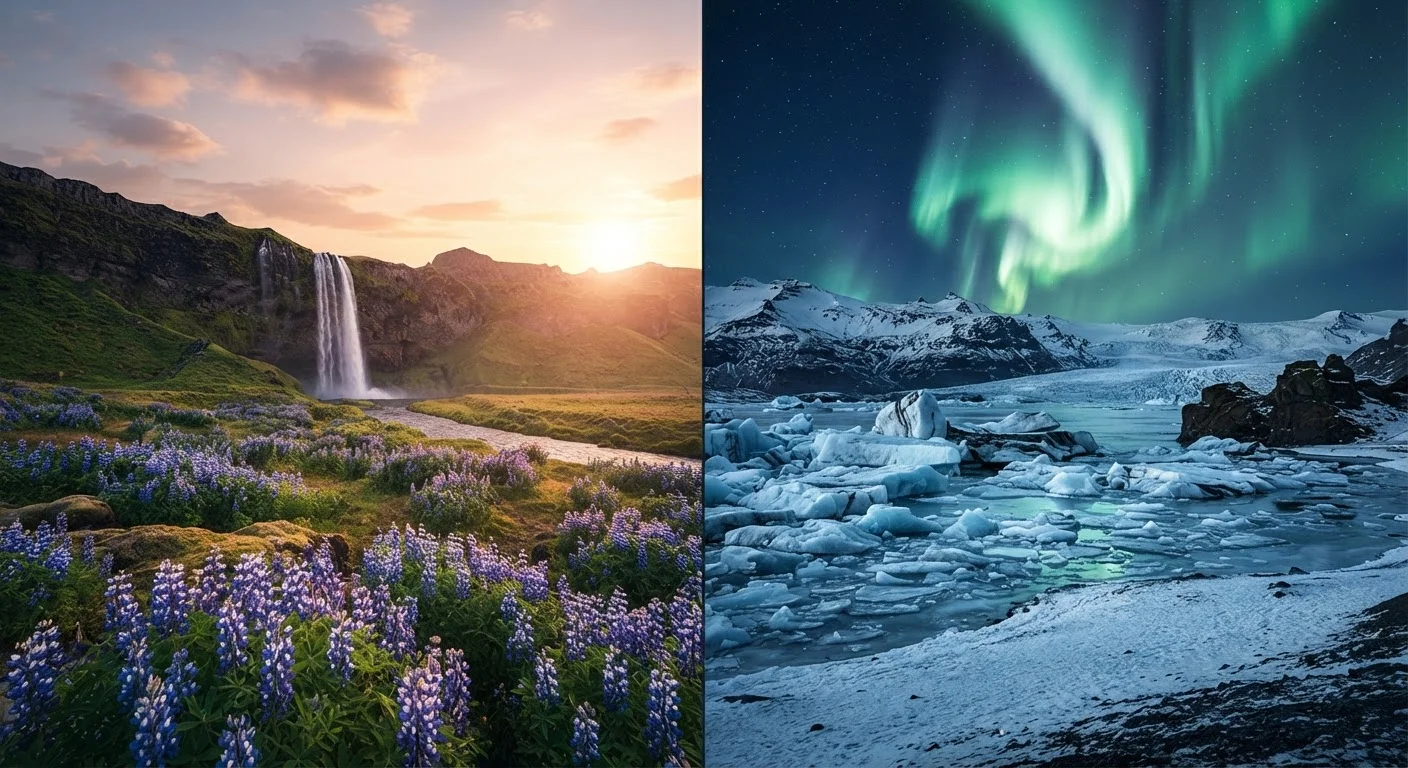
Option A
Iceland in Summer (June–August)
The season of endless daylight and wide-open access.
Best for: Travelers who want to hike, road-trip the Ring Road, and experience the surreal midnight sun without cold-weather challenges.
Option B
Iceland in Winter (November–February)
The season of dramatic darkness, snow, and the northern lights.
Best for: Travelers chasing the aurora borealis, ice cave tours, and a quieter, more atmospheric side of Iceland.
Light, Darkness, and What They Actually Mean for You
Iceland's location just below the Arctic Circle means its seasons aren't just meteorological — they're almost theatrical. In midsummer, the sun barely dips below the horizon, producing the legendary midnight sun: a golden, never-quite-setting light that makes 11 p.m. feel like late afternoon. In midwinter, daylight shrinks to as little as four or five hours, wrapping the island in long, velvety darkness punctuated by the possibility of the aurora borealis.
This single difference — light versus dark — shapes nearly every aspect of your trip, from what you can do each day to how your body feels after a week. Summer visitors often find themselves hiking at midnight, genuinely unsure whether to sleep. Winter visitors structure their days around those precious daylight hours, then scan the skies eagerly after dark.
Understanding this contrast is the foundation of good Iceland planning. For a broader look at how daylight and seasons affect destinations globally, see our guide to planning around seasons.
| Criterion | Summer (June–August) | Winter (November–February) |
|---|---|---|
| Daylight | Up to 22–24 hrs near solstice | 4–6 hrs near solstice |
| Northern Lights visibility | Not possible (too light) | High potential on clear nights |
| Glacier ice caves | Closed (structurally unsafe) | Open for guided tours |
| Ring Road drivability | Fully accessible | Main ring open; highlands closed |
| Wildlife (puffins) | Present May–August | Absent |
| Typical crowds | High — peak tourist season | Lower — quieter at most sites |
| Average temperatures | 50–60°F (10–15°C) | 25–35°F (-4 to 2°C) |
| Weather predictability | More stable overall | Highly variable; storms common |
What You Can (and Can't) Do Each Season
Summer unlocks Iceland's full outdoor menu. The Ring Road — the highway circling the entire island — is navigable in a standard vehicle, and highland routes like the famous Landmannalaugar trails open to foot and wheel. Puffins nest along coastal cliffs from May through August. Waterfalls like Skógafoss and Seljalandsfoss run at their thundering peak. The weather is cool and often breezy (think 50–60°F), but dramatically more stable than winter.
Winter, by contrast, closes most highland roads entirely due to snow and ice. But it opens experiences that don't exist in summer: guided glacier ice cave tours inside Vatnajökull — the largest glacier in Europe outside the polar regions — are only safe and stable enough to run from November through March. The famous Diamond Beach icebergs near Jökulsárlón glacier lagoon look wholly different draped in snow. And, of course, the long nights create optimal conditions for aurora hunting.
~24 hrs
Daylight near summer solstice in Reykjavík
Around June 21, the sun sets for only about two to three hours, barely dipping below the horizon in Iceland's capital.
4–5 hrs
Daylight near winter solstice in Reykjavík
Around December 21, usable daylight shrinks dramatically, making efficient daytime planning essential for winter visitors.
~2 million
Annual international visitors to Iceland
Tourism to Iceland grew substantially in the 2010s; the majority of visits are concentrated in the summer months of June, July, and August.
One honest caveat: winter weather in Iceland can shift dramatically within hours. Roads can be closed with little warning, and some days the clouds simply won't cooperate for northern lights viewing. Flexibility — and genuine acceptance of unpredictability — is part of the winter experience.
Crowds, Cost, and the Practicalities of Each Season
Summer is Iceland's undisputed peak travel season. Reykjavík buzzes with activity, the Golden Circle route sees steady streams of visitors, and popular waterfalls can feel busy during mid-morning hours. Accommodation prices reflect that demand. If the idea of sharing a famous viewpoint with a large crowd would dampen your experience, it's worth thinking carefully about timing — our piece on why peak-season travel often undermines the experience explores this tradeoff in depth.
Shoulder Season: Worth Considering
May and late September through October offer a compelling blend of both worlds — fading or emerging midnight sun, early aurora opportunities, and noticeably smaller crowds than peak summer. Road access is largely good in May, while October brings more dramatic storm light and the first real aurora chances of the season. These months reward travelers willing to dress in layers and embrace a bit of atmospheric unpredictability.
Winter travel typically comes with lower accommodation rates and thinner crowds at major sites. The tradeoff is logistical complexity: you'll need a 4WD vehicle for most driving outside Reykjavík, appropriate cold-weather gear, and a flexible itinerary. Travel insurance that covers weather-related disruptions is strongly advisable — always verify current entry requirements, road conditions, and travel advisories through official Icelandic and U.S. government sources before your trip.
Shoulder months — May and September/October — offer a compelling middle path: some midnight sun or early aurora potential, thinning crowds, and moderating prices. Many experienced Iceland travelers consider these the sweet spot.
The content on this site is for informational purposes only and is not a substitute for professional advice. Always consult a qualified professional for guidance specific to your situation.