

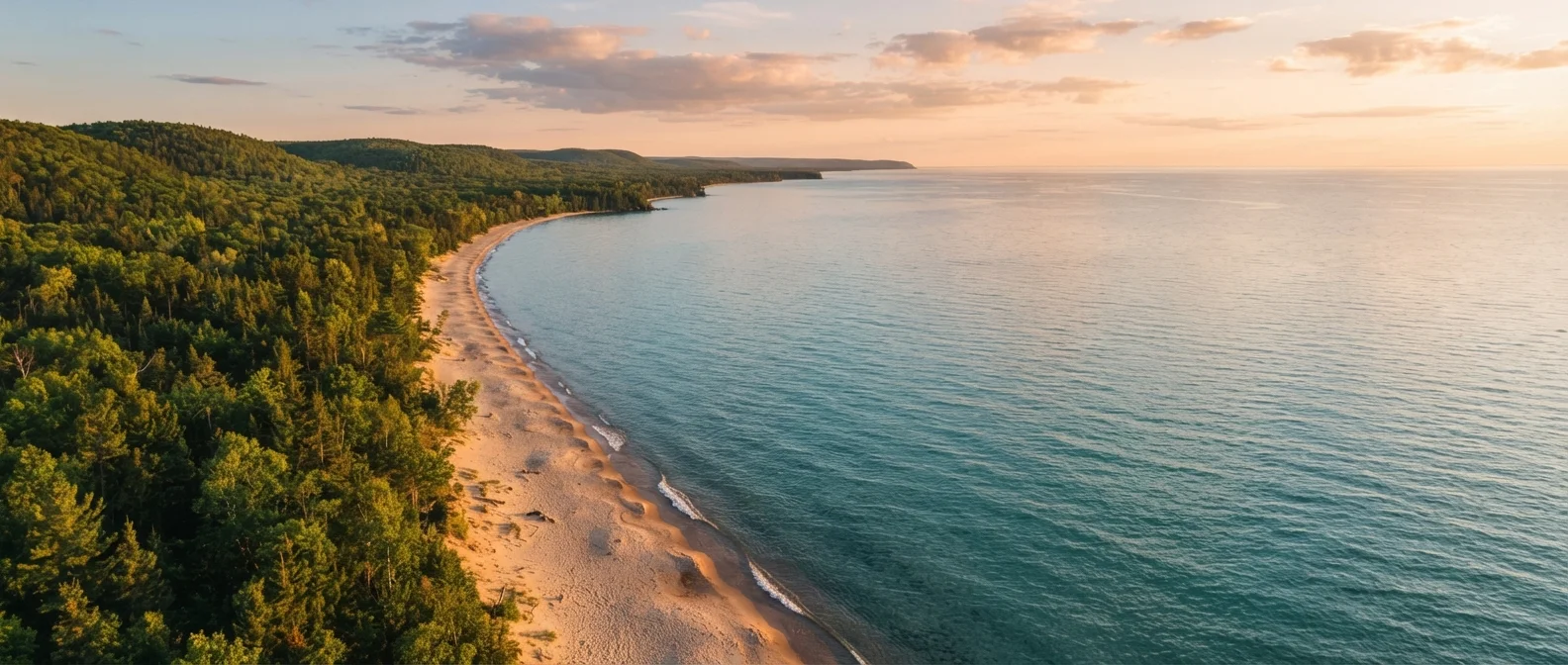
Why the Great Lakes Deserve a Closer Look
Mention a summer beach trip to most Americans and their minds jump to Florida, the Carolinas, or California. The Great Lakes rarely enter the conversation — which is precisely what makes them such a rewarding discovery. These five lakes are so vast that standing on the shore of Lake Superior, you cannot see the other side. Waves roll in. Gulls circle overhead. The horizon fades into open water. It looks, feels, and sounds like an ocean.
What sets the region apart isn't just scale. It's variety. Within a few hours of driving, a traveler can move from the sandy dunes of Michigan's Sleeping Bear Dunes National Lakeshore to the rugged cliffs of the Pictured Rocks coastline, from dense boreal forests to the walkable neighborhoods of a revitalized mid-sized city. Few inland destinations in North America pack this range into a single geographic area.
21%
Share of world's surface fresh water
The five Great Lakes together hold approximately 21% of all surface fresh water on Earth, according to the U.S. Environmental Protection Agency.
10,900 mi
Total U.S. Great Lakes shoreline
The U.S. side of the Great Lakes encompasses roughly 10,900 miles of shoreline, more than the entire U.S. Atlantic and Gulf coasts combined.
8
U.S. states bordering the lakes
Minnesota, Wisconsin, Illinois, Indiana, Michigan, Ohio, Pennsylvania, and New York all border at least one of the five lakes.
A Region of Distinct Landscapes
Each lake has a different character. Lake Superior — the largest by surface area — is cold, deep, and genuinely wild. Its southern shore in Michigan and Minnesota rewards travelers who love dramatic scenery and uncrowded wilderness. Slower, more deliberate exploration suits this territory well; its rewards come to those willing to linger.
Lake Michigan offers the region's most famous beach culture, with towering freshwater dunes along the eastern shore and classic resort towns like Traverse City and Petoskey. Lake Huron's Les Cheneaux Islands and Georgian Bay (on the Ontario side) deliver a quieter, almost Scandinavian atmosphere of island-hopping and boreal calm. Lake Erie, the shallowest and warmest of the five, anchors a stretch of excellent wine country in both Ohio and New York. Lake Ontario anchors the region's eastern edge, connecting travelers to the Thousand Islands and the cultural hub of Toronto just across the border.
The Cities Are Part of the Story
Any honest accounting of the Great Lakes has to include its cities. Detroit, Cleveland, Buffalo, Milwaukee, and Chicago each sit on or near the lakes and each tells a different story about American reinvention. Detroit's architecture, music history, and food scene have drawn genuine national attention. Cleveland's West Side Market and arts district have made it a destination in its own right. Buffalo sits at the gateway to Niagara Falls and has developed a culinary identity far beyond its famous chicken wings.
Approaching these places with curiosity rather than preconceptions pays off. Stepping off the standard tourist trail in any of these cities tends to reveal neighborhoods, chefs, and galleries that feel genuinely alive rather than curated for visitors.
Research Local Events Before You Book
Many Great Lakes towns punch above their weight on festivals — cherry harvest celebrations in northern Michigan, folk music gatherings in Minnesota's Boundary Waters corridor, and ethnic heritage events in Cleveland and Milwaukee. Timing a visit around a local event can add genuine cultural depth to what might otherwise be a straightforward outdoor trip. Check destination-specific tourism board calendars well in advance, especially for summer weekends.
Practical Considerations for Great Lakes Travel
The region is large — driving from the eastern end of Lake Ontario to the western tip of Lake Superior covers roughly 1,100 miles. Most travelers will focus on one lake or one state at a time, which is the right instinct. Michigan's Lower Peninsula alone offers enough material for two or three separate trips.
Seasonality matters more here than at many destinations. Summer fills campgrounds and resort towns quickly; booking ahead is genuinely necessary for peak weekends in popular areas like Door County, Wisconsin, or Traverse City, Michigan. Fall foliage typically peaks in late September through mid-October across most of the region. Winter transforms the landscape dramatically — snowshoe trails, ice caves (when conditions allow), and quiet lakeside towns that feel entirely different without summer crowds.
For travelers accustomed to ocean cruising and looking for a different kind of water travel, the Great Lakes offer a compelling comparison. The experience of navigating freshwater seas is meaningfully different from saltwater itineraries. Understanding how geography shapes a travel experience helps set realistic expectations and find the right fit for any trip.
Entry Requirements for Cross-Border Travel
Several of the most scenic Great Lakes areas — including Ontario's Georgian Bay, the Thousand Islands, and Niagara Falls — sit on the Canadian side of the border. U.S. travelers will need a valid passport or passport card to cross. Always verify current entry requirements with official U.S. and Canadian government sources before planning any cross-border leg of your trip, as rules and processing times can change.
Frequently Asked Questions
Yes, many Great Lakes beaches have clean, swimmable water during summer months. Water temperatures vary significantly by lake and time of year, with Lake Erie generally warming the fastest. Always check local water quality advisories before swimming, as conditions can change.
Summer (June–August) is peak season for beaches and outdoor activities. Fall is widely regarded as spectacular for foliage, particularly along Lake Superior and in Michigan's Upper Peninsula. Winter travel appeals to snowshoers, cross-country skiers, and ice fishing enthusiasts, though road conditions require preparation.
The lakes lack tides, salt, and ocean marine life, but offer wide sandy beaches, dramatic storms, dune landscapes, and a horizon that genuinely disappears into open water. The experience is its own thing — not a substitute for the ocean but a compelling alternative with far less crowd pressure at many locations.
U.S. citizens traveling to the Ontario side of the Great Lakes need a valid U.S. passport or passport card to cross the border. Always verify current entry requirements with official U.S. and Canadian government sources before your trip, as rules can change.
Absolutely. The region is well-suited to road trips, with scenic drives along each lake's shoreline connecting small harbor towns, state parks, and major cities. The Lake Michigan Circle Tour and Lake Superior Circle Tour are well-established scenic driving routes.
The content on this site is for informational purposes only and is not a substitute for professional advice. Always consult a qualified professional for guidance specific to your situation.