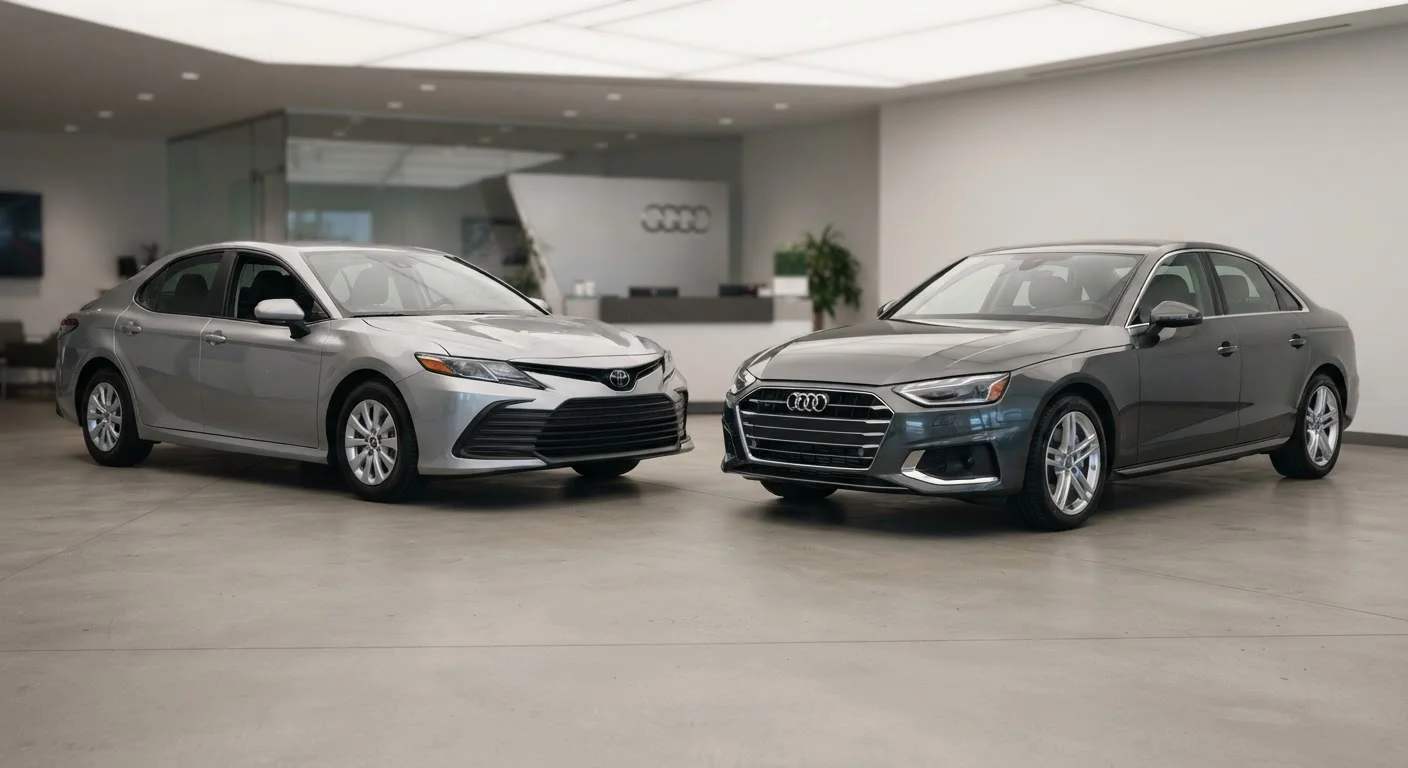

Option A
Coupe
The style-forward, performance-oriented body style.
Best for: Drivers who prioritize aesthetics, a sportier driving feel, and don't regularly need rear-seat or cargo space.
Option B
Saloon
The practical, well-rounded everyday sedan.
Best for: Families and commuters who want a comfortable, spacious, and versatile four-door vehicle for daily use.
Defining the Coupe and the Saloon
At their most traditional, the definitions are straightforward. A coupe is a fixed-roof car with two doors and a sloping rear roofline. A saloon - known as a sedan in the US - is a three-box car with four doors, a separate trunk, and a roughly upright rear window. These two silhouettes have defined mainstream motoring for decades.
But as manufacturers compete for attention, they have stretched both labels considerably. The term "four-door coupe" now appears regularly in marketing materials, used to describe cars that are technically saloons but styled with a more steeply raked roofline to evoke coupe proportions. This can make shopping confusing, especially if you're relying on body-style labels alone to guide a decision.
For a broader grounding in how body styles are categorized, see our guide to common car body types, which places the coupe and saloon alongside other common configurations.
| Criterion | Coupe | Saloon |
|---|---|---|
| Typical door count | 2 doors | 4 doors |
| Roofline style | Sloping, low | Upright, boxier |
| Rear headroom | Limited | Generous |
| Rear passenger access | Difficult | Easy |
| Cargo space layout | Varies; often smaller | Separate, practical trunk |
| Typical market positioning | Sport / prestige focus | Practical / family focus |
| "Four-door coupe" variant? | Sometimes marketed as such | Traditional form; no crossover label |
Where the Real Differences Lie
Beyond door count, the structural differences between a coupe and a saloon have meaningful real-world effects. Coupes tend to have a lower roofline, which reduces rear headroom noticeably - getting in and out of the back seat of a coupe can be awkward, especially for taller adults. The doors on a coupe are also longer, which can make parking in tight spaces more challenging.
Saloons, by contrast, sacrifice some visual drama for practicality. The more upright greenhouse (the glass area above the beltline) gives rear passengers proper headroom, and the separate trunk compartment typically provides a more organized cargo space with a wider opening than many coupe alternatives.
~4 in.
Typical rear headroom difference
Automotive measurement standards suggest coupes frequently offer 3-5 inches less rear headroom than equivalent saloon models on the same platform.
~10-15%
Average coupe price premium
Industry analysts have generally observed that coupe variants of the same model command a modest premium over equivalent saloon trims, reflecting their positioning.
Manufacturers also tend to tune coupe and saloon variants of the same platform differently. Coupes frequently receive stiffer suspension settings and occasionally more powerful engine options - though this varies widely by model and trim level. It's worth verifying the specific configurations available before assuming the coupe will always drive noticeably sportier.
The 'Four-Door Coupe' and What It Means
The rise of the four-door coupe label deserves special attention, because it reflects a broader shift in how car brands position their products. Several European manufacturers popularized this category in the 2000s and 2010s to describe long, low saloon-like cars with a dramatically swept rear roofline. Structurally, these are saloons or fastbacks. Marketwise, they are coupes in attitude.
This matters for buyers because a "four-door coupe" may offer rear-door convenience while maintaining the sleek profile that coupe buyers seek - but it often comes with compromises in rear headroom compared to a conventional saloon on the same platform. If the sloping roof is purely aesthetic for you, a traditional saloon may offer more space without sacrificing much styling.
When 'Coupe' Is a Marketing Term
Not every car labeled a coupe has two doors or a distinctly sporty structure. In recent years, several manufacturers have applied the coupe name to four-door cars, fastbacks, and even SUVs to signal a sportier roofline. When researching a specific model, check the actual door count, roofline slope, and seating dimensions rather than relying on the label alone. Specifications published by the manufacturer or independent automotive data sources are the most reliable reference.
The same model name can carry very different body styles across generations - a saloon from one decade may have been replaced by a fastback variant in the next. Our article on how models change across generations explains why this happens and what to watch for when buying used.
In the luxury segment, these labeling distinctions become even more pronounced. Luxury manufacturers often use the coupe designation as a prestige marker, positioning coupe variants above their saloon counterparts in terms of price, exclusivity, and available features.
The content on this site is for informational purposes only and is not a substitute for professional advice. Always consult a qualified professional for guidance specific to your situation.