

How a Car Battery Actually Works
A standard car battery is a lead-acid battery - a sealed or vented box of lead plates submerged in a sulfuric acid solution. When you turn the key or press the start button, the battery delivers a surge of current to the starter motor, which cranks the engine. Once the engine is running, the alternator takes over and recharges the battery while also powering the car's electrical systems.
The battery's capacity is measured in cold cranking amps (CCA) - the amount of current it can deliver at 0°F for 30 seconds without dropping below a minimum voltage. This figure matters most in winter. A second rating, reserve capacity (RC), tells you how long the battery can sustain basic electrical loads if the alternator fails.
Understanding these basics helps make sense of why batteries degrade: every charge-discharge cycle slightly reduces the battery's ability to hold and release energy efficiently.
What Drains a Battery Faster Than Normal
Battery degradation is rarely dramatic - it's the result of compounding stresses over time. The most common culprits include:
- Short trips: Driving less than 15-20 minutes doesn't give the alternator enough time to fully recharge the battery after starting the engine. Repeated short trips gradually deepen discharge cycles and shorten battery life.
- Extreme temperatures: Heat accelerates the chemical reactions inside the battery, increasing internal corrosion. Cold thickens engine oil and raises the current demand at startup, pushing a weakened battery past its limits. Both ends of the thermometer are hard on batteries - see our seasonal car maintenance guide for broader weather-related preparation tips.
- Parasitic drain: This refers to electrical components that draw current even when the car is off - a faulty relay, an aftermarket accessory wired incorrectly, or a light left on. Even a small continuous draw of 50 milliamps can flatten a battery over several days.
- Infrequent use: A car left sitting for weeks without being driven will self-discharge. Lead-acid batteries that sit in a deeply discharged state suffer sulfation - a hardening of lead sulfate crystals on the plates that permanently reduces capacity.
Parasitic Drain Is Easy to Overlook
A small, constant electrical draw from a malfunctioning relay, improperly installed accessory, or interior light that won't shut off can kill a healthy battery in days. If your battery keeps going flat despite being relatively new, have a mechanic perform a parasitic draw test before simply buying a replacement.
Habits like leaving electronics plugged in overnight or repeatedly using accessories without the engine running compound these effects significantly. For a wider look at everyday behaviors that accelerate wear, see habits that quietly wear down your car.
How to Test Your Car Battery
There are two primary testing methods available to most drivers:
Voltage Test (Basic)
A multimeter set to DC voltage can give you a quick snapshot of battery state. With the engine off and the car resting for at least two hours, a fully charged 12-volt battery should read between 12.6V and 12.8V. Below 12.4V indicates a partial charge; below 12.0V suggests significant discharge or a failing battery.
Load Test (More Accurate)
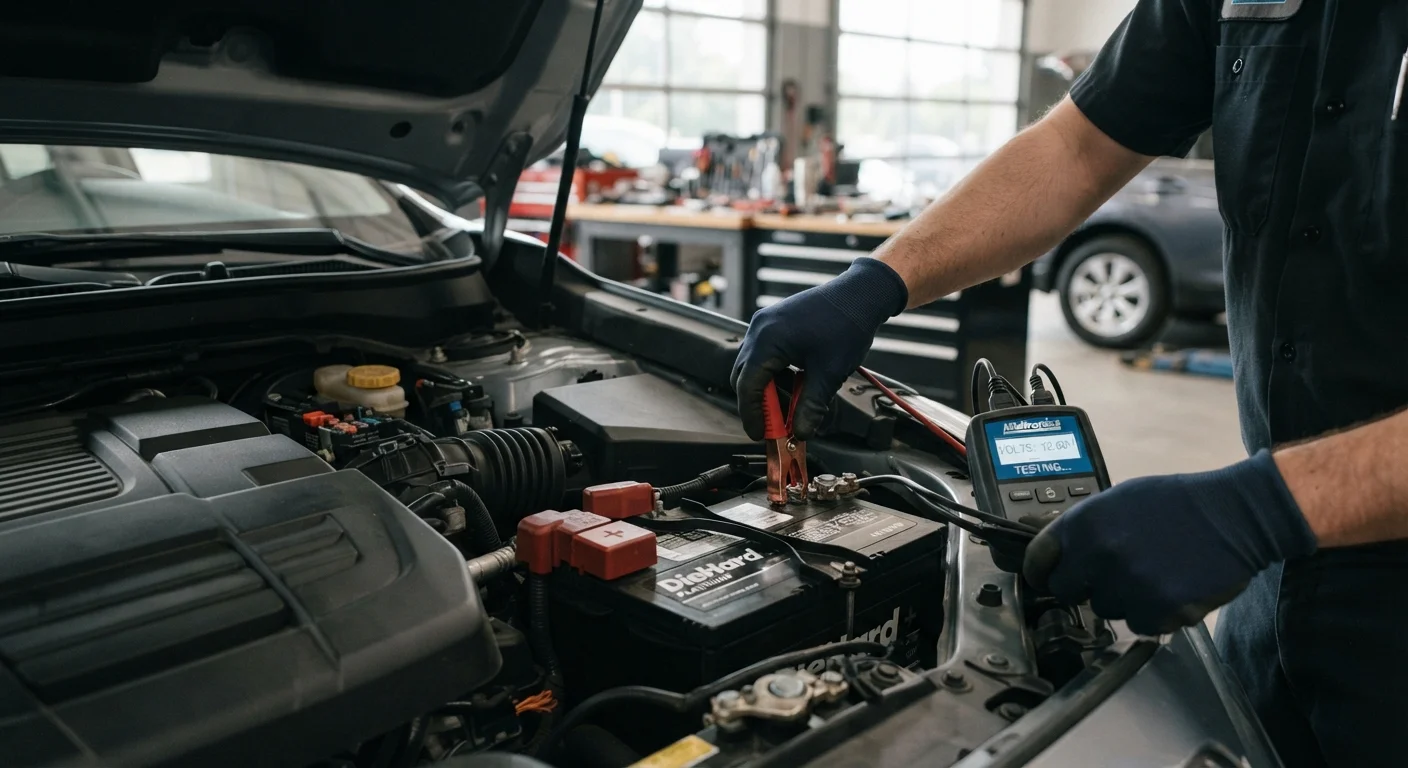
A voltage reading only tells you the battery's resting state - not how it performs under real demand. A load tester applies a controlled electrical load (typically half the battery's CCA rating) and measures how far the voltage drops. A healthy battery maintains above 9.6V during a 15-second load test at room temperature. This is the test most auto parts stores will perform for free.
Always perform a load test, not just a voltage check, when evaluating a battery older than three years. Resting voltage can look normal even in a battery that will fail under real starting conditions.
Many drivers replace a battery only after a failure, but a load test at an auto parts store is free and takes minutes - catching a marginal battery before it strands you is far less disruptive.
If your car sits unused for more than two weeks regularly, consider connecting a battery maintainer (also called a trickle charger) to prevent deep discharge and sulfation.
Deep discharge events are one of the primary causes of premature lead-acid battery failure; maintainers keep the battery at an optimal charge level without overcharging.
For context, phone batteries degrade in similar ways - resting voltage alone doesn't reveal true capacity, which is why load testing matters for both.
Warning Signs Your Battery Is Failing
3-5 years
Typical car battery lifespan
Industry guidance from AAA and battery manufacturers generally places average lead-acid battery life in the three-to-five year range under normal conditions.
~20%
Cold cranking power lost at 32°F
Studies from battery testing organizations indicate that battery capacity can drop significantly as temperatures fall, with losses compounding below freezing.
50 mA
Parasitic drain that can kill a battery in days
Automotive electricians note that a continuous parasitic draw of as little as 50 milliamps - from a faulty relay or accessory - can discharge a standard battery within one to two weeks.
Several reliable indicators suggest your battery is approaching the end of its service life:
- Slow or labored cranking: The engine turns over sluggishly before starting, particularly in cold weather. This is often the first noticeable sign.
- Battery warning light: The dashboard battery or charging system light illuminates. Note that this can also indicate an alternator problem - a mechanic can distinguish the two.
- Frequent need for jump-starts: If you've needed more than one jump-start in a short period, the battery is likely no longer holding a sufficient charge.
- Electrical gremlins: Dimming headlights, infotainment systems resetting, or erratic power windows can all point to inadequate battery voltage.
- Visible corrosion: A white or blue-green powdery buildup around the terminals increases resistance and reduces charging efficiency. Cleaning terminals can sometimes restore function temporarily, but heavy corrosion often accompanies an aging battery.
If you notice multiple signs at once, testing soon is advisable - waiting risks being stranded. Our guide on DIY maintenance versus taking it to a mechanic can help you decide whether to handle the replacement yourself.
When to Replace - and What to Know First
Most automotive technicians recommend proactive replacement at around the three-to-five year mark, even if the battery is still functioning. Waiting for complete failure risks being stranded, and batteries don't always give dramatic warning before they quit entirely.
Choosing a Replacement Battery
Match the replacement to your vehicle's specifications - primarily the group size (physical dimensions and terminal placement) and the minimum CCA rating specified in your owner's manual. Installing a battery with lower CCA than required for your climate can lead to the same cold-start problems you were trying to solve.
DIY Replacement Considerations
Physically swapping a battery is manageable for most drivers: disconnect the negative terminal first, then the positive; remove the old battery; install the new one in reverse order. However, some modern vehicles - particularly those with advanced driver-assist systems, European makes, or start-stop technology - require a battery registration or calibration procedure using a diagnostic tool after replacement. Without this step, the vehicle's battery management system may not charge the new battery correctly. When in doubt, consult the owner's manual or have a shop handle the swap.
Make Battery Checks Part of Your Routine
Pair a battery terminal inspection with your seasonal tire pressure check - it takes under five minutes and catches corrosion or loose connections early. Most auto parts retailers will test your battery for free if you bring the vehicle in, so there's no cost barrier to staying informed about battery health.
Maintaining your battery is just one part of a broader maintenance routine. A fluid check you can do yourself takes only a few minutes and rounds out a basic under-hood inspection alongside battery and terminal checks.
Finally, resist the temptation to dismiss maintenance myths like believing a battery will always warn you before failure - some batteries test adequately until they simply don't start the car one morning.
The content on this site is for informational purposes only and is not a substitute for professional advice. Always consult a qualified professional for guidance specific to your situation.